Brands and models compared
The details below can help you compare specific models; manufacturers’ stated figures are not independent measurements taken in a student room.
Trotec
The Dutch product page describes the TTR 57 E as an adsorption model for rooms up to 20 m².
- Trotec states that it has a 5 l tank and a capacity of 9 l/24 hours; according to the product information, the model also has a laundry mode.
- These are manufacturer figures, not independent measurements taken in a student room. Check that the dimensions, noise level and energy use are right for your room and how you plan to use it.
De’Longhi
The Dutch product page describes the Tasciugo AriaDry Light DNS65 as having a laundry function and adjustable humidistat.
- De’Longhi gives the DNS65 a capacity of 6 l/24 hours at 30 °C and 80% relative humidity, with an input power of 520 W and a stated noise level of 34 dB(A).
- The stated capacity under those test conditions does not necessarily indicate how much moisture it will remove in a colder student room.
Wood’s
Wood’s describes the WDD80 as an adsorption model for cold spaces, with a hose connection and several fan settings.
- The WDD80 manual states a capacity of 8 l at 20 °C and 60% relative humidity, a 2 l tank, 650 W under the same conditions and a stated noise level of 36–50 dB.
- The product page gives a different temperature range from the manual. Before buying, check which manual applies to the version on offer.
Eurom
The Dutch DryBest 10 is a compressor dehumidifier worth comparing if your room is warmer.
- Eurom gives this model a capacity of 10 l/24 hours, 230 W, a 2 l tank and an operating temperature range of 5–35 °C.
- The stated temperature range does not prove that it will achieve its daily capacity at the lower end of that range.
Dehumidifiers at Joybuy
This selection includes dehumidifiers for managing moisture and drying washing indoors, as well as a compressor option for comparison.
 No image available
Comfee’ MDDO-10DEN7
The product information mentions a laundry drying mode and sleep mode for use when drying washing indoors or in a bedroom.
Stated capacity: 10 l per day; tank: 2.5 l; stated noise level: 36 dB(A). The description also mentions a timer, automatic shut-off when the tank is full and an automatic mode that maintains humidity between 45–55%.
The title specifies a room of approximately 40 m³ (16 m²); check whether that figure is suitable for your room.
View at Joybuy
 No image available
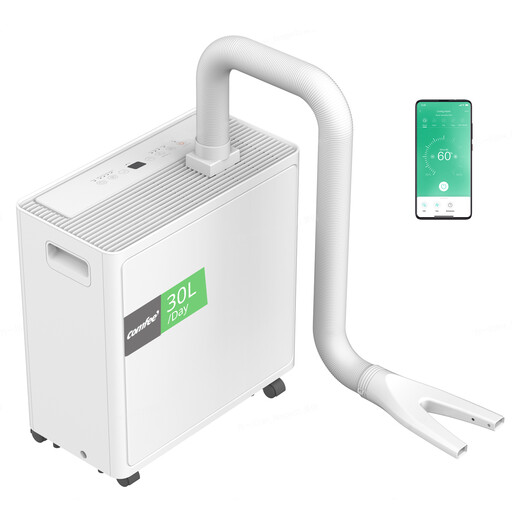
Comfee’ MDDA-30DEN7-SD
The product information mentions a laundry drying mode and continuous drainage; check whether you can use the drain hose in your room.
Stated capacity: 30 l per day; tank: 3.2 l. The description mentions four modes, a timer and app control.
The title specifies a room of approximately 130 m³ (73 m²); consider whether that figure is appropriate for your room.
View at Joybuy
 No image available
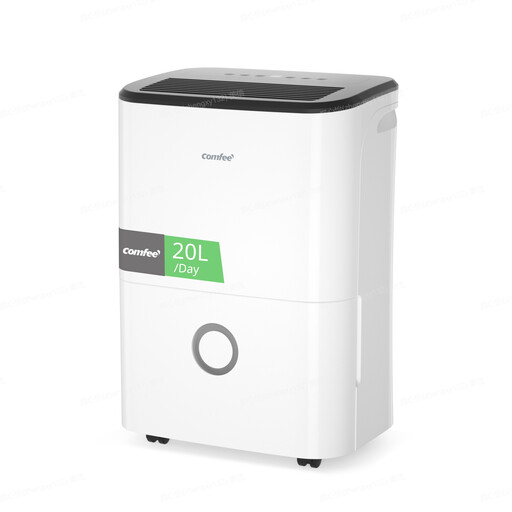
Comfee’ MDDF-20DEN7
The description mentions a drying mode and continuous drainage; check whether the tank or drain connection suits how long you want to run the appliance.
Stated capacity: 20 l per day; tank: 3 l. The description mentions three modes and a timer.
The title specifies a room of approximately 100 m³ (40 m²); check whether that figure is relevant to your student room.
View at Joybuy
 No image available
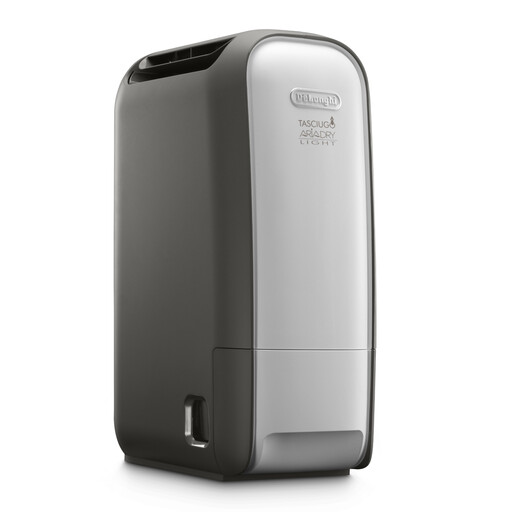
De’Longhi AriaDry Light DNS80
The product information mentions a laundry function, three fan speeds and a stated noise level of 34 dB; compare the settings with how you plan to use it in a bedroom or study.
Stated capacity: 8 l per day; tank: 2.8 l. The description also mentions a timer and humidity control.
This Joybuy model is the DNS80; do not treat it as the same model as the DNS65.
View at Joybuy
 No image available
ELECCI 12L/D
The product information describes this model as a compressor dehumidifier. The Consumers’ Association says this type is most suitable for rooms warmer than 15 °C and less suitable for cold spaces.
The product name specifies a 3.8 l water tank, a drain hose and a room size of 25 m². Check that the room size and drainage options suit your situation.
The description also mentions a drying mode, timer and automatic defrosting.
View at Joybuy
Frequently asked questions
When should I deal with the room or contact my landlord first?
First, check whether poor ventilation, washing drying indoors, a leak or a possible structural problem is causing the moisture. Report damp problems that may be due to poor maintenance to your landlord; a dehumidifier will not fix the underlying issue.
Can a dehumidifier replace my air vent?
No. Ventilation brings in fresh air and removes indoor air, while a dehumidifier removes moisture from the air it treats. Milieu Centraal describes ventilation as bringing in fresh air and removing polluted air, so keep ventilation as part of your approach.
What should I consider when positioning and maintaining it?
Follow the manual for the exact version for guidance on positioning, keeping it away from water and heat sources, emptying the tank and maintaining the filter. The Wood’s WDD80 manual says to unplug the appliance before maintaining the filter; do not assume that model-specific instructions also apply to another appliance.
How can I compare energy use for the way I’ll use it?
Multiply the power in kilowatts by the number of hours the appliance actually runs at that power to calculate its consumption in kilowatt-hours. The stated power alone does not tell you how long the humidistat will keep the appliance running.
Is a manufacturer’s guarantee the same as your statutory rights?
No. According to the Dutch Government, there is no fixed period for statutory guarantees in the Netherlands: what you can expect from a product depends, among other things, on the product and the information provided with it. A manufacturer’s guarantee may also apply; if a product is faulty, contact the seller.


