
Damp in the living room after showering
If you notice a spike in humidity mainly after showering, first check whether the bathroom is ventilated adequately. Milieu Centraal recommends increasing ventilation while you shower.


First tackle the moisture around the shower with effective extraction and ventilation; a dehumidifier is no substitute for these. If you still need extra dehumidification, adsorption may be suitable for a cool living room, although the Consumers' Association says this technology uses more electricity than condensation. If your living room is heated, compare condensation models too, and always check the stated room coverage and the conditions used to calculate the capacity.
If you notice a spike in humidity mainly after showering, first check whether the bathroom is ventilated adequately. Milieu Centraal recommends increasing ventilation while you shower.
If you have dealt with the source of the moisture but the living room still feels damp, compare its floor area with the stated coverage for the exact model, and bear in mind the conditions in which it will be used.
If your living room is often cool, how well a model works at low temperatures may influence your choice. The Consumers' Association says adsorption is suitable for cold rooms, but uses more electricity than condensation.
First tackle the source of the moisture. Then consider your living room's floor area and usual temperature to decide which dehumidification technologies to compare.
| What to consider | What should you check? | Who is this important for? |
|---|---|---|
| Remove moisture at its source | Check the bathroom extraction and fresh-air supply, then monitor humidity levels in the living room. | If I notice damp after showering, I first want to know whether the bathroom extraction is working properly. Tackling the source is the main buying concern for around 25% of consumers. |
| Capacity for the living room | Measure the floor area and compare it with the stated coverage for the exact model. Also check the capacity at the specified temperature and humidity. | If I have a large living room, I want to know whether the stated coverage suits my space, not just the maximum daily capacity. Around 25% of consumers prioritise room coverage. |
| Use in a cool room | Consider the temperature in your living room while the unit is running and check the model's operating conditions. | If my living room stays cool, I want a technology suited to that temperature, and I take electricity use into account. This is the main buying concern for around 20% of consumers. |
| Noise while running | Compare the noise levels for each fan speed, if these are provided. | If I use the unit in my living room, I want to know how much noise it makes on the setting I need. Quiet operation is the top priority for around 15% of consumers. |
| Electricity use and day-to-day running | Compare the power rating and expected hours of use. Also check the controls, tank capacity and whether a drainage hose is available. | If the unit will be running often, I want to know how frequently I will need to empty the tank, as well as how much electricity it uses. Usage and maintenance are the main buying concerns for around 15% of consumers. |
A dehumidifier does not extract humid air from the bathroom to the outside. So the source of the moisture may remain.
First check the extraction and air supply, then see whether the living room remains damp after showering.
Temperature and relative humidity affect how much water a unit removes from the air. So a maximum figure in litres per day does not, by itself, tell you what to expect in your living room.
Compare the test conditions and stated room coverage with the size of your living room.
The Consumers' Association says adsorption is suitable for cold rooms, but uses more electricity than condensation. So a condensation model may also be worth comparing in a heated living room.
Check how warm your living room is while the unit is running, and compare the technologies under those conditions.
The manual for the Wood’s WDD90 says that the unit must not be used in bathrooms or shower rooms.
Follow the placement instructions for your chosen model and use the bathroom extraction to remove moisture from the shower area.
The DD3 Classic MK3 is an adsorption model to consider if its stated coverage is suitable for your living room.
The WDD90 is an adsorption model for cooler rooms, with Wi-Fi, several fan speeds and hose drainage according to the product information.
The DD8L Zambezi is an adsorption model to compare if its stated room coverage suits your living room.
The TTR 57 E shows why an adsorption model is not automatically suitable for a large living room.
The products below are options for additional dehumidification in the living room. Several are compressor models, not adsorption models, so compare the technology and stated coverage with your needs.
 No image available
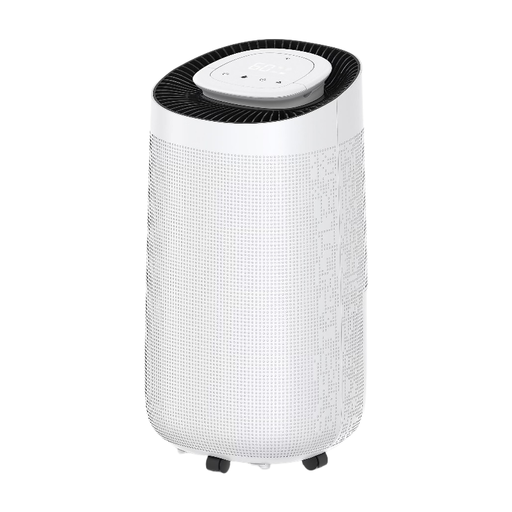
The product information says this model is suitable for rooms up to 30 m²; compare this coverage with the size of your living room.
The listed features include a 3,2-litre tank, a humidity display and automatic controls.
 No image available
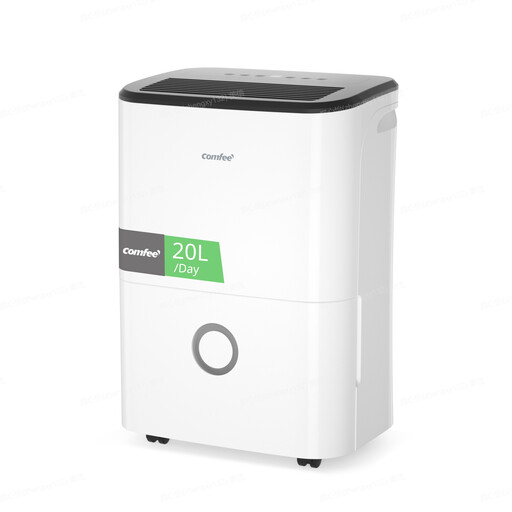
According to the product information, this model is intended for living rooms of around 40 m²; actual dehumidification also depends on the conditions.
The stated maximum capacity is 20 litres per 24 hours, and the tank holds 3 litres. According to the product information, Smart mode maintains a set humidity level of 45–55%.
The drainage hose is not included.
 No image available
The product description identifies this as a compressor model for living spaces up to 60 m², so it is not an adsorption model.
The stated maximum capacity is 16 litres per day. The product information also lists a 2,5-litre tank and continuous drainage with hoses.
 No image available
According to the product information, this compressor model is intended for rooms of around 32 m², but it is not an adsorption model.
The stated capacity of 16 litres per day applies at 95°F and 90% relative humidity, according to the product information. Below 15°C, the compressor may stop for automatic defrosting, according to the description.
 No image available
The product information describes this as a compressor model for rooms up to 40 m²; it is not an adsorption model.
The stated capacity of 20 litres per day applies at 30°C and 80% relative humidity. The tank holds 2,5 litres, and continuous hose drainage is listed.
No. Start by ventilating and removing moisture at its source; a dehumidifier in the living room is only an additional measure. Check the manual before placing an appliance near water: Wood’s prohibits using the WDD90 in bathrooms and shower rooms.
Follow the manual for your exact model when emptying the tank, connecting the drain and cleaning the filter. Unplug the unit before maintaining the filter; the Wood’s WDD90 manual explicitly mentions this safety step.
No. An additional manufacturer's warranty is not the same as your statutory rights. According to the Dutch government, there is no fixed statutory warranty period in the Netherlands, and products must be of satisfactory quality; the retailer is your point of contact if something goes wrong. Check what an optional extended warranty adds.
Electrical appliances placed on the market in the Netherlands must meet the applicable European safety requirements and CE obligations for manufacturers. A CE mark in an advert does not, by itself, independently confirm that the item supplied meets the requirements.