
Regular post coordinator
Creates labels regularly for different recipients and wants to use addresses from a file. Check the import options, print a test label and confirm the roll size. Seiko Instruments lists CSV and TXT import for the SLP650.


If your addresses change regularly, a desktop label printer with compatible address label rolls is a handy option, especially if you want to process addresses from a file. For just a few labels, a suitable office printer you already have, used with label sheets, could be an alternative. Compare roll or sheet compatibility and print a test label first: PostNL provides guidance on address lines and legibility. If several staff members work with address lists, also decide who needs access to that data.
Creates labels regularly for different recipients and wants to use addresses from a file. Check the import options, print a test label and confirm the roll size. Seiko Instruments lists CSV and TXT import for the SLP650.
Prints a few envelopes now and then and wants a suitable process without replacing a device unnecessarily. Compare individual address label rolls with sheets for a compatible printer you already have. PostNL provides guidance on clearly printed postal addresses.
Needs a printer that works for several users and must also decide who can access address lists. The Dutch Data Protection Authority points out that organisations must determine appropriate security measures for the personal data they process.
Start by considering the number of addresses and where they come from. Then check the label size and printer connection, and print a test label before you buy.
| What to consider | What should you check? | Who is this important for? |
|---|---|---|
| Entering changing addresses | Test with sample data to make sure the software you use handles the file format and address lines correctly. Seiko Instruments lists CSV and TXT import for the SLP650. | If I regularly process addresses from a file, I want to spend less time retyping data and be able to check what I’ve entered. Around 36% of consumers prioritise list processing. |
| Printing a legible address | Print the longest address you expect to use on your chosen label. PostNL recommends three to six address lines and sans-serif lettering of 10–12 points for printed addresses. | If I print addresses of different lengths, I want every line to fit legibly on the label. Around 29% of consumers prioritise address legibility. |
| Labels and consumables | Check that the printer is compatible with the exact roll or sheet you want to use. DYMO states that the LabelWriter 5 series only works with DYMO labels. | If I need labels regularly, I want to know in advance which rolls or sheets will work with our printer. Around 21% of consumers focus mainly on label choice and the associated consumables. |
| Printing for several staff members | Check which devices can connect and who is allowed to open the address list. Brother specifies USB and Wi-Fi for the QL-810Wc. | If staff print from different workspaces, I want a suitable connection and clear management of the address list. Around 14% of consumers prioritise shared use. |
A label’s external dimensions don’t necessarily tell you whether all the address lines will fit legibly. A layout that’s too small can be hard to read.
Print a long sample address first and compare it with PostNL’s guidance for postal addresses.
According to DYMO, the LabelWriter 5 series only works with DYMO labels. A roll that isn’t compatible with the printer could go unused.
Make a note of the printer model and exact roll code before ordering.
With the DYMO LabelWriter 5 series, the brand-specific choice of rolls limits your consumables options.
Address label sheets are available for laser and inkjet printers. A sheet that isn’t compatible with your printer type won’t be a useful alternative.
First check which type of office printer is available and test a sheet before choosing a separate roll-fed printer.
Names and addresses can be personal data. The Dutch Data Protection Authority says that organisations processing personal data must determine appropriate security measures.
Decide who needs the address list and restrict access to those users.
QL desktop printers for individual address labels on rolls. Compare the USB QL-700 and QL-800 models with the wireless QL-810Wc.
The LabelWriter 550 is a roll-fed printer for post and address labels.
The Smart Label Printer SLP650 is a desktop option when addresses need to come from changing files.
Label sheets and design templates for use with a suitable office printer you already have.
This selection includes Brother desktop printers for DK address labels and Phomemo label makers for labels designed on a mobile device. Before use, check that the label size and connection suit your address layout and workspace.
 No image available
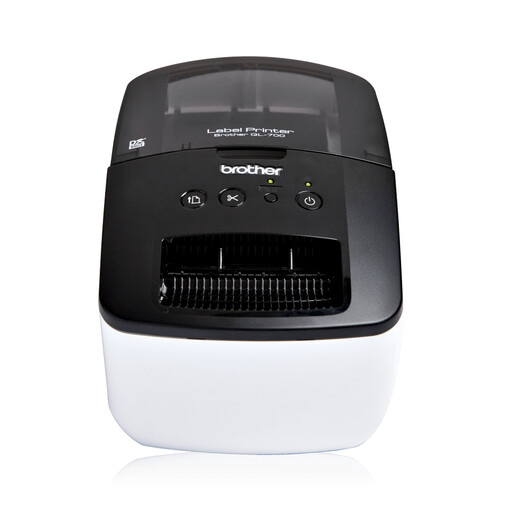
A desktop option for individual envelope addresses and pre-cut DK address labels.
The product name specifies direct thermal printing, 300 × 300 DPI and 150 mm/sec. The product information lists USB, an automatic cutter and DK-11201 labels measuring 29 × 90 mm.
 No image available
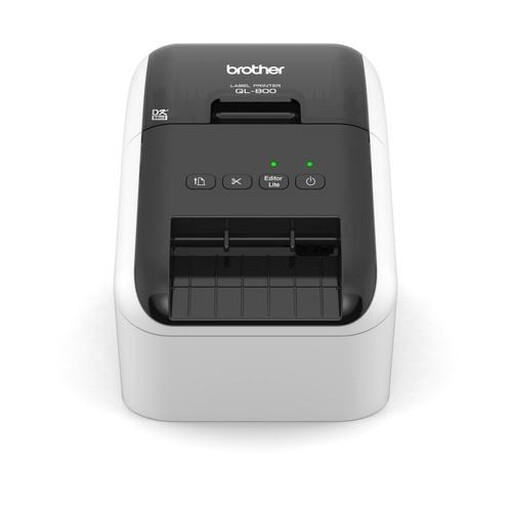
A desktop option for a fixed USB workstation using pre-cut DK address labels.
The product name specifies direct thermal printing, colour, 300 × 600 DPI and 148 mm/sec. Brother lists USB and DK-11201 address labels measuring 29 × 90 mm.
 No image available
The product information lists address labels and Excel import with batch printing. Check the layout and label type before choosing this printer for postal addresses.
Features include Bluetooth, the Print Master app and label widths of 20–50 mm. The product name specifies one label roll.
 No image available
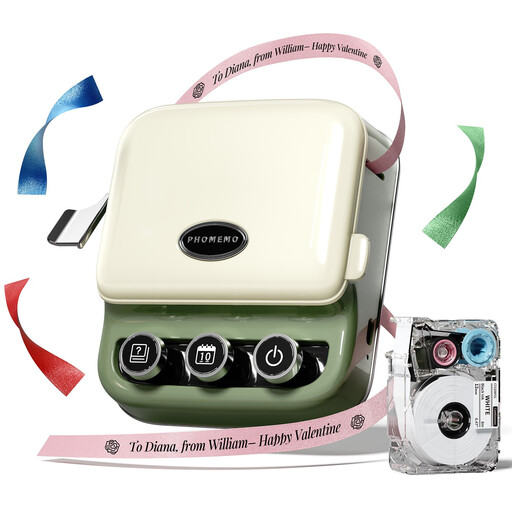
A mobile option for designing labels. Check that the available label type is suitable for your chosen address layout.
The product information lists Bluetooth, the Print Master app and inkless printing. The product name specifies one label refill.
 No image available
The product information lists Excel import and mobile use. Check that the available label width suits your chosen address layout.
Features include Bluetooth, Excel import from the app and a label width of 0,59 inch. Compare this measurement with the label you want to use.
Print a complete test address and check that every line fits and is legible. PostNL recommends three to six address lines, a space between the numbers and letters in the postcode, and two spaces before the town or city name. For printed addresses, PostNL recommends sans-serif lettering of 10–12 points.
Not necessarily. According to PostNL, the sender’s address can go in the top left-hand corner of the envelope when the recipient’s address is printed. PostNL says the sender’s address is required for international letters; this is not a general legal requirement for domestic post.
No. According to DYMO, the LabelWriter 5 series only works with DYMO labels. Check the exact roll and size before ordering.
According to the Dutch Data Protection Authority, names and addresses are personal data. If your community centre processes this information, the organisation must determine appropriate security measures based on the risks. In practice, restrict access to the file and don’t keep data for longer than necessary. A list containing only details of legal entities does not automatically fall under the same definition.
Check that the connection suits your computer and workspace, and that your software works with the printer. Brother provides support and download pages for the QL-700 and QL-800; check which information applies to your chosen model.