Vandaag of morgen in huis

Kwaliteit gegarandeerd

Welkomstaanbiedingen ontgrendelen: GRATIS bezorging | Tot 80% korting | Gratis 30 dagen JoyPlus-proefperiode
Download de app
Whether you're climbing a mountain, cycling through the city, or capturing your holiday adventures, a good action camera is indispensable. However, the market is vast, and the specifications can be overwhelming. How do you choose a model that suits your activities without getting lost in marketing jargon?
As a Joybuy Product Recommendation Officer, I'm here to guide you. In this article, we'll provide practical buying tips and highlight some popular choices. We focus on what really matters: image quality, durability, and ease of use, so you can make an informed decision.
Before you make a choice, it's helpful to know which specifications are important for your needs. Here are three key points to consider.
A 4K action camera is the standard nowadays. This not only delivers sharp images but also gives you the freedom to zoom in or crop your videos later without losing quality. Also, pay attention to the frames per second (fps). 60 fps ensures smooth footage, while 120 fps is ideal for stunning slow-motion shots.
Just as important is a camera with image stabilisation. Especially for sports or handheld vlogging, electronic image stabilisation (EIS) prevents shaky and unusable footage. Advanced systems use a gyroscope to compensate for movement, resulting in stable and professional-looking videos.
An action camera needs to be tough. Most models are designed to withstand shocks and falls. However, the degree of waterproofing varies. Some cameras are natively waterproof to a certain depth, for example, 10 metres. For deeper dives or extra protection, you often need a special housing. Will you be using the camera mainly for water sports? Then a fully waterproof camera or a model with a good underwater housing is a must-have.
A camera can have the best specifications, but if it's not practical to use, you'll quickly stop using it. Consider the controls: does the camera have a touchscreen? Is there a front-facing screen, which is handy for a vlogging camera? Battery life is also crucial. Nothing is more frustrating than a dead battery halfway through your adventure. Check the stated recording time and see if there are options for external batteries or power banks.
Based on the criteria above, we have selected models that stand out for their specifications and features.
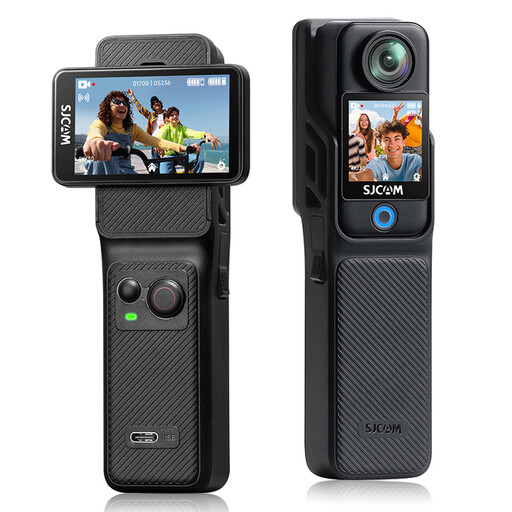
Why It Stands Out The SJCAM C400 is a compact and versatile camera that comes with a 64G memory card. The combination of dual touchscreens and long battery life (with the handgrip) makes it an attractive package for those who want to get started right away.
Pros
Who Is It For? This model is a great choice for beginners and budget-conscious adventurers looking for a complete kit for activities like cycling, hiking, or vlogging.
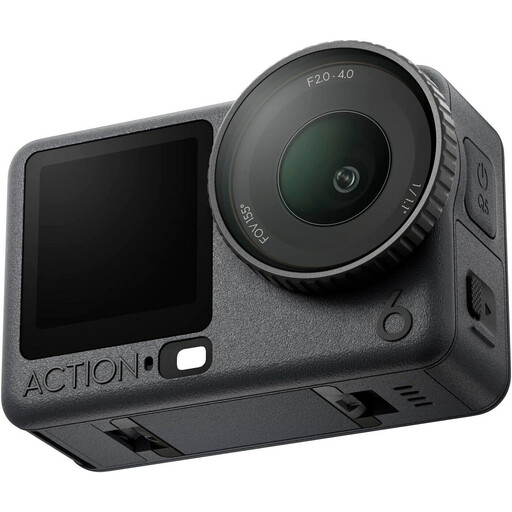
Why It Stands Out DJI is renowned for its imaging technology, and the Osmo Action 6 is no exception. With a large sensor and a variable aperture, this camera adapts to different lighting conditions, resulting in high image quality.
Pros
Who Is It For? The serious content creator or sports camera user who demands reliable performance and excellent image quality, even in challenging conditions.
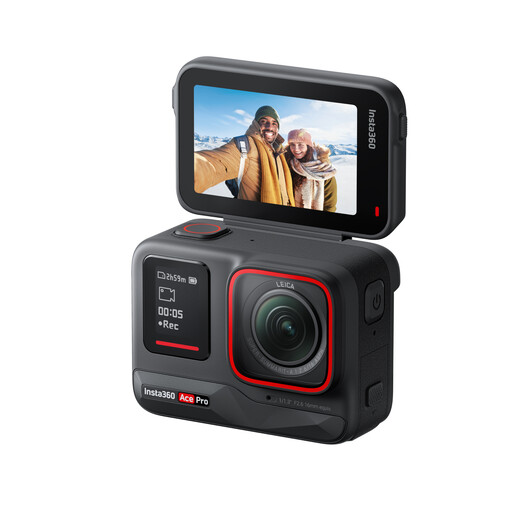
Why It Stands Out The Insta360 Ace Pro, co-engineered with Leica, combines a high-quality lens with smart AI features. Its large, flip-up touchscreen makes it an exceptionally flexible camera for creative shots.
Pros
Who Is It For? Vloggers and tech enthusiasts who appreciate the latest AI features, great low-light performance, and the flexibility of a flip-up screen.
These recommendations are a great starting point, but the world of action cameras is vast. Are you looking for a different model, a specific feature, or do you just want to compare more options? Check out our full range of action cameras and find the camera that perfectly matches your adventures.
Optical image stabilisation (OIS) corrects movement by physically moving the lens or sensor. Electronic image stabilisation (EIS) does this through software by slightly cropping the image. Most action cameras use an advanced form of EIS, often combined with gyroscope data. This is very effective at smoothing out jolts during sports activities.
Although 1080p is still sufficient for many applications, 4K offers significant advantages. The images are sharper and more detailed, which is especially noticeable on larger screens. Additionally, 4K gives you more flexibility in post-production, such as being able to crop your video without visible quality loss. It's a great way to future-proof your recordings.
This depends entirely on your activities. For water sports like diving, surfing, or kayaking, good waterproofing is essential. Pay attention to the depth rating (e.g., 10m or 30m with a case). For land-based use, such as cycling or skiing, a camera that is splash-proof and robust is often sufficient. However, a fully waterproof housing always provides extra peace of mind.