
Guitar editors working in a quiet room
You mainly edit existing guitar parts and want to assess positioning, dynamics and tonal balance. RTINGS and Sennheiser describe open-back models as an option to compare for mixing in a quiet space.


If you mainly edit existing acoustic guitar recordings in a quiet room, compare open-back headphones. If you’re recording with a microphone at the same time or want to reduce distracting background noise, consider closed-back models. RTINGS describes this as a design trade-off: sound leakage, fit and connectivity depend on the headphones and your setup, so check your mix on a second playback system too.
You mainly edit existing guitar parts and want to assess positioning, dynamics and tonal balance. RTINGS and Sennheiser describe open-back models as an option to compare for mixing in a quiet space.
You’re recording acoustic guitar with a microphone and want to stop headphone sound from getting into the recording. RTINGS and beyerdynamic point to closed-back designs as an option for reducing sound leakage while monitoring.
You’re assessing guitar tracks while household noise threatens to distract you, so sound isolation matters. RTINGS and beyerdynamic describe closed-back models as an option worth considering.
Best for: mainly editing or mixing existing tracks in a quiet room, without a microphone close to the headphones.
Keep in mind: open-back models leak sound and offer limited isolation from background noise.
Best for: recording and listening back at the same time, or working in a space where background noise is distracting.
Keep in mind: check your mix on a second playback system too. Less sound leakage doesn’t automatically make a model suitable for every mixing decision.
Best for: mainly listening and editing, if you’d also like to compare a semi-open design.
Keep in mind: don’t assume a semi-open model provides enough isolation when recording with a microphone; check for sound leakage in your own setup.
| What to consider | What should you check? | Who should prioritise this? |
|---|---|---|
| Guitar balance and detail | Compare the fit and listen to your mix on a second playback system. | If I’m editing existing guitar tracks in a quiet room, I want to assess positioning and tonal balance properly. This is a priority for around 33% of consumers who focus on these editing details. |
| Sound leakage when recording | Check the design and make a test recording with your own microphone setup at a normal listening volume. | If I’m recording acoustic guitar at the same time, I want to stop headphone sound from reaching the microphone. Around 27% of consumers are most concerned about sound leakage while recording. |
| Background noise | Check the fit of the ear cups and see whether you can work at a moderate volume. | If I’m working in a noisy home office, I want to reduce distractions without turning up the volume. This is a priority for around 20% of consumers. |
| Comfort and connectivity | Check the fit, plug size, included adapter and replacement ear pads available for the exact model. | During longer editing sessions, I want my headphones to feel comfortable and connect to my audio interface. Around 20% of consumers prioritise these practical considerations. |
Open-back models leak sound that a microphone can pick up, allowing headphone audio to get into the recording.
First decide whether you’re only editing existing tracks or recording at the same time too. If you’re recording and monitoring simultaneously, test for sound leakage with your own setup.
The DT 770 PRO comes in different impedance versions. The 80-ohm specification applies to the DT 770 PRO 80 Ohms and doesn’t automatically apply to other versions.
Before choosing a version, compare the full model name, impedance and connection with your audio interface.
The World Health Organization (WHO) notes that recommended listening time decreases as sound levels rise.
Check the fit and isolation first, keep the volume moderate and avoid trying to block out background noise by listening louder.
The DT 770 PRO 80 Ohms is a closed-back model to compare if you’re recording or looking for sound isolation.
The open-back HD 490 PRO is an option to compare if you mainly edit and mix in a quiet room.
The wired ATH-M50x is a closed-back alternative to consider if you’re looking for monitoring and sound isolation.
The K240 Studio is a semi-open model to compare with open-back and closed-back designs.
Sony Netherlands presents the MDR-7506 for studio use.
These headphones may be worth considering if background noise is distracting or you want to listen using a cable. Check your guitar balance on a second playback system too, and make sure each model’s connections are compatible with your audio interface.
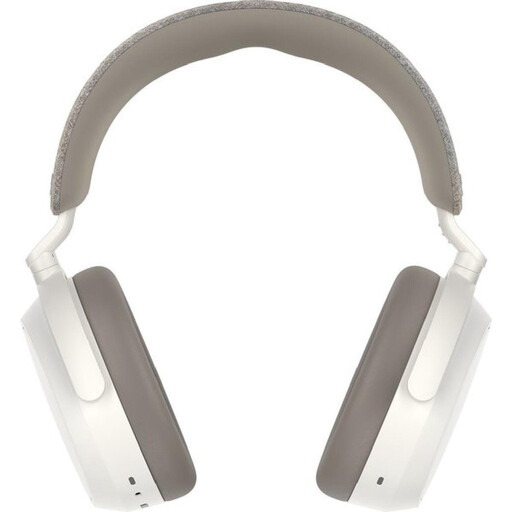 No image available
May suit you if you want to listen using a cable in a space where background noise is distracting; check your guitar mix on a second playback system too.
The product description lists a 3.5mm audio cable for wired use without the battery, as well as adaptive active noise cancellation.
The product description lists a 42 mm transducer system and an adjustable equaliser.
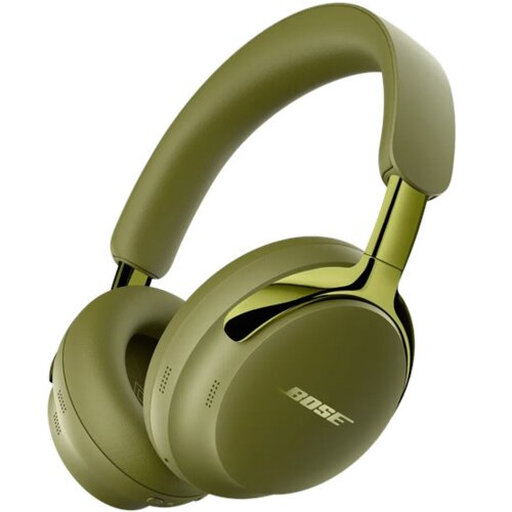 No image available
May suit you if you want to switch between wireless and wired listening; check that the connections work with your audio interface.
The product description lists Bluetooth, a detachable cable with USB-C and 3.5mm connections, and active noise cancellation.
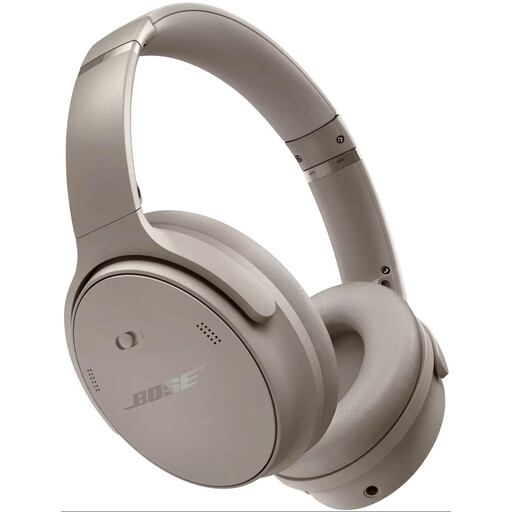
 No image available
May suit you if you want to listen using a cable in an environment where background noise is distracting; check your mix on a second playback system too.
The product description lists a closed-back design, active noise cancellation and an audio cable for use without the battery.
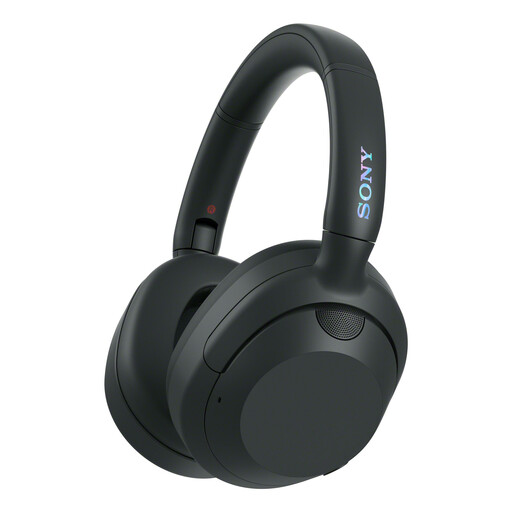
 No image available
May suit you if you want to reduce distractions from background noise during longer listening sessions; check the fit for yourself and assess your guitar balance on a second playback system.
The product description lists Bluetooth, active noise cancellation, on-earcup controls and EQ settings through the app.
 No image available
May be worth considering if you’re looking for an over-ear model with noise cancellation; check the connection for guitar editing and assess your mix on a second playback system.
The product title lists an over-ear design and noise cancellation.
You can, but open-back models leak sound that a nearby microphone may pick up. If you’re recording at the same time, compare a closed-back model and check the result with a test recording at your usual listening volume; RTINGS identifies sound leakage as something to consider when recording.
No. Check your interface’s connection, as well as the plug and accessories supplied with the exact model. For example, AKG specifies that the K240 Studio has a 3.5mm plug with a 6.3mm adapter.
It varies by model. AKG lists a detachable cable and replaceable ear pads for the K240 Studio; before buying, check whether replacement parts are available for the model you’re considering.
Keep the volume moderate and take breaks. The WHO gives a maximum of 40 hours per week at an average of 80 dB as an example; this is general health guidance, not a recommended setting for these headphones.
According to the Dutch government, when you buy as a consumer you’re entitled to a product that works as it should. The Netherlands has no fixed statutory warranty period, and the seller is your point of contact if there’s a problem. For online purchases from a business, a 14-day cancellation period applies in many cases. Check whether it applies to your order and what terms and conditions are in place.