
Campers who want to photograph acorns up close
If you don’t want to change lenses on the go, look for a close-focusing mode and room for lighting. OM SYSTEM and Ricoh specify a macro mode from 1 cm on certain models.


For quick close-ups on the go, especially when rain, dust or knocks are a concern, a rugged compact camera with a documented close-focusing mode could be a good fit. If you want more control over magnification and framing, a mirrorless camera with a suitable macro lens is a better option. Compare the focusing distance in the mode you’ll actually use, the room available for lighting, and the protection offered by the complete camera-and-lens setup: a high zoom ratio or the word ‘macro’ alone doesn’t tell you enough.
If you don’t want to change lenses on the go, look for a close-focusing mode and room for lighting. OM SYSTEM and Ricoh specify a macro mode from 1 cm on certain models.
If you expect rain, dust or knocks, consider the protection specified for the exact camera model. OM SYSTEM and Ricoh provide model-specific protection information.
If you want to choose the lens and framing yourself, consider a mirrorless camera with a suitable macro lens and factor in the extra kit. Canon describes the RF 35mm F1.8 MACRO IS STM as a separate lens for compatible cameras.
A good fit if: you want to photograph acorns without changing lenses and protection matters on your camping trip.
The trade-off: there may be less room for lighting at very close range, and the specified close-focusing distance won’t necessarily apply to every zoom or shooting mode.
A good fit if: you want to capture other camping scenes as well as acorns, using one fixed lens and no extra lens.
The trade-off: the minimum focusing distance can vary considerably between zoom settings, so check it for the framing you want.
A good fit if: you want to choose the lens and magnification yourself and are happy to carry a separate lens.
The trade-off: check the lens mount, which lens is included, and the protection offered by both the camera body and lens; a body or standard zoom isn’t automatically a macro setup.
| What to consider | What should you check? | Who is this important for? |
|---|---|---|
| Getting details to fill the frame | Check the close-focusing mode at the zoom setting you plan to use; only compare magnification figures if they use the same measurement. | I want to capture the veins and other surface details of an acorn clearly. Around 29% of consumers prioritise these close-up details. |
| Protection on the go | Read the protection details and any test conditions for the exact model; don’t assume a separate lens has the same protection. | When I’m taking photos in changeable weather, protection matters, even if it makes an interchangeable lens less appealing. Around 23% of consumers prioritise protection while camping. |
| Carrying your kit | Compare the total weight of the setup and check whether any separate lens is included with the version you’re considering. | I want to keep my camping kit simple and light, without carrying an extra lens. Around 18% of consumers make ease of carrying their top priority. |
| Lighting for close-ups | Check whether lighting is included and which aperture is available at the zoom setting you’ll use. | For a close-up, I want to consider the light around the acorn and avoid the camera or lens casting a shadow over it. Around 18% of consumers prioritise practical lighting. |
| Other camping photos too | Check the minimum focusing distance for each zoom setting, then consider the range you’ll need for other subjects. | I want to use the same camera for acorns and other travel photos. Around 12% of consumers prioritise this versatility. |
The minimum focusing distance can change with the zoom setting. Panasonic specifies 3 cm at wide angle in AF Macro mode and 200 cm at telephoto for the LUMIX DC-TZ99; Canon specifies 5 cm and 40 cm respectively for the PowerShot G7 X Mark III.
Check the minimum focusing distance at the zoom setting you’ll use to photograph the acorn.
Canon specifies a maximum magnification of 0.5× for the RF 35mm F1.8 MACRO IS STM. That’s a different magnification ratio from 1:1.
Compare the stated magnification and, before buying, check that the lens fits your chosen camera body and is included in the version you’re considering.
If 0.5× isn’t enough for the framing you want, you may need a different or additional lens.
OM SYSTEM lists the LG-1 light guide and an extra battery in its micro adventure kit; check what’s included with the specific version.
Before buying, check which accessories are actually included in the kit you’ve chosen.
A lighting accessory or extra battery may mean you need to carry additional kit.
The Tough TG-7 is a fixed-lens option for close-up photography during outdoor activities.
The WG-8 is a rugged compact camera with a dedicated close-focusing mode.
The LUMIX DC-TZ99 is a compact travel zoom for anyone who wants to capture other camping scenes too.
The PowerShot G7 X Mark III and an EOS R body with the RF 35mm F1.8 MACRO IS STM are two different camera-and-lens options.
This selection includes compact cameras and action or vlogging cameras for use on the go. Check the minimum focusing distance for each model and whether it’s suitable for acorn close-ups; a compact design or video feature doesn’t guarantee that it is.
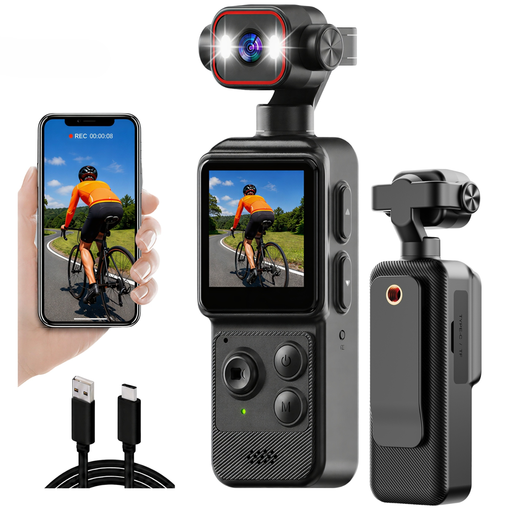 No image available
The product name lists 4K, a 1.54-inch display, a 140° viewing angle, LED lighting and a 1200 mAh battery. Check the focusing distance for acorn close-ups.
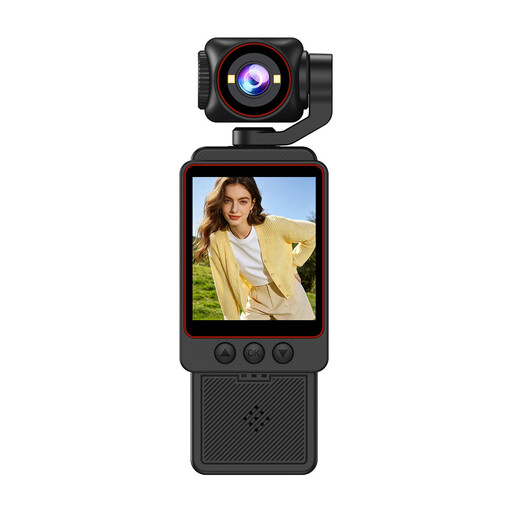 No image available
The product name lists 2K and a 360° rotating lens. Check the focusing distance before choosing this camera for close-ups of small subjects.
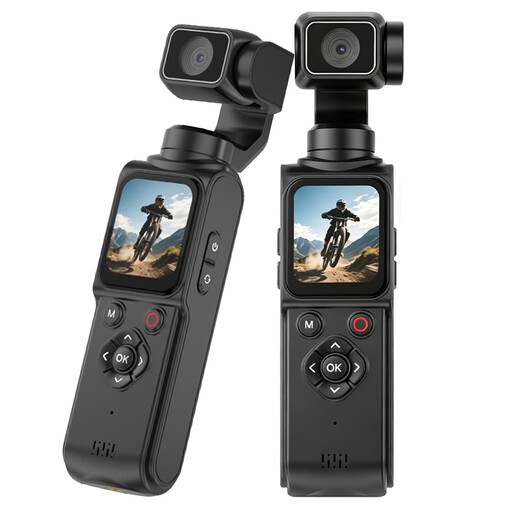 No image available
The product name lists 64 MP, a 330° rotating lens and a 1.72-inch touchscreen. Check whether the camera can focus closely enough for the acorn shot you want.
 No image available
The product name lists a 1-inch CMOS sensor, 4K video at 120 fps, 3-axis stabilisation and an included microphone. Check the focusing distance if acorn close-ups are your main priority.
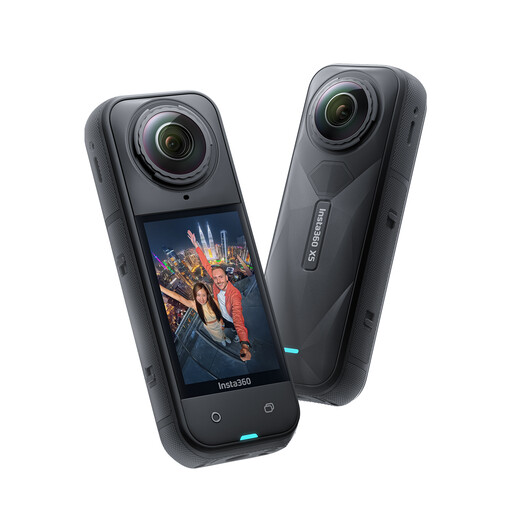 No image available
The product name lists 8K 360° video and an interchangeable lens. The product description says the stated waterproofing to 15 m requires firmware version 1.3.0 or later; check this condition and the focusing distance for close-ups.
No. Focusing distance and magnification describe different things. The focusing distances listed apply to specific modes or zoom positions; Canon also specifies a maximum magnification of 0.5× for its separate RF 35mm macro lens. Compare the specifications for the setup you plan to use.
That depends on the available light and how close you’re shooting. OM SYSTEM lists an LG-1 light guide and an extra battery in the TG-7 micro adventure kit; check whether these are included in the version you’re considering.
Check whether a battery, memory card and any macro lens or lighting accessory are included. According to ACM ConsuWijzer, your statutory guarantee depends on what you could reasonably expect from the product under normal use. For distance purchases, you usually have 14 days to change your mind, as explained by the Netherlands Authority for Consumers and Markets.
First, check the rules for the area you’re in. Staatsbosbeheer directs visitors to the access signs for the rules that apply, while the Dutch government explains that provinces set the rules for their areas. This is not general permission to take photographs off the paths.