
Parents with toys beside the bed
You want to have batteries ready without using a charger on or among the bedding, or within a child’s reach.


First, choose batteries that the toy’s instructions say are suitable. Then pick a charger designed for their size and chemistry. Charge them in a clear space away from bedding, preferably while you’re nearby. Choose a charger based on how many cells you need to charge at once and how quickly you want them ready. Check the instructions to see whether the toy accepts NiMH or lithium AA cells.
You want to have batteries ready without using a charger on or among the bedding, or within a child’s reach.
You don’t always charge a full set of four and want to know how many cells a charger can handle at a time.
You want to know how long the specific combination of charger and batteries you use will take to charge.
First check which type of battery the toy accepts and choose a suitable charger. Then consider how many cells it can charge at a time and how long charging takes for the battery combination you use.
| What to consider | What should you look for? | Who is this important for? |
|---|---|---|
| Safe charging location and battery chemistry | Check the toy’s instructions and the battery label; only use NiMH cells with a charger designed for them. | I don’t want to use the charger on or among the bedding, and I want to make sure the batteries are suitable for the toy. Around 33% of consumers prioritise a safe charging location and suitable battery chemistry. |
| Number of batteries per charge | Compare the number of AA cells the toy needs with how many the charger can handle at a time. | If I don’t always need a full pair or set of four, I look for a charger that can charge individual cells. Around 27% of consumers prioritise being able to charge varying numbers of AA cells. |
| How long until the batteries are ready? | Only compare times for the specific combinations listed: Panasonic Energy quotes around 90 minutes for two AA eneloop cells; IKEA typically quotes 6–8 hours for four AA cells in the STENKOL. | If I need to get batteries ready just before playtime, I want a time estimate that matches the number and type of cells I use. Around 20% of consumers prioritise the time needed to get ready. |
| Complete starter set | Check whether batteries are included, how many there are and whether the toy’s instructions say they are suitable. | If I don’t already have suitable cells, I look for a set that includes both batteries and a charger. Around 20% of consumers prioritise a complete starter set. |
AA describes the battery size, not whether it is rechargeable or suitable for the toy. IKEA says alkaline batteries are not rechargeable.
First check the toy’s instructions, then check which battery chemistries the charger supports. Do not recharge alkaline batteries.
The Fire Service advises placing a charger in a clear space so it can dissipate heat, and not charging it under a pillow or duvet.
Charge in a clear space away from bedding, preferably while you’re nearby. Automatic shut-off doesn’t change the need to choose a safe place to charge.
Quoted times apply to specific numbers and types of cells, so they aren’t directly comparable.
For each time quoted, check how many cells and what capacity the manufacturer specifies. For example, Panasonic Energy quotes a time for two AA eneloop cells, while IKEA lists four AA cells for the STENKOL.
The STENKOL is a straightforward charger for AA and AAA NiMH cells. The STENKOL/LADDA set may be worth considering if you need batteries too.
The BQ-CC55 is designed to charge cells individually and shows the status of each one.
The LCD Charger type 57070 is designed for people who usually charge two or four AA NiMH cells and want a display.
These Joybuy product picks are related to AA batteries and chargers for toys. If you’re choosing a battery set, always check first that the toy’s instructions allow the battery chemistry listed.
 No image available
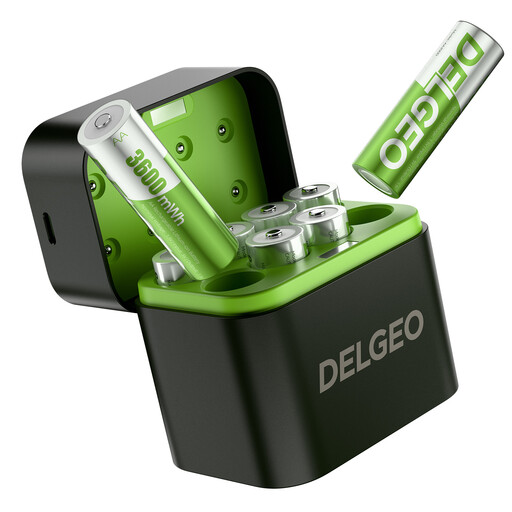
This set may suit you if you’re looking for both AA lithium batteries and a charger. Only use the cells if the toy’s instructions allow lithium AA batteries; the AA size alone doesn’t confirm that the chemistry is suitable.
 No image available
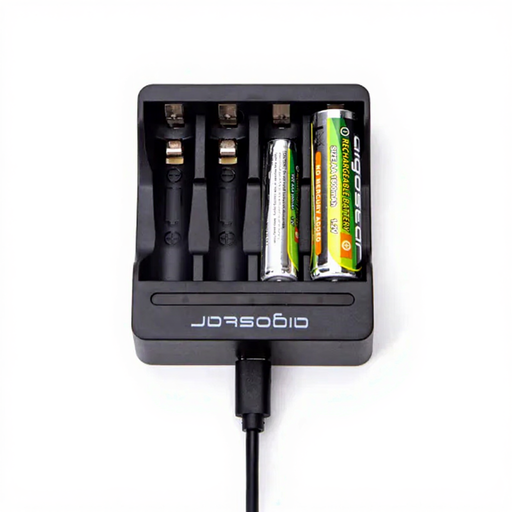
This model may suit you if you’re looking for a charger for AA cells. Before use, check which battery chemistries it supports and whether the number of cells it charges at a time suits your routine.
It’s best to charge in a clear space where the charger can dissipate heat, preferably while you’re nearby. The Fire Service warns against using chargers under pillows or duvets; automatic shut-off is no reason to ignore that advice.
No. IKEA says alkaline batteries are not rechargeable. Only use a charger designed for rechargeable cells, and follow the positive and negative polarity markings.
Keep loose batteries out of children’s reach and follow the polarity markings. Only clean a charger as instructed in its manual. For the STENKOL, IKEA says to unplug it first and wipe it dry.
According to the Dutch government, the seller must provide a solution if a product is faulty. The Netherlands does not have a fixed statutory two-year guarantee for every product; what you can expect also depends on the product and normal use.