
Occasional kitchen timer user
Wants to keep batteries ready without buying a charger unnecessarily. For a device that uses very little power, alkaline batteries may sometimes be a more sensible choice, according to Milieu Centraal.


Don’t automatically buy a charger for a kitchen timer. If the device uses very little power, an approved alkaline AA battery may be a more sensible choice, according to Milieu Centraal. If you also use rechargeable AA batteries in other devices, check that the timer accepts your chosen battery type and choose a charger that supports the batteries’ chemistry.
Wants to keep batteries ready without buying a charger unnecessarily. For a device that uses very little power, alkaline batteries may sometimes be a more sensible choice, according to Milieu Centraal.
Wants to use rechargeable AA batteries in the timer and other devices. Check both the battery chemistry and the charging options offered by your chosen charger.
Wants to know in advance how long charging will take. Manufacturers’ stated charging times can vary by battery type and capacity, so compare them on a like-for-like basis.
First, check which battery type the kitchen timer’s manual recommends and how often you use the batteries. If you also regularly use rechargeable AA batteries, choose a charger that suits their chemistry and your charging needs.
| What to consider | What to look for | Who is this important for? |
|---|---|---|
| Battery and charger compatibility | Check the timer’s battery requirements and the battery chemistry supported by the charger. | If I want to make sure both the timer and charger are compatible with my batteries, I’ll start by checking both manuals. Around 36% of consumers put compatibility first. |
| Whether it’s worthwhile for occasional use | Check whether you also use rechargeable AA batteries in other devices. | If the kitchen timer is used infrequently and I don’t need rechargeable AAs for anything else, I’ll first work out whether a charger would be useful. Around 36% of consumers prioritise avoiding an unnecessary charger. |
| Flexible charging slots | Check how many cells can be charged at once and whether you can charge AA and AAA batteries together. | When I’m getting batteries ready for different devices, it’s useful to know whether I can charge individual cells or a mix of types. Around 21% of consumers value this flexibility most. |
| Charging time before you leave | Only compare charging times for the same cell type, capacity and charge level. | If I only remember to charge the batteries shortly before leaving, I’ll want to know how long the stated charging time actually takes. Around 7% of consumers prioritise charging time over flexible charging options. |
For a device that uses very little power, an approved alkaline battery may sometimes be a more sensible choice. In that case, buying a charger may not be necessary.
First, check the timer’s battery requirements and consider whether you’ll use the charger for other devices too.
AA describes a battery’s size, not whether it’s rechargeable. A standard disposable or alkaline battery is not automatically suitable for use in a charger.
Read the label on the battery and check its chemistry against the charger’s manual. Only charge cells that the charger explicitly supports.
Duracell quotes around 95% charge in 15 minutes for the CEF15 when used with its own 1300 mAh AA NiMH batteries. This is not a general charging time for every battery, nor a promise of a full charge.
Only compare charging times for batteries with the same capacity and the same intended charge level.
The Energizer Pro Charger and VARTA type 57070 are specified for two or four cells. Panasonic says the BQ-CC17 can charge suitable cells individually.
If you sometimes need to prepare just one battery, check the minimum number of cells required per charge.
The eneloop BQ-CC17 is designed for charging one to four compatible AA or AAA cells individually.
The Pro Charger is a NiMH charger that Energizer says comes with four AA batteries.
The LCD Charger type 57070 has a display and is designed to charge two or four AA or AAA NiMH cells.
The Hi-Speed range includes the CEF14 and CEF15 for AA and AAA batteries.
This selection includes a set of AA lithium batteries with a charger and an AA/AAA charger for rechargeable cells. Before use, check that the battery type is suitable for your kitchen timer and that the charger supports the chemistry of your chosen batteries.
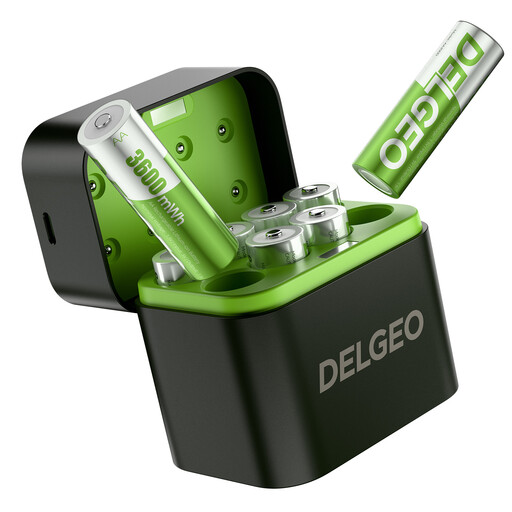 No image available
A set of eight AA lithium batteries with a USB-C charger for anyone wanting to get rechargeable AA cells ready to use. First, check that your kitchen timer accepts this battery type.
Features listed: 1.5 V constant output and 3600 mWh.
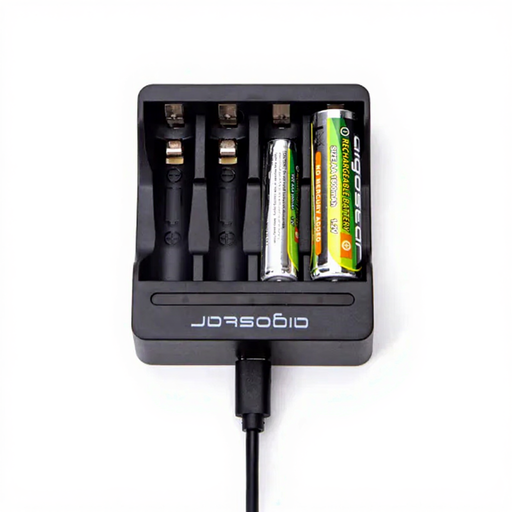 No image available
The product information says cells can be charged individually or together. Check that the battery chemistry is suitable for the cells you want to use.
Types supported according to the product information: NiMH and NiCd for AA/AAA. USB power supply: DC 5 V, 1 A.
Only if it’s a rechargeable battery with chemistry supported by the charger. Also check the timer’s battery requirements, and never recharge a standard disposable or alkaline battery.
Follow the use and polarity instructions for the timer and charger. Store loose batteries in a cool, dry place, and don’t mix old and new batteries or rechargeable and non-rechargeable batteries in the timer.
According to ACM ConsuWijzer, you have statutory rights in addition to any manufacturer’s warranty. Depending on the circumstances, the seller must provide a remedy at no cost if the product is faulty. A stated warranty period does not automatically limit your statutory rights.
According to the Dutch government, used batteries must not go in the bin. You can take them to shops or supermarkets that sell batteries, among other places. An old charger is electrical equipment and can be taken to a collection point or returned when buying a similar new appliance, subject to the government’s conditions.
Check the relevant product information and who the seller is. For online purchases, the Netherlands Food and Consumer Product Safety Authority advises checking, among other things, for the relevant CE marking. The product rules that apply also depend on the design and power supply of the specific charger.