What should you look for when choosing?
Start with your sensor’s manual. The number of charging channels, charging time and any status information only matter once you have confirmed that the sensor allows the type of rechargeable AA battery you have chosen.
| What to consider |
What should you check? |
Who is this important for? |
| Compatibility |
Check your sensor’s manual to see whether rechargeable AA batteries are permitted and which chemistry and voltage are required. |
If I want to avoid finding that a charged battery is incompatible with my sensor, I check the exact model first; around 36% of consumers say compatibility is their main concern. |
| Charging time before you leave |
Compare the charging time for the number and type of cells you want to charge. |
If the cells need to be ready before I leave, I consider how much time I have to prepare; around 29% of consumers prioritise charging them in time. |
| Checking individual cells |
See whether the charger has separate charging channels, a status display or a test programme. |
If I want to check existing cells with different charge levels, I look for features that handle them individually; around 21% of consumers say this is their main consideration. |
| Power supply and what’s included |
Check what power supply is needed and what comes with the exact model. |
If I want to avoid missing an extra power supply or other essentials, I check what I already have at home; around 14% of consumers focus mainly on this. |
Products on Joybuy
These products are designed to prepare rechargeable AA batteries. Before use, check that your weather sensor supports the specific battery type and voltage.
 No image available
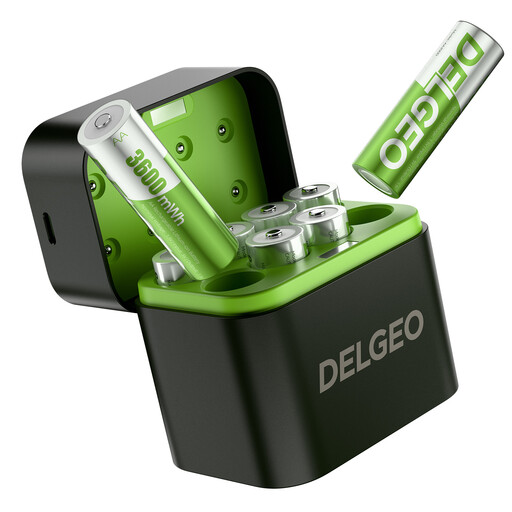
Pack of 8 AA lithium batteries with USB-C charger, 1.5 V
A set with a charger for preparing eight AA lithium batteries. First, check that your sensor supports this battery type and the stated voltage.
The product description lists eight included cells and a charging time of 2.5 hours for all eight using a 5 V / 3 A power supply.
The stated charging time is based on that power supply; do not assume these lithium cells are suitable for a sensor that requires NiMH batteries.
Joybuy
 No image available
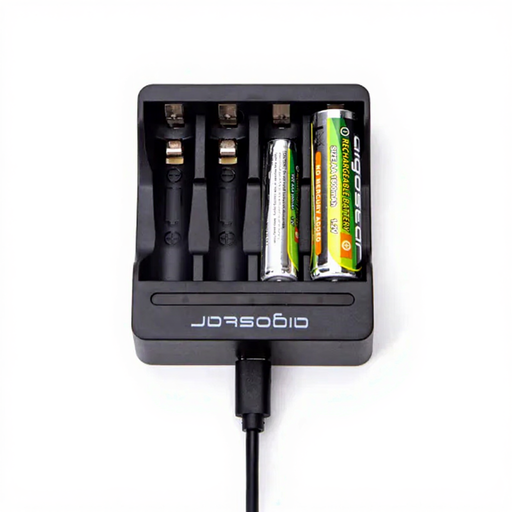
Aigostar Quick Smart IC charger for 4 AA/AAA batteries
Suitable if you want to charge compatible NiMH cells individually; check that your weather sensor allows NiMH batteries.
The product description lists four separate charging channels for NiMH and NiCd cells, as well as an LED charging indicator and automatic shut-off when charging is complete.
According to the product description, the charger is designed for indoor use at 0–35 °C and is powered via USB; check which power supply is included with the model.
Joybuy
Frequently asked questions
Can I use rechargeable AA batteries in any weather sensor?
No. Check the manual for your exact sensor model. For example, the Netatmo Help Centre states that Netatmo weather station modules do not support rechargeable batteries. This does not determine the requirements set by other brands.
Can I charge alkaline or non-rechargeable lithium AA batteries in a NiMH charger?
No. Only use rechargeable NiMH batteries in a NiMH charger if its manual specifies them. Energizer’s instructions for the CHPRO warn that other battery types may leak, split or explode; always follow the instructions for your own charger too.
Where should I use the charger while preparing the batteries?
Follow the charger’s manual and insert the cells with the correct polarity. For the CHPRO, Energizer specifically recommends using it in a dry place, away from rain and excessive moisture.
What can I do if a charger I bought online isn’t right for me?
According to ACM ConsuWijzer, online consumer purchases generally come with a statutory 14-day cancellation period from the date of delivery; check the applicable exceptions and conditions. If a product develops a fault too soon during normal use, you may also have a statutory guarantee claim against the seller.
Where can I recycle used AA batteries and an old charger in the Netherlands?
According to the Dutch Government, you can return used batteries to shops and supermarkets that sell batteries. For an old electrical charger, the Government lists collection points, recycling centres and returning it when buying a similar new appliance as options.


