
Student without a charging set
You have a radio that takes compatible AA rechargeable batteries, but you don’t have any batteries or a charger yet. You want to know what comes in a starter set.


First, check whether your radio’s manual allows rechargeable AA batteries and the chemistry of the cells you’ve chosen. Then choose a charger that’s compatible with them. A starter set is a practical choice if you don’t have any rechargeable batteries yet, while a standalone charger or extra features are mainly worth considering if they suit what you already own and how often you plan to charge. Charging-time claims apply only under the conditions specified by the manufacturer.
You have a radio that takes compatible AA rechargeable batteries, but you don’t have any batteries or a charger yet. You want to know what comes in a starter set.
You want to charge the batteries you already have and need to check that their chemistry is compatible with the charger.
You want to replace or recharge your radio’s flat batteries sooner and compare charging-time claims under similar conditions.
Start by checking your radio’s manual and the chemistry of the batteries. Then decide whether you need a complete set, more flexible charging or a shorter charging time.
A good fit if: your radio accepts rechargeable AA NiMH batteries and you don’t have any compatible ones yet.
Bear in mind: the number of batteries included should match what your radio needs.
A good fit if: you already have compatible rechargeable batteries or want to choose them separately.
Bear in mind: a standalone charger won’t include the batteries you need.
A good fit if: you want to check the charging status and have a compatible USB-C power supply.
Bear in mind: according to VARTA AG, the USB-C PD adapter required for the VARTA LCD Smart Charger+ type 57684 is not included.
A good fit if: a flat spare set would leave your radio out of action and shorter charging times matter to you.
Bear in mind: Duracell’s claim for the CEF27 applies to specific batteries and a partial charge; it doesn’t necessarily mean every AA battery will be fully charged in that time.
| What to consider | What should you check? | Who is this important for? |
|---|---|---|
| Compatibility | Check your radio’s manual to see whether it allows rechargeable AA batteries, then make sure their chemistry is compatible with the charger. | If I’m not sure which batteries my radio accepts, I want to avoid choosing batteries or a charger that aren’t right for it. Around 36% of consumers prioritise compatibility. |
| Complete set | Check whether rechargeable batteries are included and whether the number of cells is right for your radio. | If I don’t have any rechargeable batteries yet, I want to get both a suitable charger and the batteries I need in one purchase. Around 29% of consumers prioritise a complete starter set. |
| Charging flexibility | Check how many batteries you can charge at once and what power supply or adapter is needed. | If I don’t always want to charge the same number of batteries at once, I look at the charging options and power supply. Around 21% of consumers consider flexibility the most important factor. |
| Charging time | Compare batteries with the same capacity, the same number of cells and the same intended charge level. | If I can’t rely on a spare set, I want to know how long I’ll really have to wait before my batteries are ready to use. Around 14% of consumers prioritise a shorter wait. |
Duracell states that the CEF27 takes around 45 minutes to charge its own 1300 mAh AA NiMH batteries to approximately 85%. VARTA AG gives a charging time for two 1600 mAh AA batteries for a different charger. These claims are based on different conditions and aren’t directly comparable.
Only compare charging times when the number of batteries, their capacity and the intended charge level are the same.
A standalone charger can’t be used straight away without compatible rechargeable batteries. It may also need a separate power adapter; VARTA AG states that the USB-C PD adapter required for type 57684 isn’t included.
Before choosing, check which batteries and power supply come with the charger and which you already have.
A stated capacity alone doesn’t tell you how long a battery will last in every radio. When testing batteries, the Consumentenbond distinguishes between measured energy content and stated capacity.
First, check that the battery type is right for your radio. Where available, compare test results for the exact type of battery you’re considering.
The STENKOL range includes a standalone AA/AAA NiMH charger and a version supplied with AA rechargeable batteries.
The LCD Smart Charger+ type 57684 is designed for anyone looking for a charging display and USB-C power. These product details are based on VARTA AG specifications.
The Hi-Speed Advanced Charger CEF27 is aimed at anyone who prioritises shorter charging times; the claim comes from Duracell.
This selection includes a set with AA lithium batteries and a standalone AA/AAA charger. Before use, check that your radio supports the chemistry of the rechargeable batteries in question.
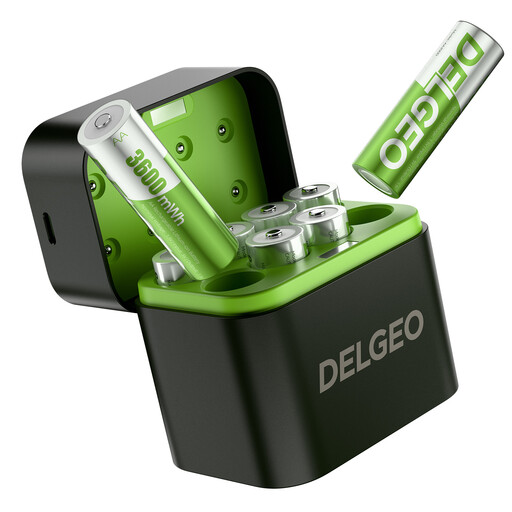 No image available
A set with batteries and a charger to consider if your radio supports rechargeable AA lithium batteries. Check the manual before using them.
The product name states a 1.5 V output and USB-C charging.
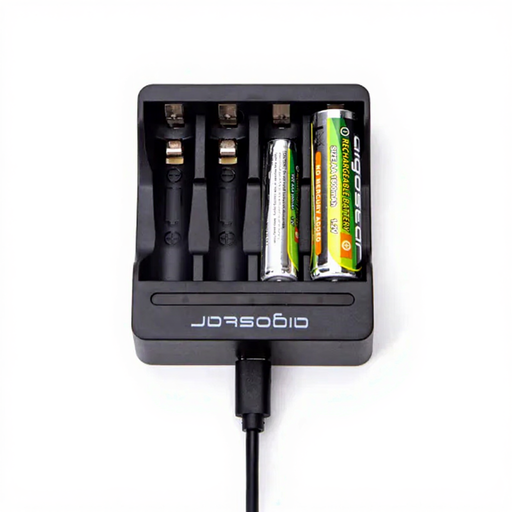 No image available
An option if you already have compatible rechargeable AA or AAA batteries. Check that the charger supports their chemistry.
The product information states that it can be used with rechargeable NiMH or NiCd batteries.
No. Don’t recharge non-rechargeable alkaline batteries. Check the wording on the battery and the chemistry supported by the charger. Also check your radio’s manual to see whether rechargeable AA batteries are suitable.
Place the charger in an open space where heat can escape, and follow the instructions. Brandweer Nederland advises leaving a charger uncovered so it can release heat.
Only compare charging times for batteries with the same capacity, the same number of cells and the same intended charge level. A stated time may apply to a partial charge and specific batteries.
According to the Rijksoverheid, used batteries must not go in general waste. You can take them to shops and supermarkets that sell batteries, among other places. You can take a discarded electrical appliance to a collection point or your local council’s recycling centre, among other places.