Products at Joybuy
This selection focuses on charging rechargeable AA cells via USB. Check that the battery chemistry permitted by your label maker matches the cells you want to use.
 No image available
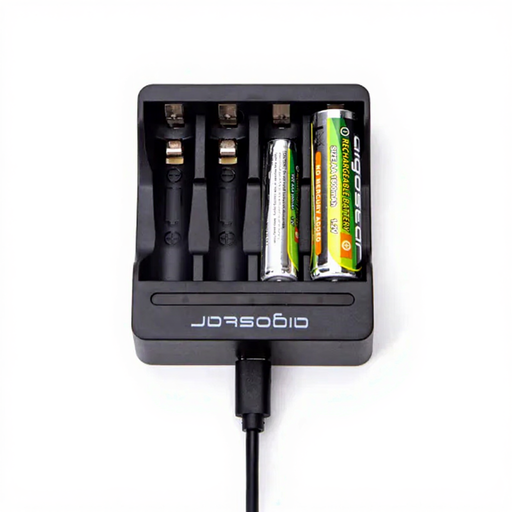
Aigostar Quick Battery Charger with Smart IC for 4 AA/AAA batteries, black
An option for charging rechargeable AA cells when you have a suitable USB power supply. First check that your label maker accepts the chemistry of the cells you’ve chosen.
The product information lists NiMH and NiCd cells, individual charging channels and a USB cable included. It also mentions DC 5V 1A, automatic shut-off once charging is complete and an LED charging indicator.
Joybuy
Frequently asked questions
Can I charge any AA battery in an AA charger?
No. According to their manufacturers, the IKEA STENKOL and VARTA LCD Smart Charger+ are designed for rechargeable NiMH cells. Check both the battery and your label maker’s manual to confirm which chemistries are permitted.
Can I leave the charger on while I sleep in my hotel room?
It’s best to charge while you’re awake and able to keep an eye on it. The Netherlands Fire Service advises placing the charger in an open space so heat can escape, and not using damaged cables or chargers. An automatic shut-off function doesn’t replace these precautions.
What can I do if the charger develops a fault after I buy it in the Netherlands?
If the product isn’t of satisfactory quality, contact the seller about your statutory rights. According to the Dutch government, there’s no fixed statutory guarantee period in the Netherlands; what you can expect depends on the product and the circumstances.
Which Dutch safety rules apply to a mains-powered charger?
The Netherlands Food and Consumer Product Safety Authority outlines the legal safety requirements for electrical appliances. The applicable rules depend, among other things, on the design and rated voltage; a general product description doesn’t prove that an individual item meets the requirements.
Where can I take worn-out rechargeable batteries?
Put them in a dedicated battery collection bin, for example at a shop or supermarket, rather than putting them in your general waste.


