
Vandaag of morgen in huis

Kwaliteit gegarandeerd

Welkomstaanbiedingen ontgrendelen: GRATIS bezorging | Tot 80% korting | Gratis 30 dagen JoyPlus-proefperiode
Download de app
An A5 notebook is large enough for detailed notes yet easy to carry to school, the office or the train. Even so, a purchase can disappoint. A beautiful cover tells you little about the paper, and a planner can prove awkward when you skip weeks.
So pay particular attention to these three common pitfalls:
A standard A5 size measures approximately 14.8 × 21 cm. That’s suitable for lecture notes, meeting notes, journaling and daily planning. Also look at the number of sheets and pages. 96 sheets usually means 192 pages, but product information may use either number.
Decide which layout you need:
An A5 book isn’t automatically a planner. Check whether it includes monthly and weekly overviews and whether the pages are pre-dated.
Paper of 100 g generally feels sturdier than 80 g paper. That can be pleasant with ballpoint pens, rollerball pens and fountain pens, but it’s no guarantee that ink will never bleed through. According to the product descriptions of the models mentioned, some books use wood-free, ivory-coloured offset paper.
Keep these practical points in mind:
A hardcover notebook is suitable when you often write on the go or use the book without a table. A fabric cover can offer a different look and texture, while a softcover is usually lighter.
The binding also makes a difference:
For heavy use, a combination of a sturdy cover, good binding, elastic closure and bookmark is often more practical than just a decorative design.
The selection below is based on verifiable data from the product descriptions, such as size, paper weight, number of pages and accessories.
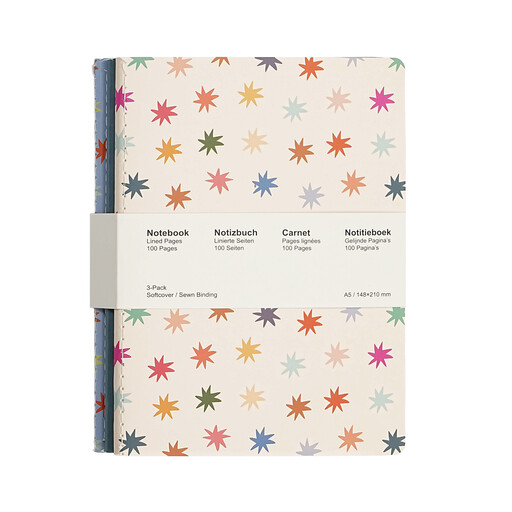
Why this fits the profile: Three A5 notebooks give you room to keep school, work and personal notes separate without filling one thick book straight away.
The product information states the A5 size, 80 g lined offset paper and a sewn binding. So the key basic details are clear upfront.
3 books per set; each book has 50 sheets and a lightweight softcover.
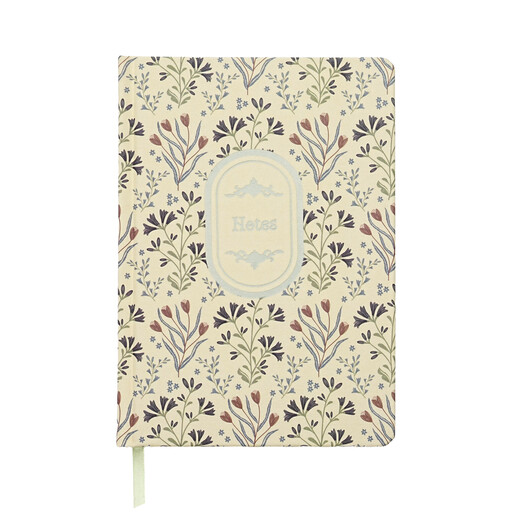
Why this fits the profile: For journaling, gifting and daily writing, both the appearance and a sturdy foundation matter.
The specifications explicitly mention A5, 100 g ivory paper, 96 sheets, a fabric hardcover, elastic closure and bookmark.
192 pages; choice of 10 designs; elastic closure and bookmark.
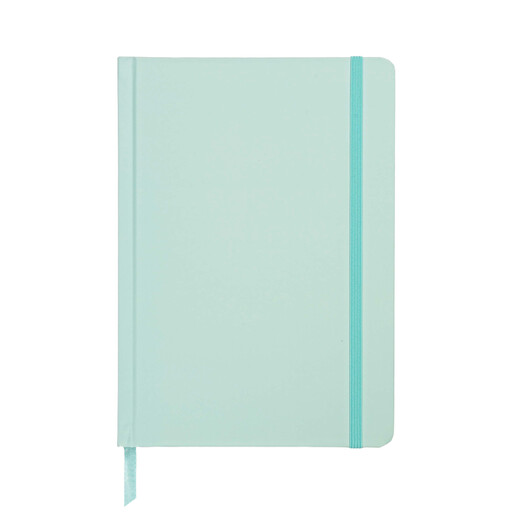
Why this fits the profile: This layout is suitable for users who plan, track goals and sometimes skip weeks.
Because the planner works without fixed dates, empty weeks don’t go to waste unnecessarily. The layout includes monthly and weekly overviews with note space.
224 pages; 100 g lined paper; hardcover, elastic closure and bookmark; designed for a flexible period of 18 months.
We’ve put together a full, up-to-date list of products that fully meet these strict selection criteria and comply with current European safety regulations.
Yes. The size offers enough space for lessons, meetings and to-do lists. For short messages or quick reminders, A6 or A7 is more compact. An A7 spiral notebook, such as the M&G Meeboki set, is mainly intended for pocket notes and not as a full A5 notebook.
The lifespan depends on the paper, binding, cover and use. A sturdy hardcover protects the contents better against pressure in a bag. Keep the book dry, avoid prolonged contact with moisture and don’t force the spine. With daily intensive writing, the number of sheets may be more important than a decorative cover.
That depends on your use. An 18-month undated planner can be practical when you don’t plan constantly, because you don’t skip unused dated pages. If you only make occasional notes, you’re probably better off with a lined notebook or a set of several notebooks.
