
Vandaag of morgen in huis

Kwaliteit gegarandeerd

Welkomstaanbiedingen ontgrendelen: GRATIS bezorging | Tot 80% korting | Gratis 30 dagen JoyPlus-proefperiode
Download de app
An A5 hardcover notebook is handy for school, the office, journaling and everyday writing. At roughly 14.8 × 21 cm, it fits in most bags, while a hard cover offers more protection than a flimsy softcover. Yet not every notebook that looks stylish on the outside still looks neat after a few months.
The biggest mistakes usually come down to three pitfalls:
Only looking at the cover design
A luxury notebook may have an attractive cover, but few pages or paper that doesn’t work well with your pen.
Misinterpreting the page count
“96 pages” in product information can sometimes mean 96 sheets. When used on both sides, that’s 192 pages. So always check whether they’re talking about sheets or pages.
Buying a planner with fixed dates when you want flexible planning
If you regularly skip weeks, an undated planner often gives you more value than a traditional diary with dates. Do check which layout it has: monthly, weekly, note space and any goal pages.
A5 is a practical middle size for an A5 notebook. It offers more writing space than A6, but is more compact than A4. For lectures, meetings and daily notes, that’s often a useful balance.
A hard cover protects the paper when the book is in a rucksack or laptop bag. Also pay attention to the material. A fabric hardcover, printed cardboard or PU finish feels and wears differently. Decorative foil, embossing and debossing add texture or shine, but don’t automatically make a cover waterproof. So keep a fabric cover dry and clean it with a soft, dry cloth.
Paper weight is expressed in grams per square metre, for example 80 g/m² or 100 g/m². Thicker paper generally feels sturdier, but the final writing comfort also depends on the finish and the type of ink.
For a lined notebook, lines are handy for notes and longer texts. If you write with a fountain pen, gel pen or dark markers, it’s wise to test a less visible page first. According to the product information for the Jubiluu models mentioned, the 100g paper is designed to limit ink bleed-through; this is a specification from the supplier and not a guarantee for every pen.
A notebook with an elastic closure stays shut better in a bag. A notebook with a bookmark ribbon makes it easier to find your last note or an important page. Also check whether the book lies flat when open. A sewn binding can be suitable for this, whereas a hardcover with a stiff spine may not open as wide.
For school and the office, a bookmark ribbon and elastic closure are practical details. For journaling or creative writing, multiple ribbons, extra note space or a pen loop can be useful. Don’t just look at the appearance, but also at how you use the book every day.
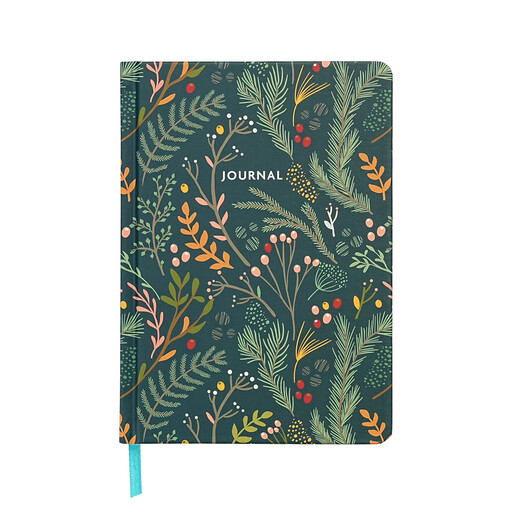
Why this fits the profile: This lined notebook combines an A5 size with 96 sheets of 100g cream offset paper. That makes it suitable for daily notes, schoolwork and simple journaling.
The product information lists not just the cover design, but also paper weight, size, bookmark ribbon and elastic closure.
A5 size, 100g lined paper, bookmark ribbon and elastic closure according to the product description.
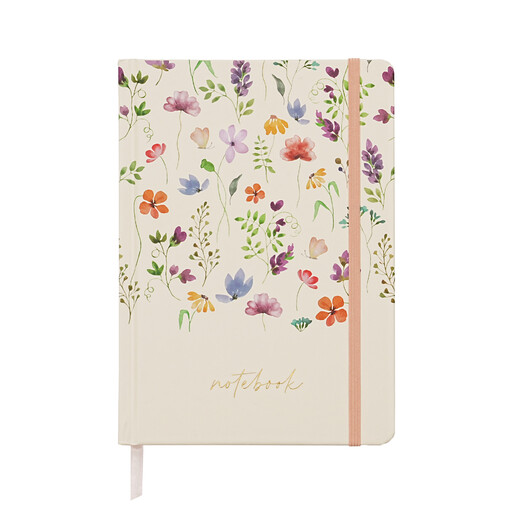
Why this fits the profile: A hardcover journal with a botanical design suits users who want to combine writing with style, for example as a work book, A5 diary or gift notebook.
The decorative cover is backed up with concrete information about 96 sheets, 100g offset paper, a bookmark ribbon and elastic closure.
A5 dimensions, 192 pages according to the stated specification, lined 100g paper and two practical accessories.
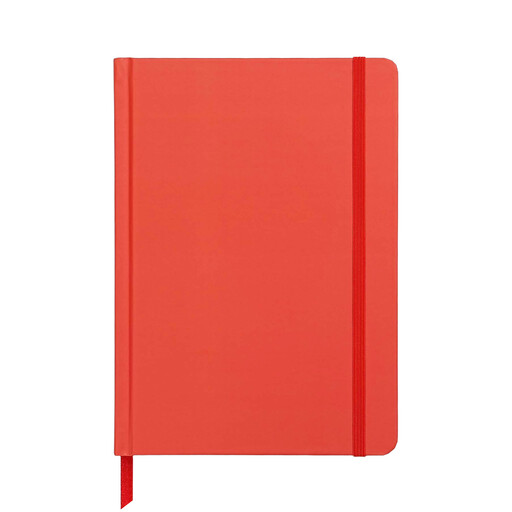
Why this fits the profile: This undated 18-month planner is designed for users who want to combine goal planning, study, work and daily organisation without being tied to pre-printed dates.
The planning starts whenever you want. The layout includes undated monthly and weekly overviews with space for notes.
224 pages according to the product information, 100g lined offset paper, hardcover, bookmark ribbon and elastic closure.
We’ve put together a full, up-to-date list of products that fully meet these strict selection criteria and current European safety regulations.
Yes. A5 offers enough space for meeting notes, lectures, to-do lists and journaling, while the size is usually easy to carry. Check the external dimensions beforehand, because a hardcover can be slightly larger than the paper size.
That depends on the cover, binding, paper quality and how often you use it. A hard cover protects against bending, but not against moisture. Keep the book dry and don’t place heavy objects on the spine or closure.
That depends on how you use it. An undated planner avoids blank pages when you skip weeks, so it can be practical for irregular planning. If you plan daily and need a fixed calendar layout, a regular diary may suit you better.
