
Vandaag of morgen in huis

Kwaliteit gegarandeerd

Welkomstaanbiedingen ontgrendelen: GRATIS bezorging | Tot 80% korting | Gratis 30 dagen JoyPlus-proefperiode
Download de app
An A5 hardcover notebook is handy for school, work, planning, journaling and jotting down ideas. At roughly 14.8 × 21 cm, it usually fits in a rucksack or work bag, while giving you more writing space than an A6 notebook.
However, a nice cover isn’t everything. Some product titles say A5, but the specifications actually list a smaller A6 size. Terms like “premium paper” are also used without making the paper weight clear. These checks will help you avoid a bad buy.
Always check the dimensions in the product specifications. An A5 notebook should measure approximately 148 × 210 mm. Some variants on the market are described as A5, but according to the product info they measure around 10.5 × 14.8 cm. That’s A6 and offers noticeably less room for notes.
An A6 notebook can be ideal for a jacket pocket or quick notes on the go. For schoolwork, meetings or extensive journaling, A5 is usually more practical.
Pay attention to the paper weight, expressed in grams per square metre. A notebook with 100 gsm offset paper is generally sturdier than a thin writing pad. According to the product description of the Jubiluu models, the cream or off-white paper is designed to minimise show-through during normal writing. That’s a claim from the brand’s product info; your experience may vary depending on the pen and amount of ink.
Do you use a fountain pen, brush pen or heavily saturated marker? Then don’t just look at the paper weight – also check user reviews and the returns policy.
A spiral notebook usually lies flat, making it comfortable during lectures or meetings. A hardcover with traditional binding looks more compact, but may not open as wide. Also check whether a notebook with an elastic closure keeps the book securely shut when there are loose papers or a pen inside.
An elastic band is practical, but can stretch over time with heavy use. An integrated bookmark ribbon is useful if you regularly switch between pages. With young children, also watch out for small parts like ribbons and elastics.
For an A5 notebook, it’s not just the size that matters, but also the contents. Note the difference between sheets and pages. 96 sheets usually give you 192 writable pages when both sides can be used. A product with 80 sheets is sometimes listed as 160 pages.
For an A5 diary or an extensive project, a larger number of pages is handy. For short notes, to-do lists or meeting notes, a thinner book can be easier to carry around.
A hard cover protects the paper better against pressure in a full bag than a flexible cover. On some Jubiluu models, the cover is made of printed and laminated material. Other variants use a PU leather cover, according to the product description. “PU leather” means polyurethane and is not full-grain leather.
Pay particular attention to the finish: a textured or laminate layer can help against light marks, but it’s best to clean the cover with a soft, dry cloth. Avoid prolonged contact with moisture.
A lined notebook helps with neat notes and is suitable for school, office and journaling. Cream lined paper gives a softer contrast than bright white paper. That’s a personal preference, not a universal quality guarantee.
Also check whether the lines suit your handwriting. Narrow lines give you more text per page, while wider lines can be more comfortable for large handwriting or quick notes.
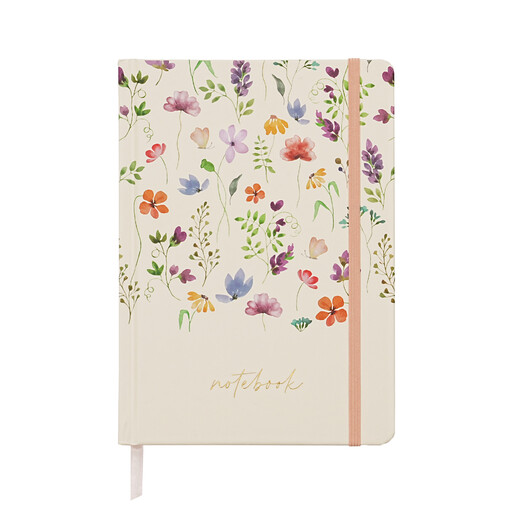
Why it fits the profile: This A5 notebook combines a hard cover with lined off-white paper and is suitable for school, office or daily notes.
The listed specifications state A5, 96 sheets and 100 gsm offset paper. This means you can check the size and paper weight before buying.
A5 size, hardcover, 96 sheets of 100 gsm offset paper, plus a ribbon bookmark and elastic closure.
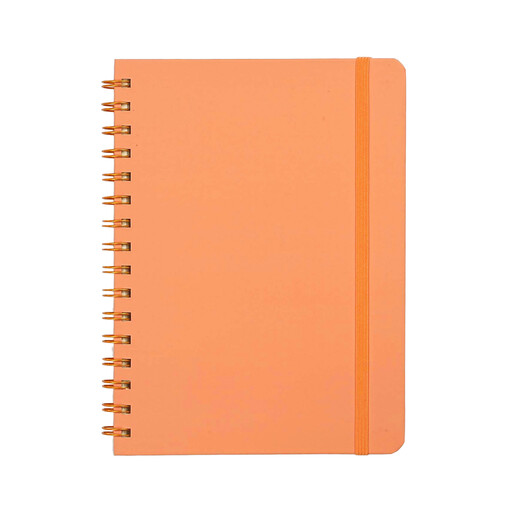
Why it fits the profile: The twin-wire spiral is ideal when you want to lay the book flat while writing, planning or studying.
The binding is clearly listed as twin-wire spiral. So you don’t have to rely on just the description “sturdy bound”.
A5 size, hard laminated cover, 96 sheets of cream lined 100 gsm offset paper and elastic closure.
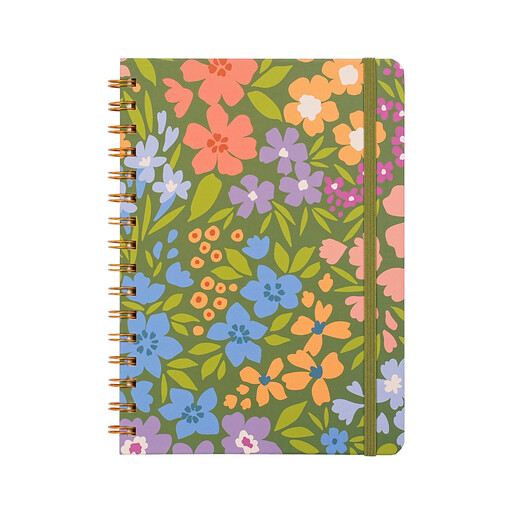
Why it fits the profile: The combination of A5 size, spiral binding and an elastic closure suits heavy use at school, in the office or during journaling.
The product information mentions both the size, the binding and the paper weight. This makes it easier to compare with other models.
Twin-wire spiral, hardcover, 96 sheets of cream lined 100 gsm offset paper and elastic closure.
We’ve put together a full, up-to-date list of products that fully meet these strict selection criteria and current European safety regulations.
Yes. The size offers plenty of room for notes, schedules and meeting minutes. Check whether the binding can lie flat and whether the weight suits how you’ll carry the book every day.
The lifespan depends on use, paper quality, binding and storage. A hard cover protects the inside pages from pressure, but avoid moisture and don’t pull hard on the elastic or spiral. Store the book in a dry place and clean the cover with a soft cloth.
That varies depending on the pen, ink and writing speed. According to the product description, 100 gsm offset paper is designed to minimise show-through, but this isn’t a guarantee for every fountain pen. If you write with wet ink, it’s a good idea to test a page first or check the returns policy.
