
Vandaag of morgen in huis

Kwaliteit gegarandeerd

Welkomstaanbiedingen ontgrendelen: GRATIS bezorging | Tot 80% korting | Gratis 30 dagen JoyPlus-proefperiode
Download de app
Loose invoices, post and project folders can quickly pile up. An A4 wall-mounted document holder can free up desk space and keep your documents organised and in view. But not every A4 wall file holder is equally practical. The wrong layout, unsuitable fixings or an opening that’s too small can mean your holder simply moves the clutter elsewhere.
As a Joybuy Product Recommendation Officer, I’ve picked out the key product specifications and practical points to help you compare your options.
More compartments don’t automatically mean more convenience. Large folders or thick bundles of documents can be awkward to remove from a narrow wall holder. So check not just the number of compartments, but also the internal width, compartment height and depth.
A single-compartment holder, for example, works well for incoming post or one current project. For a home office with several categories to organise, six or ten compartments may be more practical.
A metal wall organiser may be sturdy, but the fixings also play a part in keeping the whole unit stable. Plasterboard, brick and wooden panels may not all require the same type of wall plug or screw. Check that the fixings supplied are suitable for your wall, too.
Fit your wall-mounted document holder in a fixed, level spot, and allow for the weight of paper, folders and any accessories. The product descriptions recommend checking the fixings regularly and not exceeding the stated load capacity.
Terms such as “durable”, “rust-resistant” or “high quality” are only useful when backed up by details you can check. The models mentioned here, for example, are listed as metal with a powder-coated finish. According to the product descriptions, this finish is intended to protect the surface from oxidation and rust. It doesn’t guarantee that the holder is suitable for use in a damp room.
So look at the material, finish, dimensions and fitting instructions rather than relying on promotional claims alone.
A4 documents measure approximately 21 x 29,7 cm. So your wall holder needs enough room for loose sheets, letters and perhaps a slim folder. Consider the differences between:
A product with label holders can make it easier to identify each compartment. Just check that the compartment height suits the type of documents you want to store.
According to their product descriptions, the models below are made from metal with a powder-coated finish. This gives them a different look and level of upkeep from a plastic A4 letter holder. Metal may be a good choice if you’re looking for a sturdy finish and a stable wall-mounted solution.
According to the product information, wiping the holder with a dry cloth is generally sufficient for maintenance. It’s best not to place a metal wall holder somewhere it will be exposed to moisture all the time. A powder-coated finish is not a substitute for moisture-resistant storage.
Measure the available wall space beforehand. A tall wall holder with ten tiers needs enough vertical space and must be securely fixed. A compact wall rack for an office or home office may fit better above a desk or beside a printer.
Use labels for regular categories and avoid overfilling the compartments. An open wall holder is not the same as a lockable filing cabinet for confidential documents. If you want to move documents around, a mobile filing cabinet with drawers and a lock may be a better option.
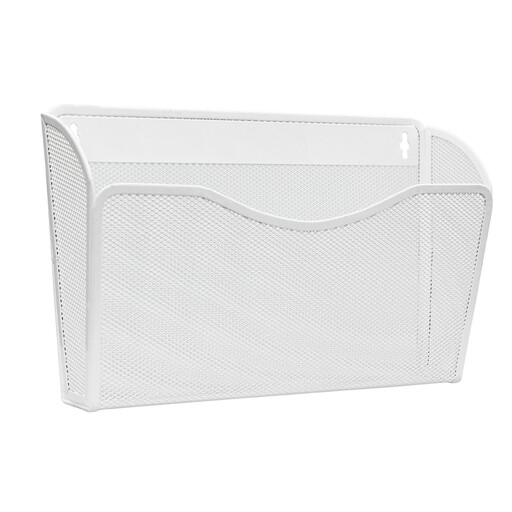
Why it suits this profile: A single compartment is a good choice if you want to start by organising one type of document, such as post or current invoices. The model measures 35 x 9 x 21,5 cm and is designed for A4 documents.
You don’t pay for compartments you won’t use. Its dimensions and single-compartment design keep things simple and organised.
Metal construction, powder-coated finish, mounting screws included and the option to place multiple units separately.
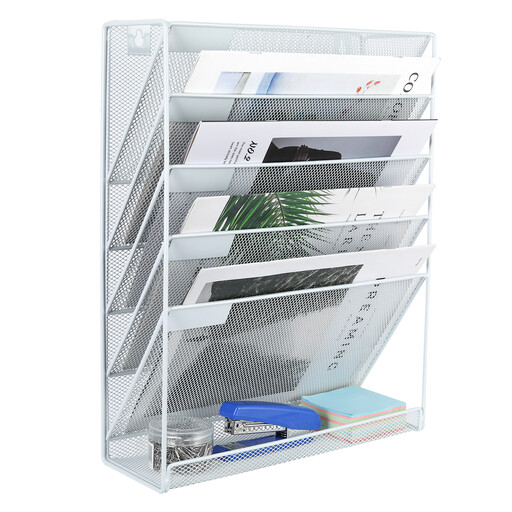
Why it suits this profile: With six compartments and label holders, this model is ideal for a home office, study area or small office where you need several categories of documents close to hand.
At 40,5 cm tall, it’s more manageable than a very tall organiser. According to the product description, it can be wall-mounted or used free-standing.
Six A4 compartments, integrated label holders, a bottom drawer for small items and a metal body with a powder-coated finish.
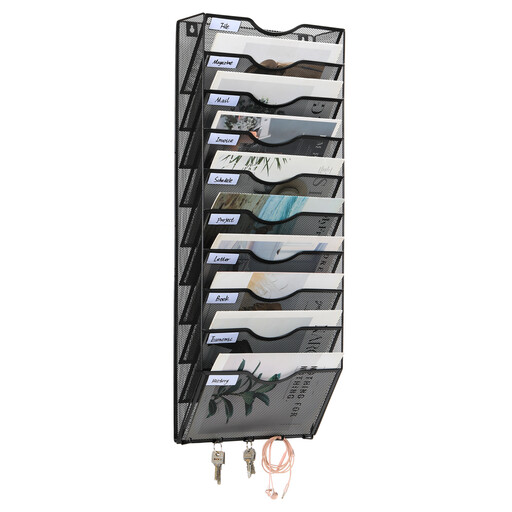
Why it suits this profile: This tall wall organiser is designed for people who deal with a lot of paperwork every day. Its ten compartments are intended for documents, files and magazines, while the five hooks provide extra space for small items.
Individual label holders help you keep track of the many compartments. Just check in advance that you have room for its 81,5 cm height on your wall.
Ten metal compartments, five hooks, label holders, a curved design for easy access and mounting screws included.
An open wall-mounted file holder is suitable for documents you need regularly. For sensitive paperwork, long-term storage or larger quantities, a lockable option may make more sense. A mobile filing cabinet with four drawers, for example, offers a different layout. According to the product description, it has a steel construction, castors, a lock and drawers with a stated load capacity of 15 kg each.
Want to keep boxes, ring binders or seasonal documents out of sight? Take a look at the options in A4 archive boxes. Choose a solution based on access, privacy and the space you have available, not just the number of compartments.
We’ve put together a complete, up-to-date list of products that meet these strict selection criteria and the applicable European safety regulations.
Use wall plugs and screws suitable for your type of plasterboard wall. For a heavier metal organiser, it’s often better to fix it to a stud or a sturdy panel behind the plasterboard. After fitting, check that the holder doesn’t wobble and spread documents evenly across the compartments.
Its lifespan depends on how it’s fitted, how much weight it holds, how it’s used and whether it’s exposed to moisture. According to the product descriptions, the models mentioned have a metal frame with a powder-coated finish. Wiping the holder down regularly, avoiding overloading it and tightening any loose screws promptly can help keep it in good condition.
The total cost includes the purchase price, any additional wall plugs and the wall fixings you already have available. A single compartment is a simple place to start. Holders with more compartments generally cost more, but may work out cheaper if you’d otherwise need several separate holders. So compare the price per usable compartment and check which fixings are included.
