
Vandaag of morgen in huis

Kwaliteit gegarandeerd

Welkomstaanbiedingen ontgrendelen: GRATIS bezorging | Tot 80% korting | Gratis 30 dagen JoyPlus-proefperiode
Download de app
Loose invoices, post and project folders can quickly take over your desk. An A4 wall file holder makes use of vertical space, but not every model suits every wall, document workflow or workspace. If you only look at the number of compartments or an attractive product photo, you could later find yourself dealing with unstable mounting, openings that are too narrow or an awkward layout.
This buying guide helps home workers, students, office workers and small businesses choose an A4 wall-mounted document holder based on verifiable specifications.
A 10-compartment document holder offers plenty of vertical storage, but also takes up around 81,5 cm of wall height. So check how much space you have available beforehand and think about which categories you actually use. For example:
For a small workspace, a 3-compartment document holder is often easier to keep organised than a large model with unused compartments.
A4 paper measures 21 × 29,7 cm. However, ring binders, plastic wallets and thicker folders may need more room. Check the internal width, depth and orientation of each compartment. A landscape model is suitable for documents inserted horizontally, while a classic wall-mounted file holder usually accommodates documents in portrait orientation.
With a mesh metal document holder, you can see what’s inside at a glance, but loose papers may be less protected from dust or draughts. That’s usually practical for post you use every day; for confidential documents, a lockable storage solution may be more suitable.
A wall-mounted letter holder needs to be securely fixed in place. The screws supplied aren’t automatically suitable for every surface. Plasterboard, concrete, brick and a wooden door each require suitable wall plugs or fixings.
Before installation, check:
The product descriptions for the models listed recommend secure wall mounting and warn against exceeding the recommended load. A specific maximum load isn’t stated for every model. So fill the compartments gradually and avoid overloading them.
A metal document holder with a powder-coated finish can usually be wiped clean with a dry or slightly damp cloth. According to the product descriptions, the Senhoglb models have a coated metal finish and their production process minimises burrs. This describes the construction, but doesn’t guarantee an unlimited lifespan or suitability for damp spaces.
Mesh is useful in an office, hallway or home office because you can see what’s inside. It’s best not to leave a metal wall holder in a very damp spot for long periods. Check the finish regularly, especially if it’s mounted in a garage, shed or vehicle.
Choose a layout that suits your workflow:
The stated slot height for the Senhoglb 6-compartment document holder is 5,5 cm. According to the product information, the 10-compartment model has a slot height of 7,5 cm. Check that your files and documents will actually fit; an A4 label doesn’t mean every thick folder is suitable.
An office wall organiser frees up desk space, but requires drilling or suitable fixings. A desk organiser is quicker to set up and can be handy in a rented home or student room. For example, the 2-tier EasyPAG mesh tray has two A4 trays and a top holder for stationery. If you need your documents every day, a desk-based solution may be more practical than a permanent wall holder.
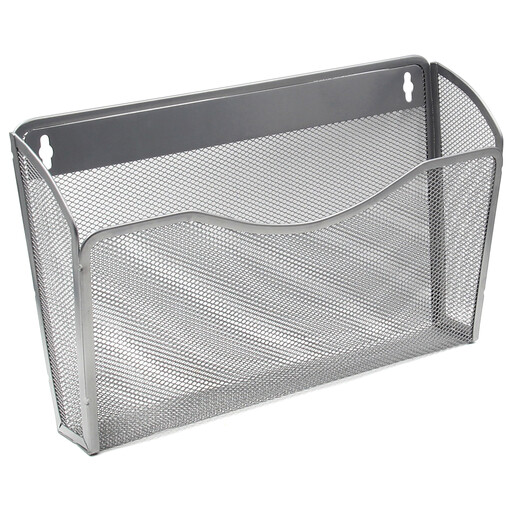
Why it suits this type of user: A single compartment is easy to keep organised and takes up little space. Use it for incoming post, a current project or documents beside your desk.
You won’t end up buying a large holder with unused compartments. The single landscape pocket measures 35 × 9 × 21,5 cm according to the product details and is designed for A4 documents.
Metal mesh construction, wall mounting with screws included and a weight of around 0,42 kg.
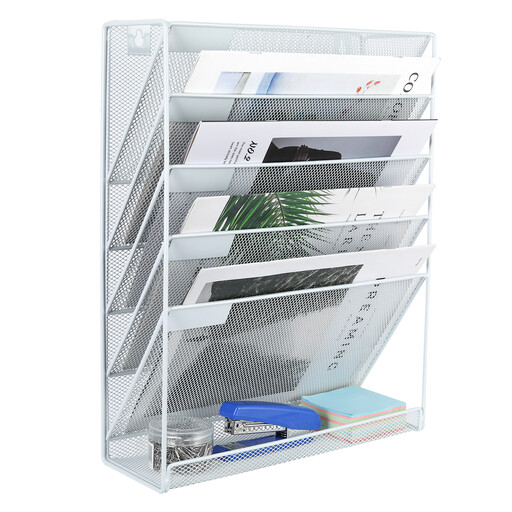
Why it suits this type of user: Ideal for keeping several paperwork categories organised, and for anyone who wants small office supplies close to hand.
The six labelled compartments make it easy to see your categories. According to the product information, the model can be wall-mounted or used freestanding on a flat desk.
Six compartments, a bottom drawer for small items and dimensions of 32,5 × 10,5 × 40,5 cm.
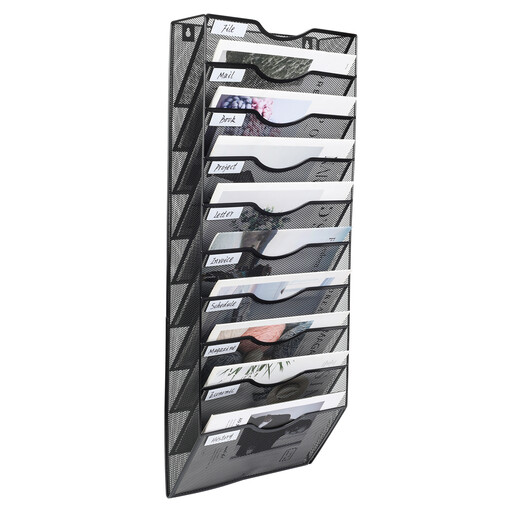
Why it suits this type of user: For offices, administrative professionals or households dealing with a high daily volume of post and paperwork.
The compartments have label plates, so a large filing system doesn’t have to mean rummaging around to find things. Just remember to check that you have around 81,5 cm of wall height available.
Ten A4 compartments, a powder-coated metal frame and a stated weight of 2,64 kg excluding contents.
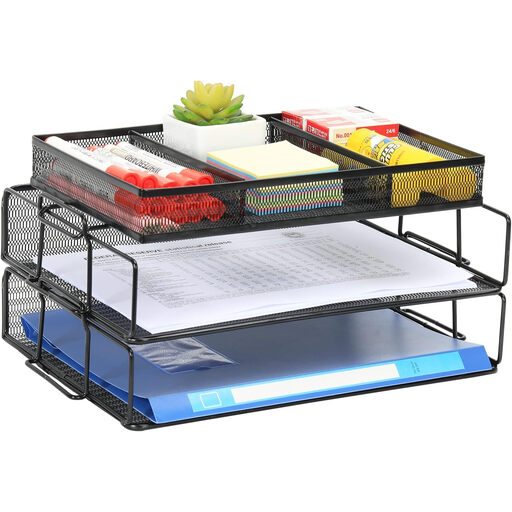
Why it suits this type of user: For anyone who prefers to keep documents close to hand on their desk rather than drilling into a wall.
This model doesn’t need installing and stands on a flat surface. That means no risk of using the wrong wall plugs or choosing an unsuitable wall.
Two A4 trays, a top holder for stationery and a stackable design measuring 34 × 24,5 × 17,8 cm.
We’ve put together a complete, up-to-date list of products that meet these strict selection criteria and the applicable European safety regulations.
A wall holder only works well if its layout stays practical. Use one clear category per compartment and place the documents you need most often at eye level. Labels stop “miscellaneous” becoming a catch-all where everything disappears.
A practical layout for home or the office is:
Only include documents you use regularly. For long-term storage, an archive folder or lockable cabinet is a better option.
Use plugs designed specifically for plasterboard and check for pipes or cables before drilling. For a heavier, fully loaded model, it’s safer to fix it to a stud or sturdy supporting structure behind the plasterboard. Follow the installation instructions and test the holder first with a small amount of paper.
Its lifespan depends on how it’s mounted and used, as well as the moisture levels and load. A powder-coated metal model may be easy to clean, but check it regularly for damage, loose screws and rust. The product information doesn’t specify a fixed lifespan or maximum load for every model.
An open mesh file holder gives you quick access, but its contents remain visible. For payslips, contracts or other sensitive documents, use a lockable cabinet or drawer instead. An open wall holder is most practical for documents you’re processing temporarily and don’t need to store securely for a long time.
