
Vandaag of morgen in huis

Kwaliteit gegarandeerd

Welkomstaanbiedingen ontgrendelen: GRATIS bezorging | Tot 80% korting | Gratis 30 dagen JoyPlus-proefperiode
Download de app
Loose invoices, contracts, meeting minutes and post can quickly pile up. An A4 document organiser for the office helps you sort and find documents, but not every model is suitable for every workspace. A compact desk organiser, for example, works differently from an A4 wall document holder or a mobile filing cabinet.
If you only consider the appearance or the number of compartments, you may run into practical problems later. Pay particular attention to the mounting method, dimensions and how you plan to use the organiser every day.
An organiser with lots of compartments may seem convenient, but also check the height and depth of each compartment. An A4 document measures 21 × 29.7 cm. Folders, ring binders and magazines take up more space than a few loose sheets. A narrow wall file holder may be suitable for post and thin documents, but less practical for full files.
A metal file holder may feel sturdy, but its load-bearing capacity also depends on the wall, wall plugs and screws. Plasterboard, brick and concrete do not always require the same mounting materials. Use suitable wall anchors and check after installation that the holder is not tilting. When mounting it on a door, you must also leave enough room for the door to open fully.
Without a set system, an office letter organiser becomes a dumping ground. Use clear categories such as “incoming”, “to be signed”, “current projects” and “to archive”. Label plates or labels make a big difference when several employees use the same documents.
First decide how many documents you want to store each day. For a small home-working space, a 1- or 2-compartment document organiser may be sufficient. If you have several projects or lots of post, look for three to six tiers. A model with ten compartments provides plenty of vertical storage, but requires a suitable clear wall with sufficient height.
Pay attention to the difference between:
Measure the available space before ordering. Check not only the width, but also the depth and height. A wall holder measuring approximately 32 cm wide and 40 cm high can make efficient use of vertical space. A desk organiser measuring around 35 × 30 cm, on the other hand, takes up part of your work surface but is immediately accessible.
When wall-mounting, take the following into account:
Many of the office storage products in this selection are made from powder-coated metal. According to the product descriptions, this finish is intended to protect the surface against everyday use and oxidation. This is a product specification, not a guarantee of unlimited service life. Ideally, do not place metal organisers somewhere they will be continually exposed to water or high humidity.
A soft, dry cloth is generally sufficient for maintenance. Avoid aggressive cleaning products and dry a metal holder thoroughly after wiping it with a damp cloth.
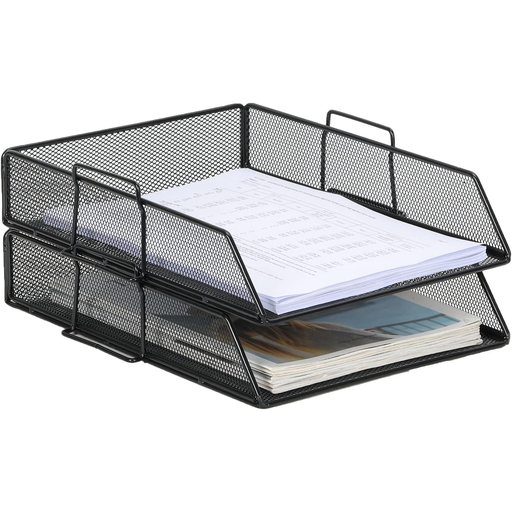
Why it suits this profile: This stackable desk organiser is ideal for a compact workspace and provides two levels for documents, post and folders. The handle makes it easy to move.
The layout is clear without requiring a large section of wall or complicated installation. By stacking multiple trays, you can increase the capacity later.
Metal construction, dimensions of 25 × 33.5 × 13.5 cm and a stackable design with handle.
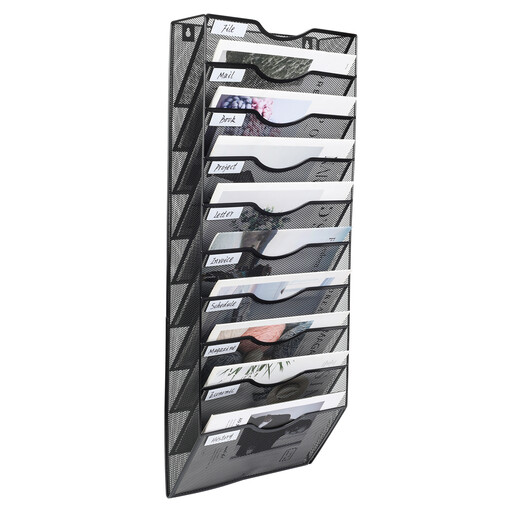
Why it suits this profile: If you want to manage many categories separately, this wall file holder provides ten A4 compartments. The label plates help you maintain a consistent system for invoices, post and current files.
The large number of compartments prevents different document streams from ending up in one untidy pile. However, check beforehand that you have a wall with 81.5 cm of available height.
Ten tiers, powder-coated metal, label plates and a design for A4 documents with a total height of 81.5 cm.
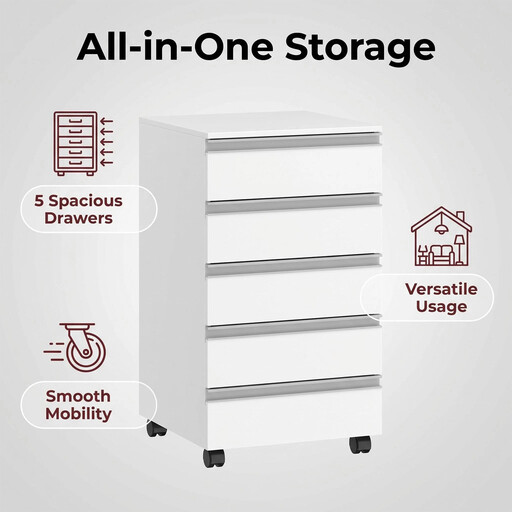
Why it suits this profile: This mobile filing cabinet is designed for offices, studios and workshops where documents, materials and accessories need to be moved regularly.
The five drawers distribute larger quantities of material more effectively than open compartments. The cabinet stands on castors and has lockable front wheels for stability in the workplace.
Five drawers, dimensions of approximately 40.5 × 40.5 × 65.5 cm, castors and a total load capacity of 50 kg specified by the manufacturer.
We have compiled a complete, up-to-date list of products that fully meet these strict selection criteria and the applicable European safety regulations.
Use a consistent order that fits your workflow. Keep documents that still require action within easy reach, and move completed items to a separate compartment or drawer. For a post organiser, labels such as “incoming”, “outgoing” and “forward” work well. Students can choose compartments by subject, while small businesses can sort documents by customer, project or status.
Check the organiser regularly. Remove outdated post, archive completed files and redistribute stacks that have become too heavy. This keeps the capacity usable and prevents unnecessary strain on compartments, drawers and mounting points.
Choose a sturdy, flat wall and use wall plugs suited to the wall material. Check that the screws are fully tightened and distribute documents evenly across the compartments. A special wall anchor may be needed for a plasterboard wall. Always follow the manufacturer’s installation instructions.
Its lifespan depends on the load, installation, moisture and maintenance. A powder coating can protect the surface against everyday use, but prolonged exposure to moisture can still cause rust or damage. Regularly check the screws, edges and condition of the coating.
That depends on your available space and the capacity you need. A desk organiser is easy to position and suitable for a limited number of documents. A wall file holder uses vertical space and can accommodate several categories, but requires secure installation. For large quantities of documents or materials, a mobile filing cabinet may be more practical.
