
Vandaag of morgen in huis

Kwaliteit gegarandeerd

Welkomstaanbiedingen ontgrendelen: GRATIS bezorging | Tot 80% korting | Gratis 30 dagen JoyPlus-proefperiode
Download de app
Loose invoices, project folders and post can quickly pile up. An A4 document organiser for the office can solve the problem, but only if its layout, dimensions and fixing method suit your workspace. A compact desk organiser is ideal for everyday documents, while a wall file organiser or mobile filing cabinet offers more capacity.
However, the product description doesn’t always tell the whole story. Before you buy, watch out for these common pitfalls.
A4 paper measures 21 × 29,7 cm. With sleeves, dividers, ring binders or a pile of post, you’ll need extra space. So don’t just check the “A4” label: look at the internal width, compartment height and depth too. In practice, a document holder with an opening that’s barely wider than A4 can be awkward to use.
A document organiser with lots of compartments may seem appealing, but without labels it can be hard to find what you need. Two or three compartments are often enough for incoming and outgoing post. For invoices, files and projects, an A4 file holder with label plates may be more practical.
A metal letter tray on a desk needs to sit securely. A wall file holder must be fitted to a sturdy surface using suitable fixings. If you have plasterboard, brick or a wooden wall, check that the supplied screws and wall plugs are suitable. A full wall file organiser will also put more weight on the fixings.
First, measure the available space on your desk, on the wall or beneath the worktop. Remember to leave room to pull out drawers or take documents from a compartment.
Also check the stated weight capacity. Don’t exceed the product limit, even if the metal frame feels sturdy.
Powder-coated metal is mentioned in the product descriptions for several organisers. According to the relevant brand descriptions, this finish is designed to help prevent oxidation and rust. This doesn’t guarantee that the product is suitable for a damp room: ideally, keep paper storage in a dry place and clean the surface with a soft cloth.
Wood and manufactured wood can create a warmer look, but check whether assembly is required and how much weight each compartment can hold. A compact home office storage solution may be enough for working from home; for an administrative setting, a sturdy drawer cabinet is more practical.
Look for handles, pull-out drawers, label holders and details on how the product is fitted. A wall holder needs to be securely attached and checked regularly. A mobile cabinet should sit steadily when its wheels are locked.
The features listed below are based on the product information provided. Claims made by brands about durability, rust resistance or suitability for everyday use are presented as product descriptions, not as independent guarantees.
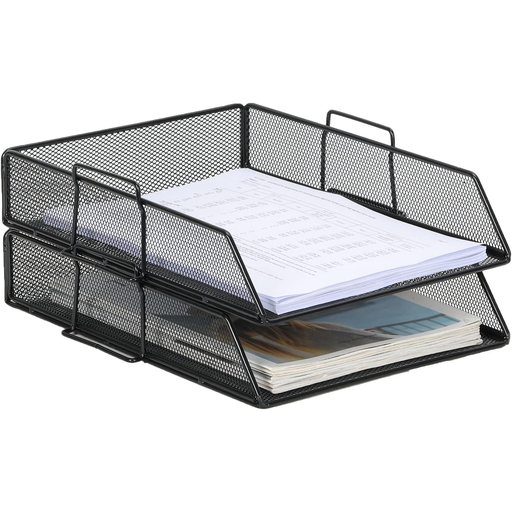
Why it suits this user: This compact document organiser has two A4 drawers and is designed for use on a desk. It measures 25 × 33,5 × 13,5 cm and the tray has a handle.
The two separate compartments make it easy to organise documents, for example into active and archived files. The stated dimensions let you check in advance whether it will fit on your desk.
Metal construction, stackable design and a handle, according to the product information.
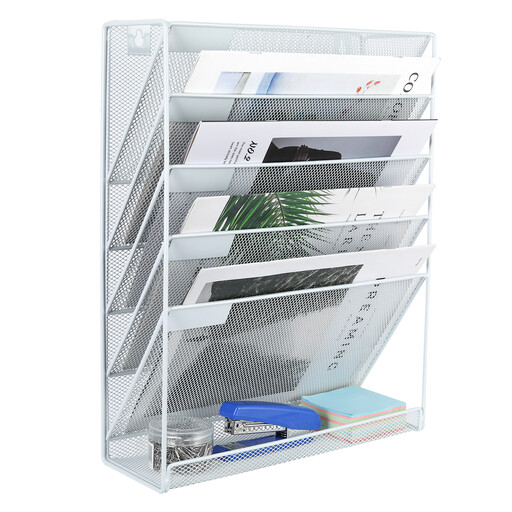
Why it suits this user: This wall file organiser is ideal if you want to keep several document streams separate without adding more office furniture. According to the product information, it can be mounted on the wall or used freestanding.
The six compartments have label plates, so you can clearly mark each category. Before fitting it, check that the wall and fixings can support the total weight.
Six A4 compartments, label plates and a separate lower compartment for small office supplies.
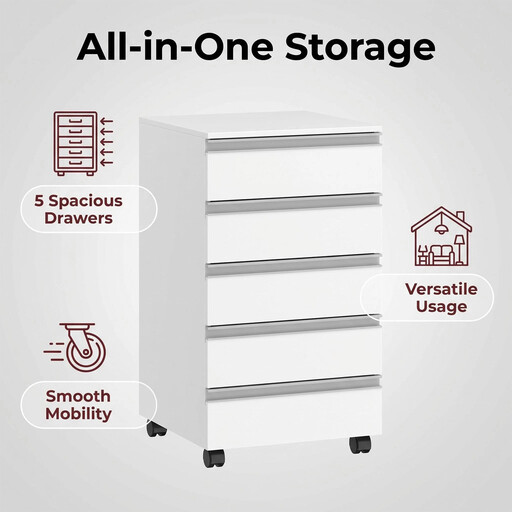
Why it suits this user: This mobile cabinet with five drawers is well suited to offices, studios and home offices where you need to store tools, materials or office equipment as well as documents.
The five drawers help keep documents and materials from ending up together in one open compartment. The product description states that the front wheels have locks.
Five drawers, dimensions of approximately 40,5 × 40,5 × 65,5 cm and a stated total weight capacity of 50 kg.
We’ve put together a complete, up-to-date list of products that meet these strict selection criteria and the applicable European safety regulations.
First, check the type of wall and use suitable wall plugs and screws. Fit the holder flat against the wall and check that all fixing points are secure. Then distribute the documents evenly. Always follow the product’s fitting and load instructions.
Its lifespan depends on the material, load, moisture and how often it’s used. According to the product description, a powder-coated metal organiser may be suitable for regular office use, but avoid overloading it or exposing it to moisture. Check the screws, drawers and stacking joints regularly.
The price depends mainly on capacity, material, fitting method and mobility. A simple metal letter tray is generally less substantial than a six-compartment wall holder or a mobile filing cabinet. So compare more than just the purchase price: consider the number of compartments and how much space you’ll save.
