
Vandaag of morgen in huis

Kwaliteit gegarandeerd

Welkomstaanbiedingen ontgrendelen: GRATIS bezorging | Tot 80% korting | Gratis 30 dagen JoyPlus-proefperiode
Download de app
Loose invoices, client documents, post and notes can quickly pile up. An A4 document organiser for the office can solve that problem, but only if the size, layout and mounting method suit your workspace. A poorly chosen organiser can take up space, sag, or make documents difficult to reach.
This buying guide helps individuals, home workers, students and office professionals compare products with confidence. You’ll learn what to look for in an A4 document holder, metal desk organiser, wall file holder A4 and document tray for the office.
More compartments don’t automatically mean a better layout. A wall file holder with six sections is handy for post, invoices and current files, but can be impractical if you mainly store thick folders. So, don’t just check the number of levels – also check the height, depth and internal width.
A standard A4 sheet is 21 × 29.7 cm. An organiser also needs room for sleeves, dividers, ring binder sheets or a thin folder. A compartment with an internal width of around 31.5 cm, for example, is suitable for many A4 documents, but that doesn’t automatically mean every large ring binder will fit.
A wall-mounted document holder must be securely fixed to the wall or door. The screws supplied may not be sufficient for every surface. Plasterboard, concrete or brick may require different wall plugs. Also check that the organiser isn’t overloaded with folders and paper.
Choose a layout based on your daily workflow:
A horizontal wall file holder A4 takes up relatively little depth. A desk organiser with multiple drawers or trays requires more desk space, but offers quick access without any mounting.
A metal desk organiser is generally rigid and suitable for daily use. The models mentioned feature a powder coating. According to the product descriptions, this finish is intended to help protect the metal against oxidation and rust. That is not a guarantee that the product will never rust: keep it dry and use a soft cloth for maintenance.
Mesh metal makes the contents visible and gives an industrial look. When installing, do check the edges and fixing points. The product information states that the edges are finished to minimise sharp burrs, but careful installation remains important.
Consider the following points before ordering:
For a home office, a wall-mounted model is often space-saving. In a shared office space, a freestanding post organiser or A4 tray can be more flexible, as you can move it later.
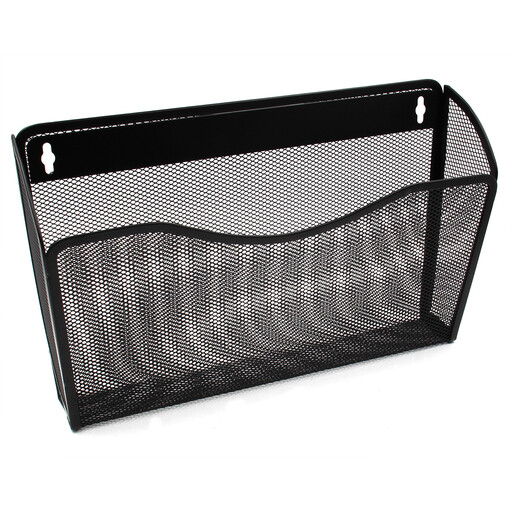
Why this fits the profile: A single compartment is clear and simple for anyone starting out with office organisation, and who only wants to gather incoming post or current A4 documents.
You don’t pay for unused compartments, and you can see at a glance that it’s a wall-mounted model for one category of documents.
A4 size, metal mesh construction, powder coating and supplied mounting screws.

Why this fits the profile: This freestanding organiser suits a workspace where multiple A4 categories need to stay within easy reach without wall mounting.
The four levels prevent documents from forming one tall stack. Rubber feet also help protect the desk surface.
Four pull-out A4 trays, handles, metal construction and dimensions of 35.5 × 29.5 × 32 cm.
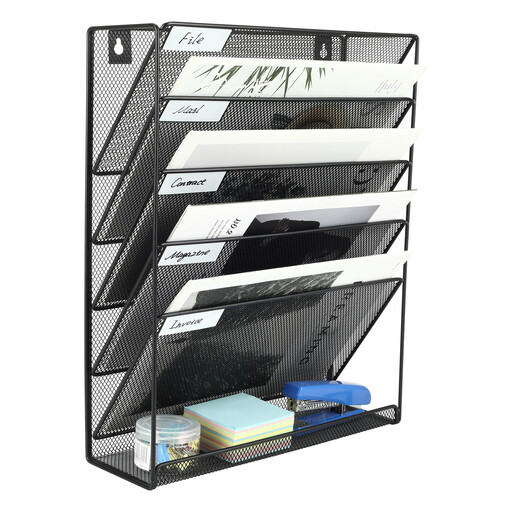
Why this fits the profile: Six levels suit a busy office, admin corner or home office with multiple projects and post streams.
The compartments allow for fixed categories, so incoming post, invoices and current files don’t get mixed up.
Six wall-mounted levels, an internal width of 315 mm and a compact size of 32.5 × 10.5 × 40.5 cm.
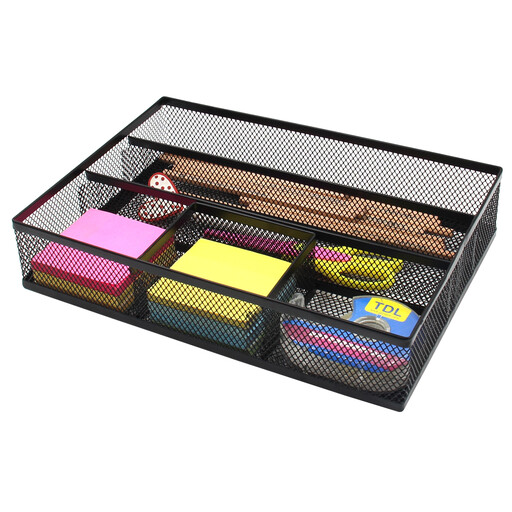
Why this fits the profile: This drawer organiser is designed for stationery and small accessories on a compact desk or inside a desk drawer.
The five separate compartments prevent pens, paperclips and notepads from disappearing under documents.
Three small and two long compartments, compact dimensions of 30 × 21.5 × 7 cm and non-slip feet.
We’ve put together a full, up-to-date list of products that fully meet these strict selection criteria and current European safety regulations.
An organiser works better when each compartment has a fixed purpose. For example, use:
A label plate, as found on some wall holders, helps you quickly identify the contents. For important files, you might also use a separate file holder or presentation folder. An A4 folder is not the same as an organiser: the former protects and transports documents, while the latter mainly provides visible storage and access.
First, check where the wall offers enough support. Use suitable wall plugs and screws for plasterboard, or fix the holder to a stud. Only hang the organiser after you’ve checked that the structure can support the weight of the holder and the documents.
The lifespan depends on the load, installation and moisture. A powder coating can help protect the surface, but prolonged exposure to water or a damp environment can cause damage. Clean the organiser with a dry cloth and regularly check the fixings and rubber feet.
Not every model is suitable for this. Compare the depth, internal width and opening with the dimensions of your folders. For loose A4 sheets, magazines and thin files, a wall compartment is often sufficient. For multiple ring binders, a wider, freestanding tray or cabinet is more practical.
