
Vandaag of morgen in huis

Kwaliteit gegarandeerd

Welkomstaanbiedingen ontgrendelen: GRATIS bezorging | Tot 80% korting | Gratis 30 dagen JoyPlus-proefperiode
Download de app
Loose invoices, study papers and post can pile up quickly. An A4 document organiser can solve that, but not every design suits every workspace. A wall holder saves desk space, while an A4 letter tray is more practical when you regularly sort or move documents.
Pay particular attention to the following common pitfalls before you order:
Don't just look at the word "A4" in the product title. Check the width, depth and height of each compartment. A wall holder around 35 cm wide and 9 cm deep is suitable for many loose A4 documents, letters and magazines. For thicker files or ring binders, a desk organiser with roomier, pull-out trays is often more practical.
Also consider the orientation. A landscape A4 document holder is handy for post, invoices and forms. If you want to store documents upright, you may need a different model to a landscape compartment.
A metal document holder or mesh file tray is generally suitable for daily office and home use when you want an open, clearly visible layout. In the product information for the Senhoglb models, metal with a powder coating is mentioned. According to the product description, this finish is intended to prevent oxidation and rust. That is not a guarantee for use in damp spaces: keep the product dry and clean it with a dry or slightly damp cloth.
Wooden desk organisers have a different look. The vidaXL and Vida models are, according to the product information, made from engineered wood and offer compartments for documents and small stationery items. When assembling, check that all parts are securely fastened.
A wall rack for post and papers must be firmly attached to a suitable wall or door. Before mounting, check:
For a desk version, non-slip feet are useful to reduce sliding and scratching. The Senhoglb trays mentioned have rubber feet according to the product description. Do not overload compartments when no specific weight capacity is given.
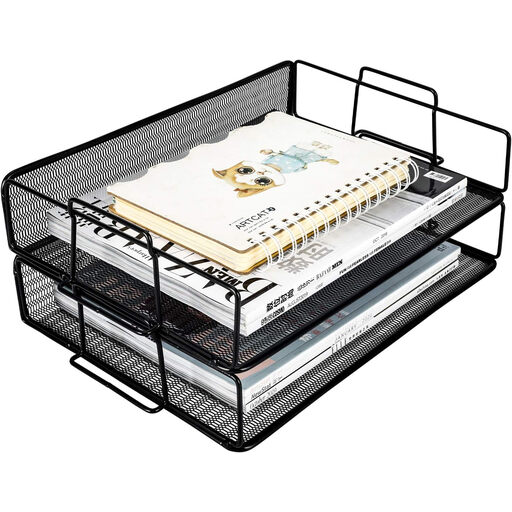
Why this fits the profile: Two stackable A4 compartments offer a clear starting point for a home office, student room or small admin setup.
The open trays make the contents visible and the stackable design uses vertical space. Place the model on a flat surface and distribute the weight evenly.
Metal mesh construction, two A4 trays and dimensions of 34 × 24.5 × 13.5 cm.
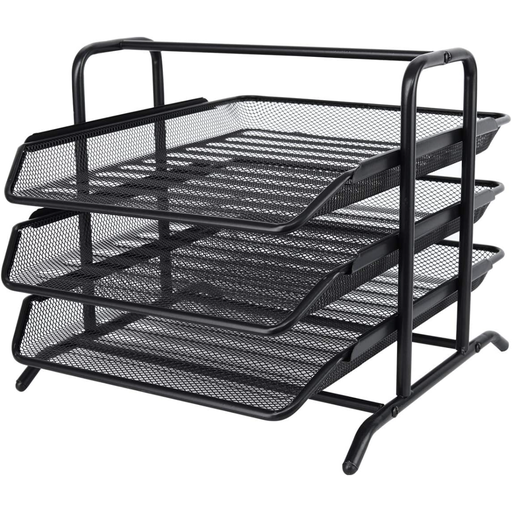
Why this fits the profile: Three pull-out levels suit a home office where incoming post, current documents and archive items need to stay separate.
The pull-out trays stop you from having to rummage through one deep pile every time. The four rubber feet help protect the desk surface.
Three A4 trays, metal construction, rounded edges and a size of 35.5 × 29.5 × 26 cm.
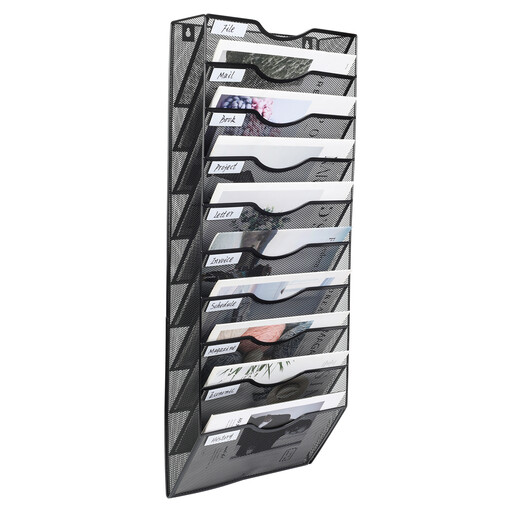
Why this fits the profile: Ten compartments are practical for small businesses, shared offices and households with lots of post and paper flow.
The label plates support a fixed layout per client, project or document type. Wall mounting keeps the desk clear, provided the wall fixing is done correctly.
Ten wall compartments, label plates, A4 compatibility and a height of 81.5 cm.
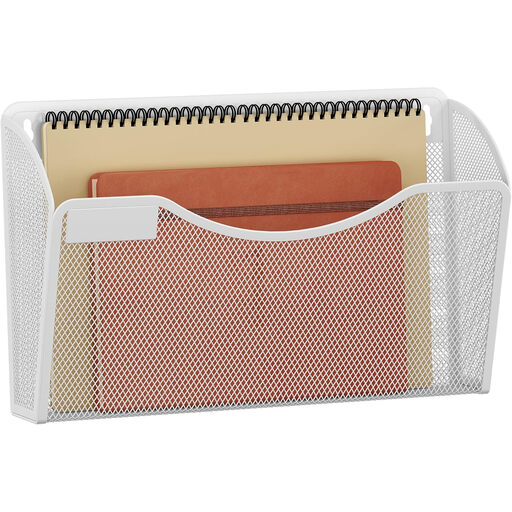
Why this fits the profile: A single compartment is suitable for a narrow hallway, student room or workspace where only incoming post or current documents need to be visible.
You are not buying a large system for a small paper flow. The label plate also stops the compartment from becoming a vague dumping ground.
One A4 wall compartment, metal construction, label plate and supplied mounting screws.
We have compiled a full, up-to-date list of products that fully meet these strict selection criteria and current European safety regulations.
An organiser works better when you choose a simple layout in advance. For example, use separate compartments for to process, to pay, to send and to keep. For a desk organiser with drawers, you could reserve one drawer for stationery and another for current files.
Check the contents monthly. Remove duplicate copies, digitise documents where you can and move completed items to an archive folder. This stops a large paper organiser from becoming full anyway.
A stackable A4 letter tray or a single wall holder takes up little floor and desk space. Choose wall mounting when the desktop needs to stay clear. First check whether you are allowed to drill into the wall and which wall plugs are needed.
That depends on the compartment depth and opening. Measure a filled folder and compare that size with the product specifications. An open, pull-out tray is usually more accessible for thicker documents than a narrow wall compartment.
Dust it regularly with a dry cloth. For marks, use a slightly damp cloth and then dry the metal thoroughly. Avoid prolonged exposure to moisture and occasionally check the fixings on wall-mounted models.
