
Vandaag of morgen in huis

Kwaliteit gegarandeerd

Welkomstaanbiedingen ontgrendelen: GRATIS bezorging | Tot 80% korting | Gratis 30 dagen JoyPlus-proefperiode
Download de app
A desk organiser can help keep your workspace tidy, but not every model suits every situation. A small desk tidy is useful for pens and paperclips, while a desk mat or XXL mouse mat offers more space, protection and cable management. If you buy a desk organiser without doing your research, you could soon run into practical problems.
So the key question isn’t which organiser looks most attractive, but what you want to store, how much space you have and how intensively you use your workspace.
An organiser may look compact in photos, but take up too much desk space in practice. So measure not just your desktop, but also the space behind your keyboard, beside your monitor and under any shelf.
When choosing a desk organiser with compartments, check:
For example, a 38 cm drawer organiser won’t necessarily fit every standard drawer.
Words such as ‘professional’, ‘premium’ or ‘durable’ don’t tell you much without specific details. Check the material, dimensions, number of compartments and care instructions instead.
For a metal desk organiser, for example, the construction, non-slip feet and finish are all relevant. With a bamboo organiser, check the exact dimensions, whether it is FSC-certified and whether the trays are stackable. According to the product information for the 5five Bamboo Storage Organizer, it is made from bamboo and is FSC-certified; the trays are not stackable.
A student who mainly wants to organise pens, highlighters and notes has different needs from a gamer with a large keyboard, mouse and several cables. A desktop organiser with small compartments is useful for accessories, but won’t solve cable clutter. A desk mat with a cable clip may be more practical for a computer workstation.
Start with a simple list:
Compartments in different sizes are useful for small stationery items. A drawer organiser with one large compartment is more of a catch-all than a divided storage system. For documents and folders, a taller desk cabinet with several levels may be a better fit.
Bamboo suits a natural-looking interior and is easy to clean with a dry or slightly damp cloth. Check whether the trays are stackable and whether the finish is suitable for the place where you plan to use them.
Metal is practical for intensive everyday use. Non-slip feet stop the organiser from moving and protect the surface from scratches. The Senhoglb Mesh Drawer Organiser Tray is listed as having five compartments, a coated metal finish and four non-slip feet. Place a metal organiser in a dry spot and follow the care instructions to help prevent rust.
Faux leather or PU is often used for desk mats. Check the dimensions, underside and cleaning instructions. A water-resistant surface may be easier to clean, according to the product description, but always check the specific product information.
A cable organiser or included cable clip is useful if charger, keyboard and mouse cables run across your desk. Check where the clip will be attached and whether your cables are narrow enough to fit through the opening.
A desk mat can also help protect your desktop from scratches and stains. Measure your desk first. A 120 × 60 cm mat offers plenty of space, but may be too large for a compact desk. For smaller workspaces, sizes such as 80 × 40 or 90 × 45 cm are more practical.
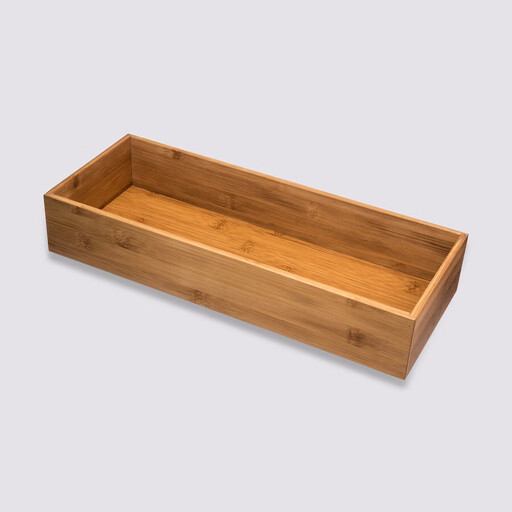
Why it suits this profile: At 15 × 38 × 7 cm, it fits a drawer or a narrow area of your desk. The organiser is designed for office accessories and can be combined with other trays of the same height.
Its fixed dimensions make it easy to measure up beforehand. The product information also clearly states that the trays aren’t stackable, so you can plan accordingly.
Bamboo construction, FSC certification, product weight of 480 g and one spacious compartment for larger accessories.
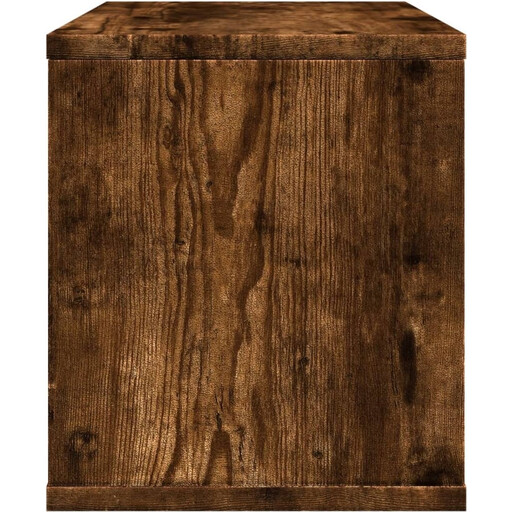
Why it suits this profile: If you want to keep documents, folders and small stationery items together, this desk cabinet gives you more vertical storage than a standalone pen pot.
The product information lists the dimensions and states that assembly is required. This means you can plan ahead for both the available space and the extra time needed to put it together.
36 × 26 × 29.5 cm, a smooth surface made from engineered wood, and space for documents, folders and accessories.
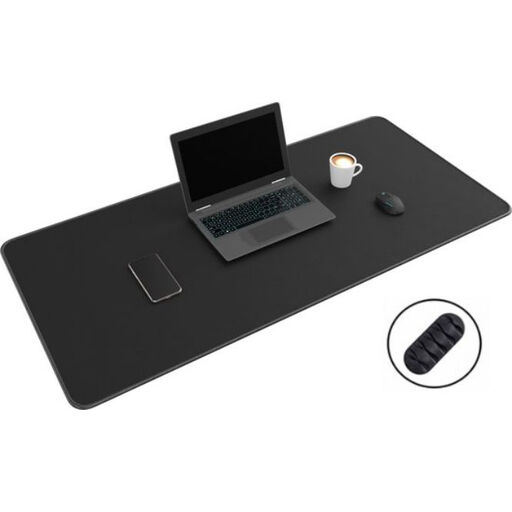
Why it suits this profile: Measuring 120 × 60 cm, it has room for a keyboard, mouse, laptop, documents and accessories. It’s a good fit for people working from home and gamers who want one large work surface.
The product description mentions a non-slip rubber base, a water-resistant surface and an included cable clip. Just check beforehand that 120 × 60 cm will fit on your desk.
Large work surface, rubber base, water-resistant top and cable clip, according to the product information.
We’ve put together a complete, up-to-date list of products that meet these strict selection criteria and the applicable European safety regulations.
First, decide what you want to organise. A slim desk tidy or drawer organiser is suitable for pens and small accessories. An 80 × 40 cm desk mat can provide enough space without covering the entire desktop. Measure the clear space around your keyboard and monitor before ordering.
Use a cable organiser, cable clip or cable tray, and group cables by device. Keep chargers you rarely use out of sight, while leaving enough slack at the connections. A desk mat with an included cable clip can be a simple starting point, but check that the clip suits the cables you use.
Its lifespan depends on the material, how much weight it holds, moisture and how often you use it. Place wooden and metal organisers on a dry, level surface and follow the care instructions. With a desk mat, the underside is particularly important: dirt can reduce its grip. Check regularly for lifting edges, damage or bent parts, and replace the product if it no longer stands securely.
