
Vandaag of morgen in huis

Kwaliteit gegarandeerd

Welkomstaanbiedingen ontgrendelen: GRATIS bezorging | Tot 80% korting | Gratis 30 dagen JoyPlus-proefperiode
Download de app
Loose invoices, study papers and post can pile up quickly. An A4 document organiser can bring order, but not every model suits every workspace. A wall-mounted holder takes up little desk space, while a metal letter tray is more practical if you move documents around regularly. If you only look at the number of compartments or a nice product photo, you could run into practical problems later.
In this buying guide, you'll discover which features to check, which designs suit different users, and how to choose a desk organiser for A4 papers, a filing rack or a wall-mounted document holder wisely.
An A4 sheet measures roughly 21 x 29.7 cm. That doesn't automatically mean an organiser is also suitable for thick folders, ring binders or multiple documents. So check the internal dimensions, not just the size on the packaging. A wall holder with a depth of around 9 cm is practical for loose papers, post and thin files, but can be limited for bulky ring binders.
A wall-mounted document holder carries not only its own weight but also its contents. A metal model can feel sturdy, but an unsuitable wall plug in plasterboard can still cause instability. Use fixing materials that suit the surface and distribute the weight evenly. After installation, check that the screws are properly tightened.
A 6-compartment A4 wall holder for documents offers plenty of sorting space, but only if you create a clear system beforehand. Without labels, invoices, incoming post and ongoing projects can still get mixed up. The same goes for a desk organiser: too many drawers or compartments can actually slow down finding what you need.
Pay attention to the paper orientation. The Senhoglb wall holders mentioned are designed for A4 in landscape orientation. A single compartment measures approximately 35 cm wide, 9 cm deep and 21.5 cm high. That's suitable for A4 documents, letters, magazines and some thin folders. For documents in portrait orientation or wide ring binders, you may need a different model.
A mesh document holder has the advantage that the contents remain partially visible. That's handy for incoming and outgoing post. If you want to keep documents out of sight, look instead at a drawer organiser or office filing cabinet.
A wall model uses vertical space and keeps the desk clear. Check:
A metal filing rack for the desk is easier to place and move. Pay attention to the feet, stability and whether the drawers pull out.
The products in this selection are, according to their product descriptions, made of metal with a powder coating. According to the relevant brand and product information, this finish is intended to resist everyday wear and oxidation. That's a product specification, not a guarantee that the product will remain rust-free in all conditions. So don't place metal organisers in direct contact with water and clean them with a soft, dry cloth.
Also check whether sharp edges have been smoothed, whether rubber feet are present, and whether parts can be easily re-tightened.
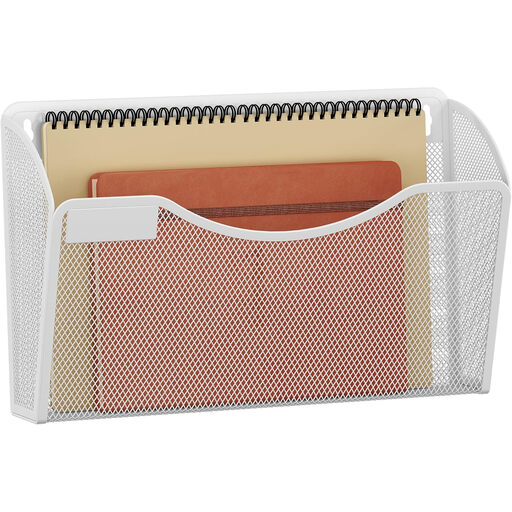
Why this suits the profile: A single compartment is clear and simple for anyone starting to sort post, invoices or ongoing documents in a home office or student room.
You don't pay for unused compartments. The integrated label plate helps prevent a single open compartment from becoming an unclear dumping ground.
Size approximately 35 x 9 x 21.5 cm, metal construction with powder coating and mounting hardware included.
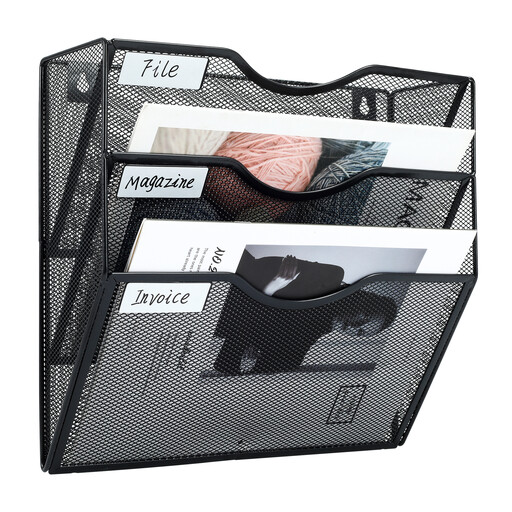
Why this suits the profile: Handy for homeworkers and office professionals who want three fixed categories, such as new, in progress and archive.
The three levels have label plates and supplied stickers. This means you can make the system visible rather than relying on memory.
Three compartments, dimensions approximately 32.5 x 10.5 x 30 cm and fixing screws included.
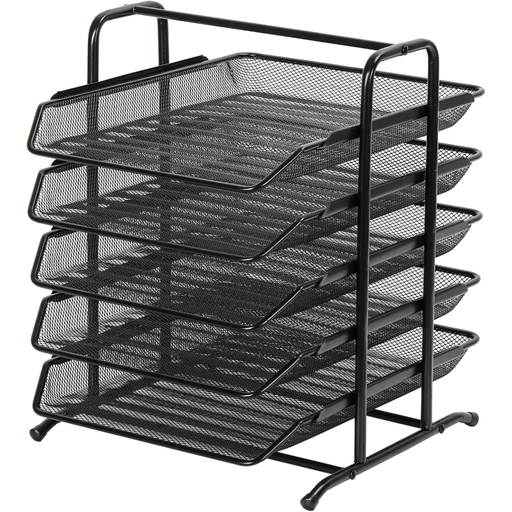
Why this suits the profile: The five pull-out layers are practical for administrative staff, small businesses and workplaces that handle a lot of paper daily.
The separate pull-out trays prevent stacks from sliding into each other. Rubber feet also help prevent scratches on the desk.
Five tiers, approximately 35.5 x 29.5 x 37.5 cm, metal construction and pull-out trays for A4 documents.
Choose a post organiser with one or more wall compartments if you want to sort post directly at the entrance or next to your desk. A magazine holder with landscape compartments is better suited to magazines, forms and thin files. For a fixed filing system with lots of folders, a lockable office filing cabinet makes more sense than an open mesh holder.
If you simply want to free up desk space, look at a 2- or 3-tier metal model. The Senhoglb 2 Tier A4 Mesh File Tray is stackable and measures approximately 34 x 24.5 x 13.5 cm. A variant with two trays and a top holder also offers space for pens, staplers and paperclips.
We've put together a full, up-to-date list of products that fully meet these strict selection criteria and current European safety regulations.
First, choose a flat spot with enough free space. Only use the supplied screws if they are suitable for your wall type. For plasterboard, concrete or brick, different wall plugs may be needed. After installation, check that the holder doesn't tilt and distribute heavy documents across several compartments.
The lifespan depends on load, moisture, installation and maintenance. According to the product description, a metal model with powder coating is designed for daily use, but prolonged exposure to moisture can damage the finish. Keep the organiser dry and check fixings regularly.
Both options require no electricity and need little maintenance. A wall holder saves desk space, but installation may require extra wall plugs or tools. A desk organiser can be placed immediately and is easier to move. The practical costs therefore depend mainly on your existing workspace and the capacity you need.
