
Vandaag of morgen in huis

Kwaliteit gegarandeerd

Welkomstaanbiedingen ontgrendelen: GRATIS bezorging | Tot 80% korting | Gratis 30 dagen JoyPlus-proefperiode
Download de app
Charging an electric car at home is simpler and more cost-effective than public charging. But the search for the right charging station can feel like navigating a maze. With your own home charging station, you're no longer dependent on the availability and rates of public chargers. A 7kW Wallbox is a popular choice, but there are pitfalls that can make your purchase unnecessarily expensive or impractical.
Before you make a decision, it's wise to consider a few common missteps:
5-meter charging cable might seem long, but be sure to accurately measure the distance from your electrical panel to your car's parking spot. A cable that's too short will cause daily frustration. Also, ensure the charger has the correct connector for your vehicle.To avoid a bad purchase, focus on the specifications that truly matter. You can ignore the marketing jargon; these technical details determine if a charging station is right for your situation.
A 7kW Wallbox is a single-phase charging station. This means it draws power from a single phase of your home's electrical service. To achieve 7.4 kW (rounded to 7kW), the charger requires a current of 32 Amps (32A). This is important to know:
The Type 2 EV charger connector (also known as a Mennekes plug) is the standard for AC charging in Europe. Virtually every modern electric car, including models from Tesla, Volkswagen, and Kia, uses this connector for home charging. You can choose between a charging station with a tethered cable or one with just a socket.
home car charging point. It's convenient, as you don't have to get the cable out of your trunk every time. A length of 5 meters is often sufficient, but a longer cable offers more flexibility if you park in different ways.A charging station is installed outdoors or in a damp garage and operates with high power. Safety is therefore not a luxury. Pay attention to the following two points:
32A charging station has built-in protections against overvoltage, undervoltage, leakage current, and overheating. This protects not only the charger itself but also your car's battery.Based on these objective criteria, we have selected a few products that suit different user profiles.

Why This Fits Their Persona: Ideal for those looking for a reliable and straightforward charging point. This wallbox does what it's supposed to do: charge your car safely and relatively quickly without unnecessary bells and whistles.
This model bypasses the pitfall of unnecessary 'smart' features. You pay for the core functionality: solid 7kW charging power and the necessary safety features.
The tethered 5-meter charging cable is practical for most driveways. Its IP65 rating makes it suitable for outdoor installation in rainy weather.
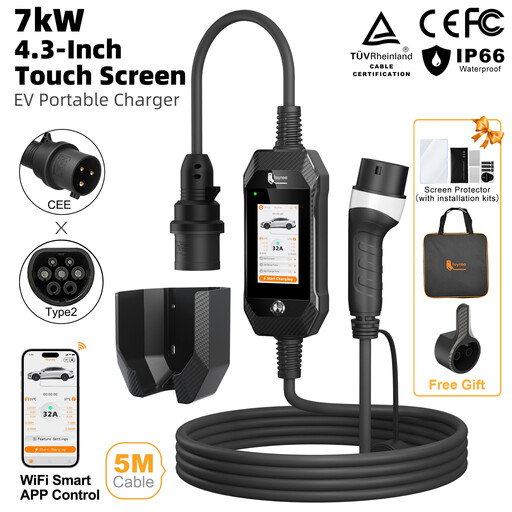
Why This Fits Their Persona: For the EV driver who wants full control and insight. The app lets you schedule charging sessions during off-peak hours to save on energy costs and accurately track consumption.
Although this is a 'smart' charger, its features are practical and focused on cost savings and convenience. It's not a gimmick; the data and scheduling offer tangible benefits.
The 4.3-inch touchscreen provides an immediate overview of the charging status. You can remotely adjust the current and schedule charging sessions via the app.
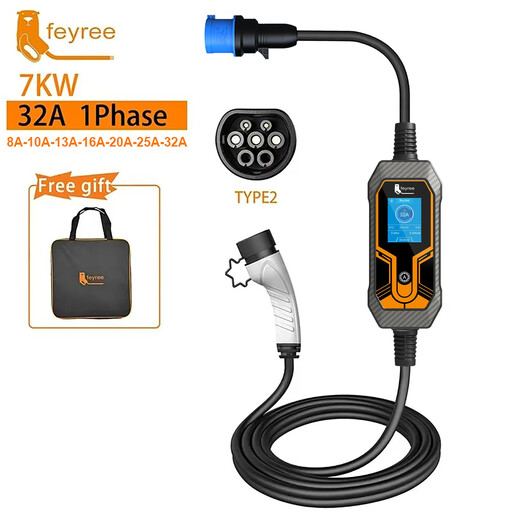
Why This Fits Their Persona: Perfect for those who can't or don't want to install a fixed wallbox. This portable charger offers the same 7kW power, but you can take it with you on vacation or use it at a campsite with a CEE socket.
This product completely bypasses high installation costs. You only need a 32A CEE socket (installed by an electrician), not a full wallbox installation.
Maximum flexibility while retaining 7kW charging power. The current is adjustable (from 8A to 32A), which is useful in locations with limited power capacity.
We have compiled a complete, up-to-date list of products that meet these strict selection criteria and safety standards.
No, that's a common misconception. A 7kW Wallbox is specifically designed for a single-phase connection. It achieves its power by using a higher current (32A) on that single phase. A 3-phase connection is required for higher-power charging stations (11kW or 22kW).
The installation costs for a home charging station vary widely depending on your specific situation. Factors that influence the price include: the need for an upgrade to your electrical panel (a dedicated circuit is almost always necessary), the distance between the panel and the charging station, and whether any trenching is required. It is wise to request quotes from multiple certified installers.
Yes, the Type 2 EV charger is the universal standard in Europe for AC charging. This means you can charge virtually all electric cars and plug-in hybrids with it, including a charging station for Tesla (Model 3, Model Y), Volkswagen ID models, and other popular cars. However, the charging speed is determined by the weakest link: the charging station, the cable, or the car's own internal charger (on-board charger).
