
Vandaag of morgen in huis

Kwaliteit gegarandeerd

Welkomstaanbiedingen ontgrendelen: GRATIS bezorging | Tot 80% korting | Gratis 30 dagen JoyPlus-proefperiode
Download de app
A 7 kW Type 2 EV charger may seem straightforward to choose on paper. However, the key differences often lie not in the maximum charging power, but in the installation, current settings, protection and cable storage. Choosing the wrong charger can result in slow charging, an overloaded circuit or a wallbox charging station that deteriorates more quickly outdoors.
This guide helps private EV and plug-in hybrid owners in the Netherlands distinguish marketing claims from verifiable product specifications.
A 7 kW charger generally operates at 220-240 V and a maximum of 32A on a single phase. However, the car also determines how much power it draws. Some plug-in hybrids, for example, charge at a lower current. Always check the car’s maximum AC charging capacity before buying a 32A EV charger.
A product description may state a charging time of 2 to 6 hours. According to feyree’s own product description, this indication depends on the vehicle, battery capacity and available mains connection. Do not therefore treat it as a guaranteed charging time.
An IP65 charging station is dust-tight and protected against water jets. This makes a wall-mounted EV charger suitable for many indoor and outdoor applications, but IP65 does not mean that the device can be placed under water. The cable, plug, wall and electrical connection must also be installed correctly.
Preferably position a charging station in a sheltered, easily accessible location. Have the fixed electrical connection checked or installed by a qualified electrician. A separate circuit and suitable residual-current protection may be required, depending on the home’s electrical installation.
Do not focus solely on general terms such as “safe” or “intelligent”. Look at the specific functions listed. The feyree 7 kW EV charger includes protection against overvoltage, undervoltage, overcurrent, overheating, short circuits, earthing faults, leakage current and lightning strikes. The product description also mentions automatic shut-off in the event of an abnormal situation and temperature monitoring.
These specifications come from the brand’s product information. They do not replace correct installation or checking the local mains connection.
An adjustable charging current is useful when you do not always want to charge at maximum power. According to the product specifications, the feyree charger supports seven settings: 8A, 10A, 13A, 16A, 20A, 25A and 32A. This can be useful when several high-power appliances are using electricity at the same time or when the electrical installation is limited.
Make sure that the car supports the selected current. Adjusting the charging current is not a way to make an unsuitable or outdated home electrical installation safe.
In the Netherlands and throughout the rest of Europe, Type 2 is a common connection for AC charging. Check whether your car has a Type 2 port and whether the electric car charger you choose uses a fixed Type 2 charging cable or a Type 2 socket.
The feyree is the socket version supplied with a 5-metre cable, according to the product description. A longer cable provides greater reach, but also takes up more space and may be heavier to store.
A charging station with a wall bracket or mounting plate keeps the ground clear and reduces the chance of the cable being left on the driveway. According to the product information, the feyree has an integrated cable hanger and a holder for the plug. The LED indicator displays the charging status and error messages.
Before buying, check the mounting surface, cable length, position of the car and distance from the meter cupboard. A technically suitable charging station can be inconvenient in practice if the cable does not reach the charging port properly.
The selection below distinguishes between a fully fledged home charger and supplementary car accessories. The phone holders and USB charger are not a replacement for an EV charging station.
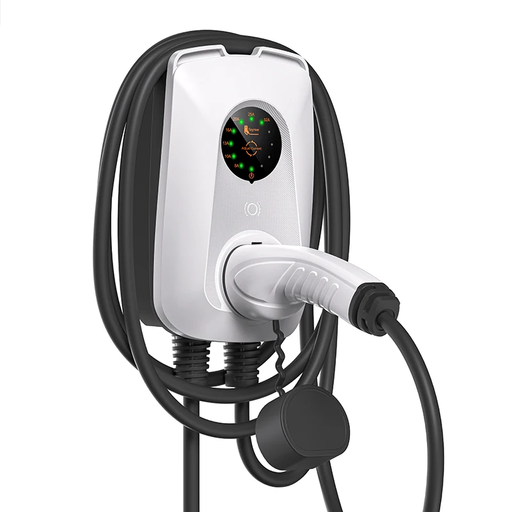
Why it suits this profile: This wall-mounted EV charger combines a Type 2 cable, adjustable current and cable storage in one device for home use.
The seven charging settings mean you do not always have to charge at 32A. The IP65 rating and stated temperature monitoring are verifiable product features, not a general guarantee for every installation.
7 kW power, adjustable from 8A to 32A, 5-metre cable, Type 2 connection and wall bracket. According to the product description, it is suitable for indoor and outdoor use.
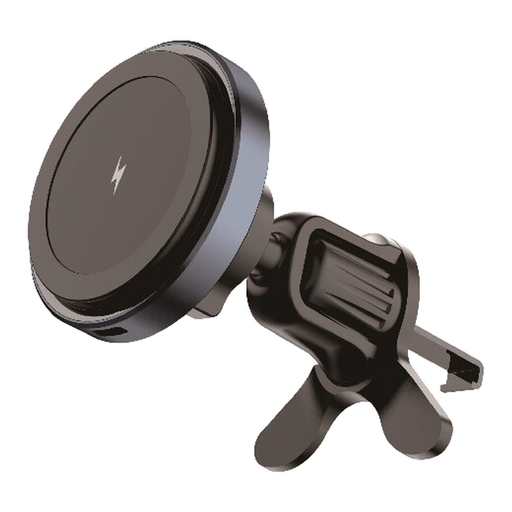
Why it suits this profile: A supplementary accessory for drivers who also want to charge their phone wirelessly while keeping it clearly visible during charging.
The product information explicitly states that a USB-C PD source of at least 18W is recommended for 15W output. Also check whether your phone and case support magnetic attachment.
Aluminium alloy, magnetic attachment, 360° rotation and output of up to 15W according to the product specifications.
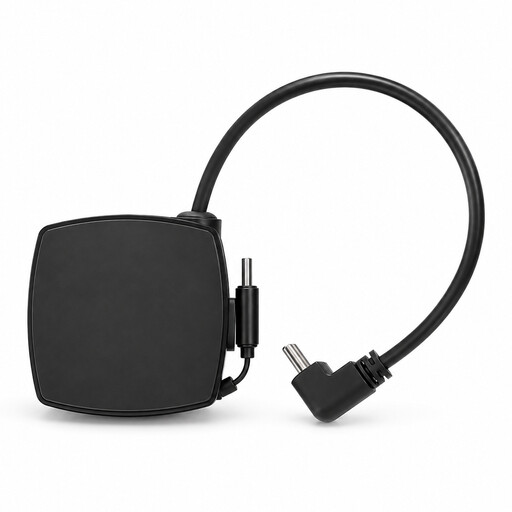
Why it suits this profile: Handy as a compact supplementary charger for mobile devices on the go, but not intended as a home charger for an electric car’s traction battery.
The compact design and retractable cable help keep loose cables out of the cabin. Check compatibility: according to the product information, the supplied Type-C cable is not suitable for iPhone 14 or earlier models.
65W output according to the product specifications, a 70-centimetre retractable cable and adhesive mounting.
We have put together a complete, up-to-date list of products that fully meet these strict selection criteria and the applicable European safety regulations.
When installing an electric car home charger, bear the following points in mind:
A fast charger for an electric car is not the same as a 7 kW wallbox. A 7 kW charger is intended for AC charging at a private location. Public DC fast chargers use different power levels and connections.
This depends on the battery capacity, state of charge and the car’s maximum AC charging speed. A car that accepts a maximum of 3.7 kW, for example, will not make full use of 7 kW. The 2-to-6-hour indication in feyree’s product description is therefore vehicle-dependent.
According to the product information, the feyree has an IP65 protection rating and is suitable for indoor and outdoor installation. However, position the charging station in accordance with the installation instructions and have the electrical connection checked. IP65 does not make a device suitable for immersion or unprotected cable connections.
The cost mainly depends on the electricity tariff, charging losses and the amount of energy your car needs. As a basic calculation, multiply the number of kilowatt-hours charged by your tariff per kilowatt-hour. The maximum power of 7 kW mainly determines how quickly you charge, not the price per kilowatt-hour charged directly.
