
Vandaag of morgen in huis

Kwaliteit gegarandeerd

Welkomstaanbiedingen ontgrendelen: GRATIS bezorging | Tot 80% korting | Gratis 30 dagen JoyPlus-proefperiode
Download de app
A dedicated charging point for your electric car is no longer a luxury, but a practical necessity. The convenience of charging overnight and starting the day with a full battery is undeniable. However, the market for charging stations can be overwhelming. Before you buy a charging station, it's important to know what to look for. Many models look similar, but the differences in performance, safety, and cost are significant.
As a Joybuy Product Recommendation Officer, I see the challenges consumers face every day. Here are the most common pitfalls and how to avoid them.
home car charging point is installed outdoors, exposed to the elements. A low IP rating (water resistance) or the absence of crucial protections against overvoltage and leakage current is a risk to both your car and your home.To avoid a bad purchase, it's essential to understand a few technical specifications. This isn't rocket science, but it will help you separate marketing jargon from facts.
Most households have a single-phase connection as standard. A 7kW home EV charger is perfectly suited for this. It supplies power via a single phase wire with an amperage of 32A (32 Amps), resulting in a charging power of about 7.4 kW. For most electric cars, this is more than enough to fully charge the battery overnight.
A 3-phase charger (11kW or 22kW) requires a 3-phase connection in your fuse box, which may mean an upgrade from your grid operator. So, first check your home's electrical connection and your car's maximum charging capacity before considering a single-phase EV charger or a more powerful model.
An electric car charging station comes in two variants: with a tethered (fixed) cable or with an untethered socket.
A charging station is an electrical device installed outdoors. Therefore, pay close attention to the IP rating. A rating of IP65 means the housing is dust-tight and protected against water jets from any angle. This is a solid standard for outdoor use in most climates.
Additionally, built-in protections are indispensable. Features like protection against leakage current, overvoltage, undervoltage, and overheating are not luxuries, but an absolute necessity for safe and reliable charging.
Based on these objective criteria, we have selected a number of products that fit different user profiles.

Why This Fits Their Persona: This user is looking for a reliable and simple solution for daily charging. No need for complex apps, just plug in and charge. The 5-meter tethered cable and simple operation make this an ideal 'no-nonsense' 7kW Wallbox for anyone with a private driveway and a single-phase connection.
This model delivers exactly the 7kW of power that matches a single-phase connection. This helps you avoid the pitfall of overpaying for unused capacity. All essential safety features are built-in, so you don't compromise on safety.
Robust design with an IP65 rating for outdoor use. The 5-meter tethered cable offers maximum convenience for daily use.
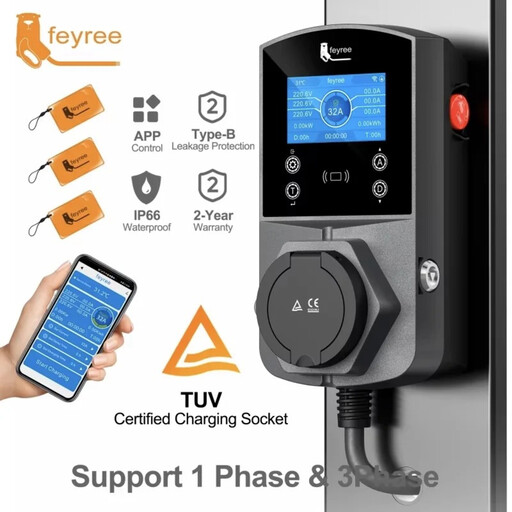
Why This Fits Their Persona: This user has a 3-phase connection or wants to be future-proof. Smart features are important, like scheduling charging sessions via an app to take advantage of off-peak rates. The socket version offers the flexibility to use different cables.
Although this is a powerful model, its smart features prevent it from being 'overkill'. By adjusting the charging current via the app, the power can be tailored to any car and connection. This helps to actively manage energy costs.
Full control via Wi-Fi and app for scheduling charging sessions and adjusting the amperage. The Type B leakage current protection offers a high level of safety.
We've compiled a complete, up-to-date list of products that fully meet these strict selection criteria and local safety regulations.
This depends on two things: your fuse box and your car. First, check if you have a single-phase or 3-phase main connection. You can often see this on your electricity meter. Then, check your car's specifications for its maximum AC charging power. For most households and many plug-in hybrids, a 7kW home EV charger (single-phase) is the most logical and cost-effective choice.
No, it is strongly recommended to have an electric car charging station installed by a certified electrician. The installation requires a separate, fused circuit in the fuse box and the correct wiring to ensure safety. Improper installation can lead to a fire hazard and damage to your car or home.
A standard wall socket delivers about 2.3 kW. A 7.4 kW charger, therefore, charges more than three times faster. A car with a 60 kWh battery can be fully charged in about 8 hours with a 7.4 kW charger, which is ideal for overnight charging. Using a wall socket, this would take over 25 hours.
