
Vandaag of morgen in huis

Kwaliteit gegarandeerd

Welkomstaanbiedingen ontgrendelen: GRATIS bezorging | Tot 80% korting | Gratis 30 dagen JoyPlus-proefperiode
Download de app
A personal home EV charger is no longer a luxury, but a practical necessity for anyone driving an electric vehicle. The convenience of charging overnight and starting the day with a full battery is undeniable. But the search for the right home car charging point can feel like navigating a maze. The market for a 7kW charger, in particular, is filled with marketing promises that don't always align with your actual needs.
Before you make a decision, it's wise to consider a few common pitfalls. Many buyers fall into these traps, leading to unnecessary costs or a charging solution that doesn't work optimally.
7kW wallbox almost always requires a modification to your fuse box (a dedicated circuit) and for a cable to be run. These installation costs are often underestimated.To make an informed choice, you don't need to be an electrician. Focus on a few core specifications that determine whether a charging station for electric cars is right for your situation.
A 7kW charger is the most common choice for home charging on a single-phase connection. This power is achieved with a current of 32 Amps (A). The calculation is simple: 1 phase x 32A x 230V ≈ 7.4kW.
32A charger is therefore an efficient choice for a single-phase charging station.The plug you connect to your car is crucial. In Europe, the Type 2 connector (also known as Mennekes) is the standard for AC charging.
Type 2 charger, you can be sure that it will be compatible with your current and likely your future car.A charger is often installed outdoors, exposed to the elements. The IP rating (Ingress Protection) indicates how well the device is protected against dust and water.
EV charger that you want to install safely outdoors.Not everyone has the same needs. That's why we've highlighted a few options that suit different user profiles, based on objective specifications.

Why This Fits Their Persona: Perfect for those who want a permanent, reliable `7kW wallbox` on the wall. An 'install and forget' solution that does what it's supposed to do: safely charge your car every night.
This model focuses on the core function (safe 7kW charging) and avoids the cost of complex smart features that many users don't need.
Fixed wall mounting for a tidy driveway. Its IP65 rating makes it suitable for outdoor installation in the UK climate.
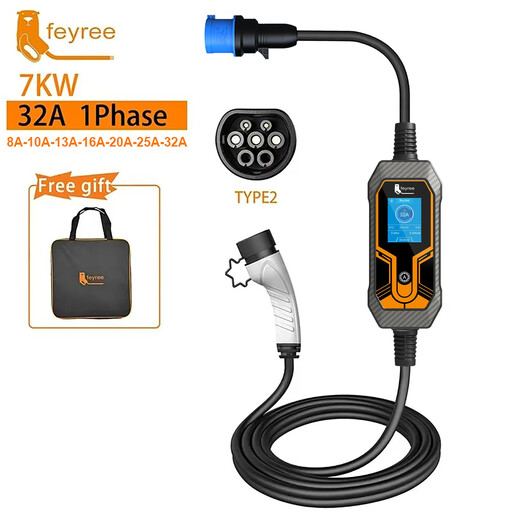
Why This Fits Their Persona: Ideal for those who can't or don't want a fixed installation (e.g., in a rental property), or for taking the charger to a holiday home. Requires a CEE socket.
Bypasses the high installation costs of a fixed wallbox. It's a plug-and-play solution, provided the correct socket is available.
Portable and flexible. The charging current is adjustable (from 8A to 32A), allowing you to adapt the charger to the available power supply on location.
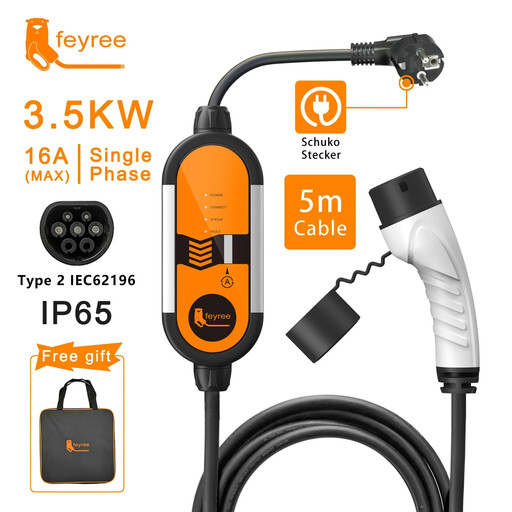
Why This Fits Their Persona: For drivers of a plug-in hybrid or an EV with a smaller battery, 7kW is often overkill. This 3.5kW charger is more than sufficient for overnight charging from a standard domestic socket.
Avoids over-investing in charging capacity and installation costs. This charger requires no modifications to the fuse box and is the most budget-friendly option.
Works with a standard domestic socket (Schuko). Extremely portable and simple to use, with an adjustable current (8A-16A).
We have compiled a complete, real-time list of products that fully satisfy these strict selection criteria and UK safety regulations.
This is easy to check. Look at the annual statement from your energy supplier; it often lists the connection type (e.g., 1x35A or 3x25A). Another method is to look at the kWh meter in your meter box. If it says 220/230V, you have a single-phase connection. If it says 3x220/230V or 380/400V, you have a three-phase connection.
For home charging, 7kW is ideal in most cases. Your car is often parked all night, which is more than enough time to fully charge the battery. A car with a 60 kWh battery will charge in about 8-9 hours. Only if you regularly need to top up quickly during the day would a more powerful charger (and thus a three-phase connection) be worth considering.
The cost for the installation of a fixed wallbox by a certified electrician varies, but is typically between €300 and €800. This depends on the complexity of the job, such as the distance from the fuse box to the charger and whether any trenching work is required. This price usually includes installing a separate, fused circuit and running the power cable.
