
Vandaag of morgen in huis

Kwaliteit gegarandeerd

Welkomstaanbiedingen ontgrendelen: GRATIS bezorging | Tot 80% korting | Gratis 30 dagen JoyPlus-proefperiode
Download de app
A 700C road bike can be a good choice for tarmac, cycle paths, commuting and longer leisure rides. However, many people buy a road bike based solely on its colour, price or number of gears. This can result in a bike that does not fit properly, is difficult to brake in wet weather or is less suitable for everyday use than expected.
The main pitfalls are:
Below, you will find the key specifications and some suitable choices for different types of cyclist.
The right size is more important than an eye-catching colour or an extra gear. The Hiland Alliance 700C road bike is available in:
The stated heights vary slightly between variants. Always check the size chart on the product page before buying. Height alone is not enough: inside leg measurement, arm length and preferred riding position also matter. If you are unsure, a slightly shorter reach is often easier to adjust using the saddle height and handlebar position than a frame that is too large.
An aluminium road bike offers a practical combination of low weight, stiffness and easy maintenance. The stated weight of the Hiland Alliance varies by size, at around 12.48 to 12.53 kg. This is verifiable information from the product specifications, but remember to allow for accessories, pedals and packaging.
The 700C bike uses a common wheel size for road bikes. According to the product description, the tyres have low rolling resistance, making them suitable for efficient riding on tarmac. This does not mean that every 700C road bike is automatically faster: tyre pressure, tread pattern, road surface and riding position also have an impact.
For poorly maintained cycle paths, cobbles and rainy routes, an extremely narrow road tyre is not always practical. Therefore, check the available tyre width and choose a suitable tyre pressure for your weight and route.
A 14-speed road bike offers different ratios for flat roads, bridges and gentle hills. However, the number of gears does not tell you everything. Also look at the cassette range, controls and availability of replacement parts.
The Hiland bike mentioned has dual caliper brakes, also known as calliper brakes. According to the product description, these are lighter and more aerodynamic than disc brakes. In practice, they are suitable for many tarmac and urban rides, but braking performance depends on correct adjustment, brake blocks, rim condition and weather conditions. If you often cycle in wet conditions or hilly areas, you may also wish to compare bikes with disc brakes.
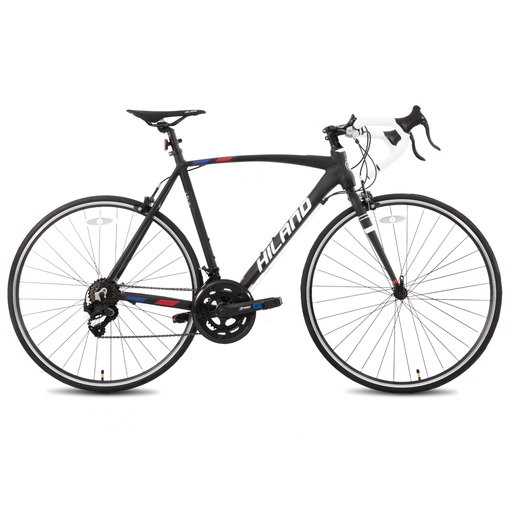
Why it suits this profile: This size S is aimed at adults around 165 to 178 cm tall who are looking for a sporty bike for urban rides, commuting and leisure use.
The product information lists the frame size, weight, brake type and drivetrain. This allows you to compare the bike based on specific details rather than simply relying on the term “lightweight”.
Aluminium frame, 14 gears, 700C wheels and a black finish. The bike is delivered partially assembled.
Why it suits this profile: Size M is intended for taller adults who want to use an aluminium road bike for longer tarmac rides, recreational cycling or their daily commute.
Choosing size M means you do not have to focus solely on colour or gears. Also compare the stated rider height with your inside leg measurement before ordering.
Stated weight of approximately 12.5 kg, 14 gears, dual caliper brakes and 700C tyres for use on paved roads.
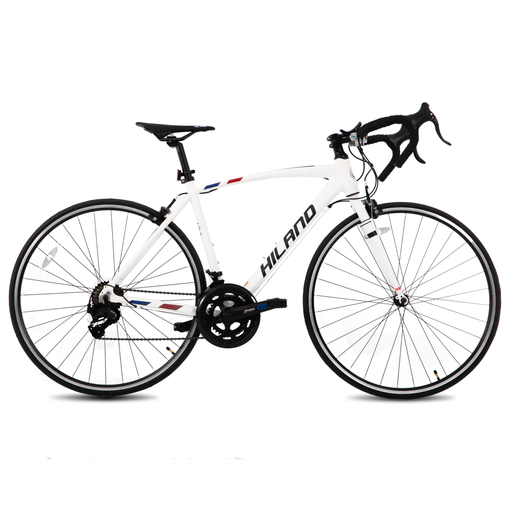
Why it suits this profile: Size L is intended for tall adults who cover many miles on tarmac and are looking for a sporty riding position and direct power transfer.
The product page specifies the frame height and intended use. This makes it easier to match a road bike for adults to your height and riding needs, rather than choosing based solely on appearance.
60 cm aluminium frame, 14 gears, dual caliper brakes and 700C wheels. Check the exact height range for size L on the product page.
The Hiland Alliance is delivered partially assembled. Among other things, you will need to attach the handlebars, pedals, front wheel and seat post. Before use, check:
Afterwards, check the brake blocks, tyre pressure and chain lubrication regularly. Clean the frame with a soft, damp cloth and store the bike somewhere dry. A service after the initial running-in period may be advisable, particularly if you use the bike every day.
For commuting, good visibility is also important. Use lights in low-light conditions and follow the Dutch traffic regulations. A road bike is generally intended for paved roads; according to the product information, the models mentioned are not designed for extreme off-road riding.
We have put together a complete, up-to-date list of products that fully meet these strict selection criteria and the applicable European safety regulations.
Yes, provided your route consists mainly of tarmac and well-maintained cycle paths. Look for a suitable frame size, reliable brake adjustment, lights and comfortable tyre pressure. For routes with lots of cobbles or unpaved roads, a bike with wider tyres may be more practical.
Its lifespan depends on the load, maintenance, storage and riding conditions. Regularly check the frame, wheels, brake blocks, chain and tyres. Replace worn parts in good time and have any damage to the frame or fork assessed before riding again.
In addition to the purchase price, you should budget for inner tubes or tyres, brake blocks, chain lubricant and any servicing. Daily use, rain and high mileage will generally lead to faster wear. Keeping the bike somewhere dry and cleaning it regularly will help to limit unnecessary costs.
