
Vandaag of morgen in huis

Kwaliteit gegarandeerd

Welkomstaanbiedingen ontgrendelen: GRATIS bezorging | Tot 80% korting | Gratis 30 dagen JoyPlus-proefperiode
Download de app
If you do heavy squats, deadlifts, Olympic lifts or CrossFit workouts, you may be looking for extra support around your knees. 7 mm knee sleeves are a popular choice. However, thicker doesn’t automatically mean more suitable. The wrong size, stiff neoprene or poor finishing can cause sleeves to slide down, dig in or wear out quickly.
As a Joybuy Product Recommendation Officer, I focus on verifiable features: material thickness, measurements, fit, care and intended use. This helps you look beyond marketing claims that say little about how a pair of knee sleeves will perform in your training.
7 mm neoprene is relatively thick and is often chosen for firm support during heavy compound exercises. However, thickness doesn’t tell you everything. The height, cut, edge finish and elasticity all affect how a sleeve feels during a squat.
For example, an asymmetrical design can have different heights at the front and back of the knee. So always check the measurements, not just the “7 mm” figure.
A snug fit may be desirable for powerlifting, but smaller isn’t automatically better. A knee sleeve that restricts your movement, rolls up or digs in uncomfortably can disrupt your training. The Thor Athletics model is described as a small fit. If you’re between sizes, the advice is to choose the larger size.
So measure carefully and check how the size label compares with your actual leg circumference.
Neoprene can lose elasticity if it’s washed or dried incorrectly. Machine washing, tumble drying and direct sunlight are not recommended for these models. Stitched seams and elasticated edges are also worth checking. Before each workout, inspect your knee sleeves for tears, fraying and loose stitching.
Damaged knee sleeves can’t provide reliable support and should be replaced.
Many athletes choose 7 mm neoprene knee sleeves for heavy squats and other compound exercises. This material provides a firm, close fit. Thor Athletics knee sleeves are made from 7 mm-thick neoprene and are supplied as a pair.
The product description says the brand claims the sleeves provide support and improve circulation. This is a claim made by the manufacturer, not a medically established effect. The sleeves are not a medical device.
Thor Athletics models measure 30 cm at the front and 26 cm at the back. The asymmetrical cut is designed to support the fit around the knee without using the same height all the way round.
Elasticated edging and reinforced stitching are practical features to look for. They may help prevent the edges from stretching or fraying too quickly, but lifespan still depends on use, body shape and care.
Measure the circumference of your leg while it’s straight and relaxed, 15 cm below the knee joint. Compare the result with the brand’s size chart. For these Thor Athletics fitness knee supports, also note that:
The three options below are part of the same product range, but each is matched to a different type of buyer. This makes it easier to compare sizes and intended uses.
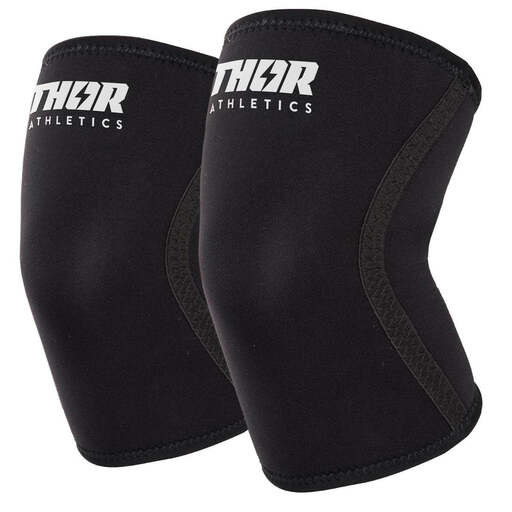
Why it suits this profile: This size is intended for athletes looking for their first pair of 7 mm knee sleeves who take careful measurements of their leg circumference beforehand. The sleeves are suitable for strength training, general fitness, powerlifting and CrossFit.
The product information clearly states that size M runs small. This helps you avoid relying on the letter size alone and ordering a sleeve that’s too tight.
7 mm neoprene, 30 cm front height, 26 cm back height and supplied as a pair. The edge finish and reinforced seams are verifiable construction features.
Why it suits this profile: Size L is suited to athletes with a larger leg circumference who want a firm fit for squats, powerlifting or intense fitness sessions.
The recommended measuring method and the warning that the fit runs small make it easier to choose the right size. You don’t have to order an L blindly without checking your leg circumference.
High-density neoprene, an asymmetrical height of 30/26 cm and elasticated edge binding. Designed for strength training, powerlifting and CrossFit.
Why it suits this profile: Size XL is intended for athletes with a larger leg circumference who want to wear a close-fitting 7 mm knee sleeve for heavy squats and other compound exercises.
The XL model also runs small. If you’re between sizes, choosing the larger one and inspecting the sleeve before each workout can help reduce the risk of a poor fit or using damaged material.
7 mm neoprene, reinforced stitching, elasticated edges and an asymmetrical 30/26 cm cut. Supplied as a pair.
Follow the care instructions in the product description for these Thor Athletics knee sleeves:
If you experience redness, itching or irritation, stop using the sleeves straight away. If you have existing knee problems or persistent pain, it’s best to seek medical advice first. Knee sleeves are a training accessory and aren’t a substitute for treatment or professional guidance.
We’ve put together a complete, up-to-date list of products that meet these strict selection criteria and the applicable European safety regulations.
It depends on your workout. They may be a good fit for heavy squats and controlled strength sets. For exercises involving lots of running, jumping or rapid changes of movement, thicker sleeves may feel less flexible. So test your range of movement during a light warm-up first.
They should fit firmly without causing pain, numbness or a constricting feeling. The sleeve shouldn’t keep slipping down, but it shouldn’t unnecessarily restrict your movement either. Measure your leg circumference as instructed and, for the Thor Athletics models mentioned, choose a larger size if you’re between sizes.
Lifespan varies depending on how often and how intensely you train, your body shape and how you care for them. Hand washing, air drying and regular checks help protect the material and seams. Tears, fraying edges or a lasting loss of elasticity are signs that it’s time to replace the sleeves.
