
Vandaag of morgen in huis

Kwaliteit gegarandeerd

Welkomstaanbiedingen ontgrendelen: GRATIS bezorging | Tot 80% korting | Gratis 30 dagen JoyPlus-proefperiode
Download de app
A 7-day pill organiser might seem straightforward, but small differences can determine whether you enjoy using it every day. A confusing layout, lids that don’t close properly, or compartments that are too small can quickly become frustrating. This applies to seniors, carers, people taking multiple supplements, and travellers.
Pay particular attention to these three common pitfalls:
The right layout depends on how many times a day you take medication. A weekly medicine planner can have these configurations:
A medicine organiser with 21 compartments therefore offers a clear weekly layout for three dosage times a day. A medicine organiser with 28 compartments gives you more room for a more detailed schedule. Always check that the markings match your own routine. Do not use the organiser to adjust your prescribed dosage yourself.
A pill organiser should be clear at a glance. Look for separate markings for the days and dosage times. For a pill organiser for the elderly, clear lettering, contrasting colours and easy-to-open lids are especially practical.
An organiser with 21 or 28 compartments is particularly useful when you need to prepare several dosage times each day. For vitamins only, a smaller vitamin organiser may be sufficient.
The JORDAN&JUDY models mentioned use ABS, PP and TPE. These are plastics stated in the product description; no specific environmental certification is provided. The compartments have individual snap-lock closures. This helps keep pills separate, but is not a guarantee of waterproof storage.
A lockable pill organiser is therefore suitable for a handbag, rucksack or suitcase, as long as you don’t expose it to moisture. Keep medicines out of reach of children and store them according to the instructions on the label or from the pharmacy.
The two organisers mentioned measure 9.1 × 5.1 × 1.2 inches according to the product information, approximately 23.1 × 13 × 3 cm. That’s compact enough for a bag, but check beforehand that each compartment is large enough for your tablets and capsules.
Clean the organiser by hand with mild soap and water. Allow it to air dry completely and do not use a dishwasher. When filling it, carefully note the day and time. If you are unsure about combining or storing medicines, consult a pharmacist.
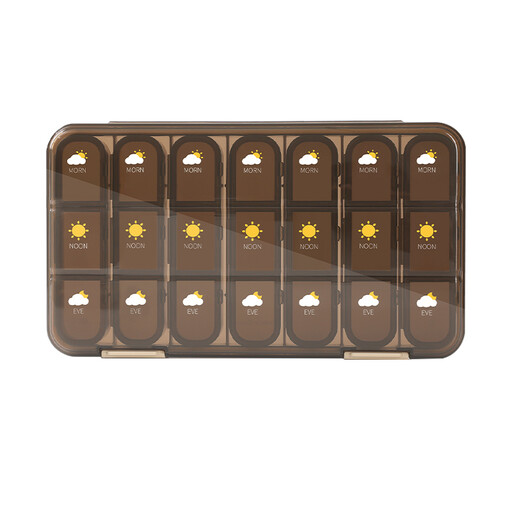
Why this fits the profile: The layout with three compartments per day is clear for a regular morning, afternoon and evening routine.
The 21 individual compartments prevent all the pills for a week from getting mixed together.
21 compartments, ABS/PP/TPE materials and a compact size of approximately 23.1 × 13 × 3 cm.
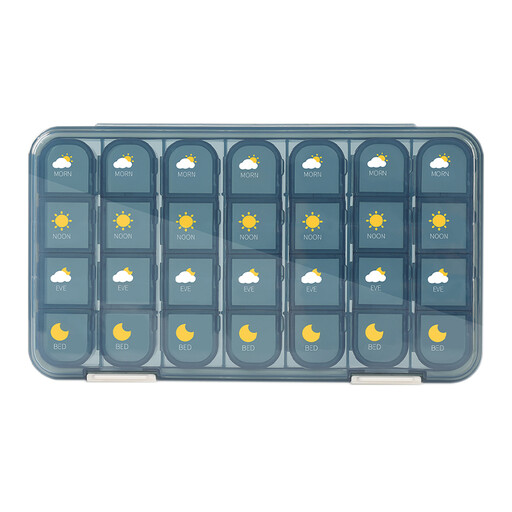
Why this fits the profile: The four compartments per day offer more structure for a more detailed schedule with multiple dosage times.
The daily layout with morning, afternoon, evening and night prevents an extra dosage time from ending up in the wrong compartment.
28 compartments, individual snap-lock closures and the same portable size as the 21-compartment version.
Why this fits the profile: The large 21-compartment layout combines a week’s supply with a size that, according to the description, fits in a handbag, rucksack or suitcase.
The individual snap-lock lids help keep the contents of each compartment separate during transport.
Portable design, three compartments per day and space for pills, capsules, vitamins or supplements.
We’ve put together a full, up-to-date list of products that fully meet these strict selection criteria and current European safety regulations.
Yes, if you have three fixed dosage times per day. The 21 compartments are divided across seven days with three compartments per day. For four dosage times, a medicine organiser with 28 compartments makes more sense.
The lifespan depends on how often the lids are opened, how full the compartments are, and how the organiser is cleaned. Regularly check that the closures still click shut properly and that no cracks have appeared. Replace the organiser if the labels become unreadable or the compartments no longer close properly.
That can be practical, but when travelling also take the original packaging, patient information leaflet and relevant prescription details with you. A portable medicine organiser is designed for organisation and transport; the models mentioned are not described as waterproof storage. Keep the organiser dry and out of reach of children.
