
Vandaag of morgen in huis

Kwaliteit gegarandeerd

Welkomstaanbiedingen ontgrendelen: GRATIS bezorging | Tot 80% korting | Gratis 30 dagen JoyPlus-proefperiode
Download de app
A 60 cm extractor hood suits many standard hobs, making it a sensible choice for smaller kitchens, flats and rented homes. However, width alone isn’t enough to help you choose the right kitchen extractor hood. A model with a high extraction rate, for example, can be noisy, while a compact appliance with low energy consumption may be less suitable for frequent wok cooking or frying.
Joybuy Product Recommendation Officer helps you assess the key differences without taking marketing claims at face value.
A high airflow rate sounds appealing, but performance also depends on the setting you choose, the ducting, bends in the duct and how the hood is installed. An extractor hood with external extraction can carry cooking fumes outside. With recirculation, air passes through a grease filter and usually a carbon filter before being returned to the kitchen.
So don’t compare maximum extraction rates alone. Check whether the quoted figure applies to normal operation, an intensive setting or recirculation.
The noise level in decibels is usually listed separately for the lowest and highest settings. A model that runs quietly on its lowest setting may be noticeably louder at maximum power. It’s especially worth checking the dB figures for each setting if you have an open-plan kitchen.
A recirculating extractor hood doesn’t need an external duct, which is handy in a flat. However, carbon filters need to be replaced periodically, unless the product information specifies a different type of filter. The metal grease filter also needs regular cleaning. A washable filter reduces ongoing maintenance, but doesn’t remove the need to clean it.
A 60 cm extractor hood is suitable for a hob of roughly the same width. If you have a wider hob, a 90 cm extractor hood can provide more coverage. This is particularly useful in an open-plan kitchen or if you often cook with several pans at once.
Also consider the design:
Check the product dimensions, chimney height and required clearance above the hob before you buy. For example, the COMFEE’ KWH-SLIF17B-60 specifies an installation height of 650 to 750 mm. Always follow the instructions for your chosen model, especially with gas or induction hobs.
A lower extraction rate may be enough for light cooking in a small kitchen. If you fry, cook with a wok or use an open-plan space every day, a more powerful model is more practical. Product specifications vary considerably: the COMFEE’ 60 cm visor hood lists 200 m³/h, while the Ciarra CBCG6736H-G lists 650 m³/h.
These figures aren’t directly comparable on their own. Also check:
An extractor hood with a metal grease filter is practical if the filter can be removed and washed. Some models specify that the aluminium filter is dishwasher-safe; always follow the instructions for use.
An extractor hood with LED lighting illuminates the hob without the need for extra lights. Check that the brightness or colour temperature suits your kitchen.
The energy label helps you compare energy consumption. According to the product specifications, a model rated A+, A++ or A+++ may use less energy each year than one rated B or C. Actual consumption depends on how often and at what setting you use the extractor hood.
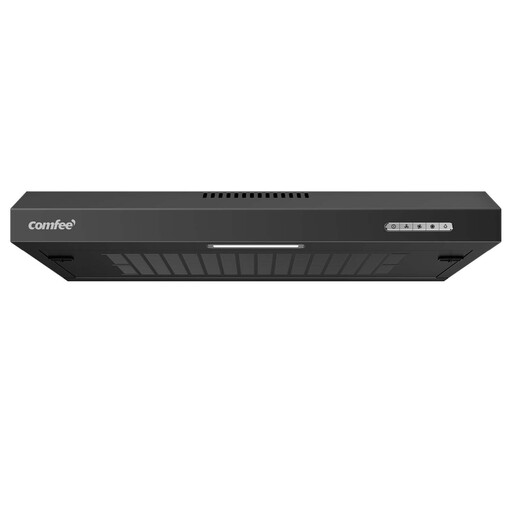
Why it suits this type of user: This 60 cm model can be fitted beneath a cupboard or on a wall. It’s designed for compact kitchens and has simple controls with three speeds.
The product information lists both external extraction and recirculation. The description says a separate cotton filter is needed for recirculation, so check this before buying.
60 cm wide, with a stated airflow rate of 200 m³/h, LED lighting and a removable aluminium filter.

Why it suits this type of user: This model combines a 60 cm wall-mounted design with app and Wi-Fi controls, LED lighting and two extraction modes for a modern kitchen.
The specifications list a washable aluminium grease filter and carbon filters for recirculation. Check the manual for how often the carbon filters need replacing.
Stated airflow rate of 650 m³/h, A+++ energy rating, maximum noise level of 59 dB and four speeds, including a boost setting.
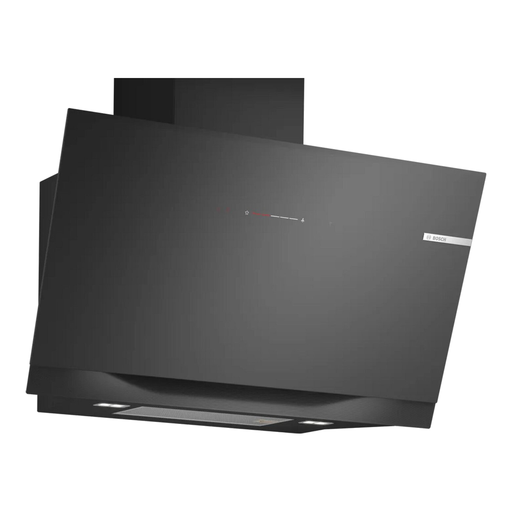
Why it suits this type of user: This 90 cm angled extractor hood is designed for larger cooking areas and open-plan kitchens where greater coverage and multiple settings are useful.
The stated extraction rate for normal operation and the intensive setting are listed separately. The specifications also include five speeds, a dishwasher-safe filter and a timer.
90 cm wide, with an A+ energy rating, LED lighting, a normal extraction rate of up to 441 m³/h and an intensive setting of up to 1007 m³/h, according to the product information.
We’ve put together a full, up-to-date list of products that meet these strict selection criteria and current European safety regulations.
It’s generally a good fit for a 60 cm hob. Be sure to measure the actual width of your hob and check the installation instructions. If you have a wide cooking area, cook intensively or have an open-plan kitchen, a 90 cm extractor hood can provide more coverage.
With external extraction, fumes are carried outside through a duct. This can be a good option if you already have a suitable duct in place. Recirculation is more flexible in flats, but usually requires carbon filters and regular maintenance. Check whether both options are available for each model and whether filters are included.
It depends on how often you cook and how much grease or steam is produced. The product information for some models recommends cleaning every two to four weeks. You can often remove and wash a metal aluminium filter. Switch off the appliance and follow the manual before removing or cleaning any filters.
