
Vandaag of morgen in huis

Kwaliteit gegarandeerd

Welkomstaanbiedingen ontgrendelen: GRATIS bezorging | Tot 80% korting | Gratis 30 dagen JoyPlus-proefperiode
Download de app
Choosing a new cooker hood seems simple, until you dive into the specifications. Especially with a popular choice like a 60 cm black cooker hood, the market is vast and the marketing terms can be confusing. Many people fall into the same traps: they buy a model that looks good but, in practice, is too loud, doesn't extract enough air, or isn't suitable for their kitchen.
As a Joybuy Product Recommendation Officer, I'm here to help you cut through the noise. We'll focus on the facts so you can choose a model that truly works for your situation. Let's discuss the three most common pitfalls.
To make the right choice, ignore the marketing hype and focus on three verifiable specifications. These will determine whether a 60 cm black cooker hood becomes an asset to your kitchen or a source of frustration.
The required capacity depends on the size of your kitchen. A simple rule of thumb is: length x width x height of the kitchen (in metres) x 10. This gives an indication of the m?/h needed to refresh the air in the room ten times per hour.
Example: an open-plan kitchen measuring 4m x 5m with a 2.5m ceiling has a volume of 50 m?. You would then need a cooker hood with a capacity of around 500 m?/h on a normal setting.
Check the specifications for the capacity of the middle settings, not just the maximum. This is the performance you'll be using daily.
The noise level is crucial, especially in an open-plan kitchen. To the human ear, a difference of just 3 dB is a doubling of the sound.
Check the dB level on the setting that provides the extraction capacity you need.
Your choice depends on the structural layout of your home.
Below are several models that score well on the above criteria, matched to different user profiles.
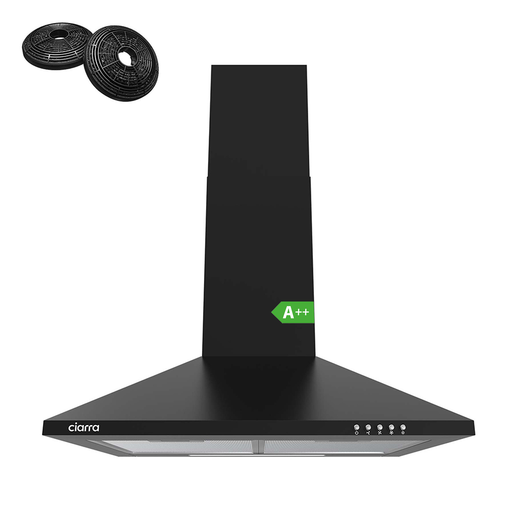
Why This Fits Their Persona: Ideal for those seeking a reliable, no-frills wall-mounted extractor. This model focuses on core functions without complex extras, perfect for a first kitchen or a budget-conscious renovation.
The specifications are transparent: the 367 m?/h capacity is achieved at an acceptable noise level of 63 dB. No exaggerated claims, just realistic performance for daily use.
Energy Class A++ is very efficient for this price point. The physical push-button controls are durable and easy to use.

Why This Fits Their Persona: For those who want a sleek design, high-end performance, and modern technology. Perfect for an open-plan kitchen where both aesthetics and functionality matter. The Wi-Fi and app control offer added convenience.
This model combines a high capacity (650 m?/h) with a remarkably low noise level of up to 59 dB. It genuinely delivers powerful performance without falling for the "silent" myth.
Energy Class A+++ is exceptionally efficient. The combination of a powerful motor, smart controls, and low energy consumption makes this a future-proof choice.
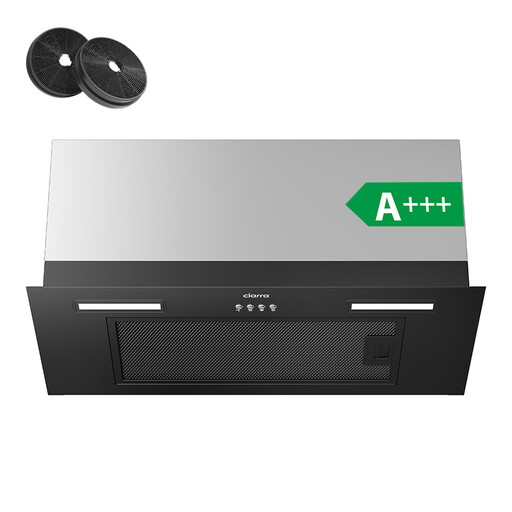
Why This Fits Their Persona: Designed for those who want a completely invisible extractor hood that integrates seamlessly into a kitchen cabinet. Perfect for sleek, minimalist kitchens where appliances should not stand out.
Built-in models often have lower capacity. This model breaks that pattern with a powerful 650 m?/h, meaning you don't have to compromise on performance for an invisible design.
Energy Class A+++ and a very low annual consumption (9 kWh/a) make this one of the most efficient built-in models on the market. Suitable for both ducting and recirculation.
The right cooker hood depends on your kitchen and cooking style. If the models above aren't exactly what you're looking for, browse our full range.
This largely depends on your cooking habits. For average use, it's recommended to replace the carbon filter every 3 to 6 months. If you fry food often or cook intensively, you may need to do it more frequently to ensure proper odour filtration. Some filters are washable, but most are designed for single use.
While 10 decibels may seem like a small difference on paper, in practice, it's significant. The human ear perceives a 10 dB increase as a doubling of loudness. A 55 dB cooker hood produces a sound comparable to a quiet conversation, while 65 dB is more like a busy office or a distant vacuum cleaner. For an open-plan kitchen, every decibel less is a noticeable improvement in comfort.
Yes, for a standard 60 cm hob, a 60 cm cooker hood is the correct size. The general rule is that the cooker hood should be at least as wide as the hob to effectively capture cooking fumes. A wider hood can further improve efficiency, but it's not strictly necessary for a 60 cm hob.
