
Vandaag of morgen in huis

Kwaliteit gegarandeerd

Welkomstaanbiedingen ontgrendelen: GRATIS bezorging | Tot 80% korting | Gratis 30 dagen JoyPlus-proefperiode
Download de app
A 60 cm cooker hood fits above many standard hobs, making it a sensible choice for flats, rented homes and compact kitchens. However, width alone says little about whether it is suitable. A model may fit, but still have insufficient extraction power, make too much noise or be incompatible with your ventilation system.
Pay particular attention to these three common pitfalls:
Capacity is expressed in m³/h, meaning the maximum volume of air the hood can move per hour. A 370 m³/h cooker hood is suitable for everyday cooking in a small kitchen, while a model with 650 m³/h offers more reserve power for stir-frying, deep-frying or using several cooking zones.
Always compare the setting used for the measurement. A listing such as 650 m³/h cooker hood may refer to the boost function. Also check:
A simple guideline is to multiply the kitchen volume by around 10 to 12 air changes per hour. For a 30 m³ kitchen, this gives approximately 300 to 360 m³/h as a practical minimum. The actual requirement also depends on your cooking habits, duct length and the number of bends in the extraction duct.
With external extraction, cooking vapour is carried outside through a duct. This can remove odours and moisture effectively, but requires a suitable connection. Check the diameter of the extraction duct and follow the installation instructions.
A recirculating cooker hood passes the air through a grease filter and carbon filter before returning it to the kitchen. This is often practical for tenants and flats without an external duct. However, the vapour is not removed in the same way as with an external duct. A carbon filter must also be maintained or replaced in accordance with the instructions.
On a product page, look out for terms such as:
You can identify a quiet cooker hood not only by its marketing name, but by the stated noise level in dB. A difference of just a few decibels can be noticeable in an open-plan kitchen. Check the level at both the normal and maximum settings; a boost setting is often louder.
An energy-efficient cooker hood has a favourable energy rating, but also check the stated annual consumption in kWh. This provides a more useful comparison than the letter rating alone. Extra features such as LED lighting, a timer, touch controls or Wi-Fi can be useful, but do not automatically make the installation more suitable for your kitchen.
The options below are based on the stated dimensions, capacity, energy rating, filters and control options. Product specifications may vary between versions, so check the current product page and installation manual.
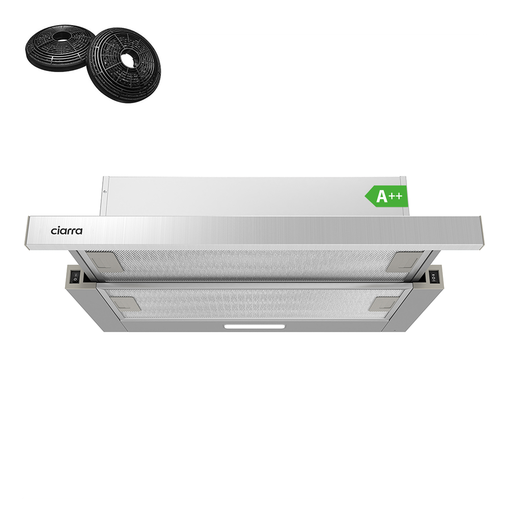
Why it suits this profile: This compact telescopic cooker hood is 599 mm wide and can be installed beneath a kitchen cabinet. The extendable panel takes up less visible space when the hood is not in use.
The product listing mentions both external extraction and recirculation, with two carbon filters included. This makes it clearer in advance which installation options are available.
370 m³/h maximum airflow, A++ energy rating, washable aluminium filters and integrated LED lighting.
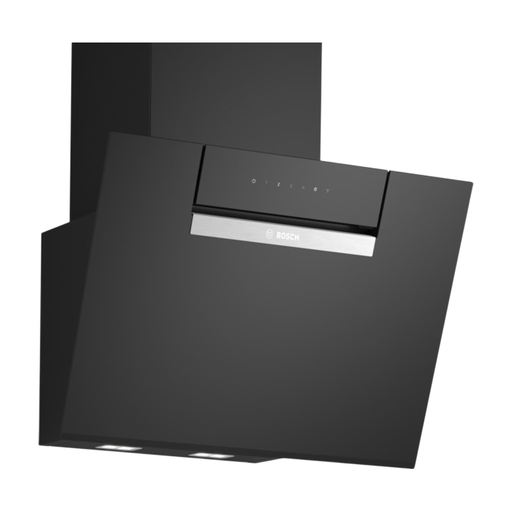
Why it suits this profile: This black wall-mounted model is designed for anyone looking for a visible, angled hood with touchscreen controls and LED lighting. The stated product width is 59 cm.
The listing specifies a maximum noise level of 56 dB, an A+ energy rating and a dishwasher-safe filter. The carbon filter is not included.
Four settings, LED light, touchscreen and a stated extraction capacity of 768 m³/h. For recirculation, check which filter pack is required.

Why it suits this profile: This black 60 cm wall-mounted cooker hood is aimed at households that want to combine a higher stated capacity with recirculation and control via Wi-Fi or an app.
According to the product listing, two CBCF003 carbon filters are included, and both recirculation and external extraction are possible. The maximum noise level is stated as 59 dB.
650 m³/h maximum airflow, A+++ energy rating, four settings including booster and sensor controls with Wi-Fi app.
Before buying, measure the available width, depth and height. With a 60 cm under-cabinet cooker hood, the underside of the kitchen cabinet must provide sufficient clearance. A wall-mounted model also requires fixing points and an adjustable chimney.
During installation, take the minimum distance from the hob into account. The exact distance is given in the manual and may vary depending on the hob and cooker hood. Gas hobs require extra care because of the open flames. Have electrical connections and complex extraction installations carried out in accordance with local regulations.
Clean the metal grease filter regularly. A dirty filter reduces airflow and can pose a safety risk. If you use recirculation, check the recommended replacement interval for the carbon filter. LED lighting generally uses less energy than older lighting technology, but for a fair comparison, look at the total annual consumption.
We have put together a complete, up-to-date list of products that fully meet these strict selection criteria and the applicable European safety regulations.
A 60 cm model is suitable for a hob of the same width, provided that the installation height and extraction zone are appropriate. With a wider hob, a larger hood may provide better coverage. Also check that the model is positioned fully above the cooking zones.
A washable aluminium grease filter should be cleaned approximately every two to four weeks under normal use. If you do a lot of deep-frying or stir-frying, it may need cleaning more often. A carbon filter for recirculation usually has a separate replacement interval; follow the product manual for guidance.
This depends on the power consumption, energy rating and how long it is used. The stated annual consumption in kWh makes comparisons easier. Multiply this figure by your current electricity tariff. The lighting and frequent use of the highest setting affect total consumption.
