
Vandaag of morgen in huis

Kwaliteit gegarandeerd

Welkomstaanbiedingen ontgrendelen: GRATIS bezorging | Tot 80% korting | Gratis 30 dagen JoyPlus-proefperiode
Download de app
A 60 cm cooker hood suits many standard hobs and kitchens in Dutch flats, rented homes and family houses. But width alone isn’t enough to help you choose the right cooker hood. The connection, extraction method, noise level and maintenance are just as important.
A black cooker hood can also complement darker appliances, but a good-looking design doesn’t necessarily mean it’s practical for your kitchen. So, keep an eye out for these common pitfalls.
A high figure in m³/u may sound appealing, but it doesn’t tell you everything about how the hood will perform day to day. Actual airflow is also affected by the length and bends of the extraction duct, the hose diameter and the fan speed you choose.
With recirculation, cooking fumes aren’t extracted outside. Instead, the air passes through a grease filter and usually a charcoal filter before flowing back into the kitchen. With external extraction, odours and moisture can be carried away through a duct, but your home needs a suitable connection.
Check more than just the width of your hob. Also measure:
For example, a 60 cm wall-mounted cooker hood may be 600 mm wide, but its depth or chimney height could still make it difficult to fit beneath a low ceiling or wall unit.
Grease filters need to be cleaned regularly. A washable aluminium grease filter means you won’t have to replace the filter each time, but it still needs looking after. If you use recirculation, also check whether a compatible charcoal filter is included and when it needs replacing.
A standard width of 60 cm suits many hobs of the same size. Measure the cooking area and the wall beforehand. Also check whether the model is designed for wall mounting, built-in installation or under-cabinet installation. Not every model sold as a 60 cm cooker hood has the same installation method.
If you’re considering an angled or glass cooker hood, check the space above the hob. Its design may give you more room to move, but the minimum installation height still depends on the instructions and the type of hob.
A ducted cooker hood carries air outside through a duct. This can be a good option if there’s already an extraction outlet. Check the connection beforehand, and ask for permission before making any alterations in a rented home.
A recirculating cooker hood is a more flexible option for flats and kitchens without an external duct. The charcoal filters must be fitted correctly and maintained. Recirculation doesn’t replace ventilation in the room, so use the cooker hood in line with the installation and safety instructions.
The maximum noise level is usually given in decibels. Compare the different fan speeds: a model may be relatively quiet on a low setting but noticeably louder at its highest speed.
A cooker hood with push-button controls is simple and straightforward to use. Touch controls and Wi-Fi can offer extra convenience, but they also add more electronic features. Choose controls that suit your everyday needs rather than simply opting for the longest list of features.
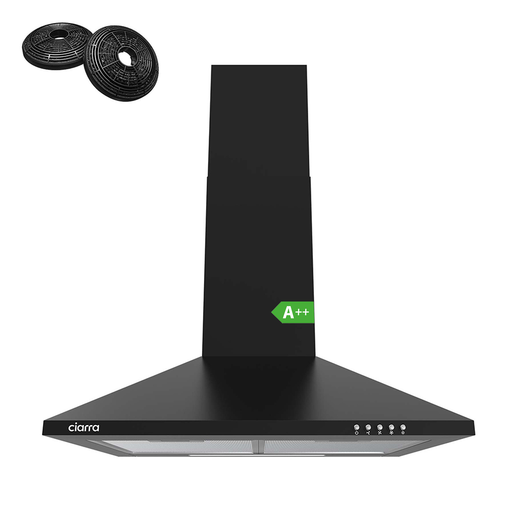
Why it suits this type of buyer: A straightforward model for anyone looking for a black wall-mounted cooker hood with simple controls. It supports both recirculation and external extraction.
Having a choice of two extraction methods means you don’t have to commit to one type of connection from the outset. Be sure to check the installation options available in your home.
Three speeds, push-button controls, LED lighting and two washable aluminium grease filters. Maximum stated airflow: 367 m³/u.

Why it suits this type of buyer: A good choice if touchscreen, Wi-Fi and app controls are important to you, or if you need higher stated airflow for a medium-sized kitchen.
The product specifications list both recirculation and external extraction. This lets you choose the installation method that suits your home, provided the necessary filters or duct are available.
Maximum stated airflow of 650 m³/u, four speeds including boost, Wi-Fi/app controls and two black washable aluminium filters.
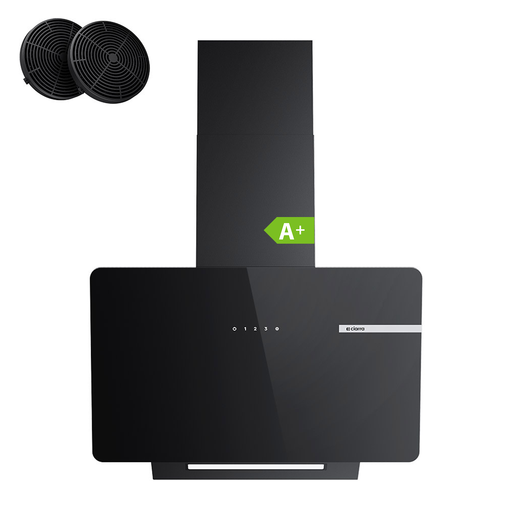
Why it suits this type of buyer: An option for households that cook regularly and want an angled black cooker hood with easy-to-use touch controls.
The model has a reusable metal filter and supports both extraction methods. This makes maintenance more straightforward than with a system that uses disposable filters only.
Stated airflow of 580 m³/u, LED lighting, sensor touch controls and a maximum noise level of 64 dB.
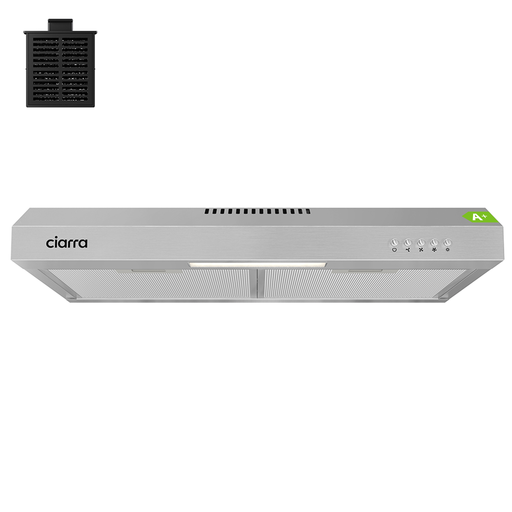
Why it suits this type of buyer: A compact model for limited spaces, with a silver-coloured body and the option of wall-mounted or built-in installation.
Its compact height of 85 mm reduces the chance of clashing with wall units. Measure the recess and check the installation method you’ve chosen before ordering.
Width of 596 mm, two washable aluminium filters, push-button controls and maximum stated airflow of 184 m³/u.
Clean the grease filter roughly every two to four weeks, depending on how often you cook and bake. Follow the instructions for your specific model. Wipe the outside with a soft, damp cloth and avoid abrasive cleaners.
Switch off the power before removing filters or carrying out maintenance. For external extraction, check that the hose isn’t kinked. With recirculation, make sure the charcoal filter is fitted correctly and maintained according to the product instructions.
We’ve put together a complete, up-to-date list of products that meet these strict selection criteria and the applicable European safety regulations.
Not necessarily. As well as the width, check the depth, installation height, chimney dimensions and connection. A 60 cm wall-mounted cooker hood must be installed at the correct distance above the hob, as specified in the instructions.
Recirculation can be a practical option if there’s no external extraction duct or you’re not allowed to install one. You’ll need compatible charcoal filters and should clean the grease filter regularly. Also ventilate the kitchen in line with the options available in your home.
That depends on its power rating, how long you use it and the speed you select. Check the stated power in watts and the annual energy consumption in kWh per year. Higher airflow may mean greater energy use on the intensive setting, so compare not only energy ratings but also how you cook.
