
Vandaag of morgen in huis

Kwaliteit gegarandeerd

Welkomstaanbiedingen ontgrendelen: GRATIS bezorging | Tot 80% korting | Gratis 30 dagen JoyPlus-proefperiode
Download de app
A 60 cm cooker hood suits many standard hobs and compact kitchens. However, its width tells you little about how well it will perform. A model with a high stated extraction rate may disappoint in practice if the duct is too narrow, the filters become saturated or the hood is installed incorrectly.
So, watch out for these three common pitfalls:
An extraction rate of around 300 to 450 m³/h may be enough for a compact kitchen, depending on how often and how intensively you cook, and on the ventilation. A higher rate may be more practical in an open-plan kitchen or if you regularly stir-fry or deep-fry. For example, a model with an extraction capacity of 650 m³/h offers extra headroom with its boost setting.
A higher figure does not automatically mean your kitchen will stay quieter or cleaner. Also check:
With extraction to the outside, the cooker hood must connect to the existing duct. A long hose with several bends reduces airflow. If you live in a flat without a suitable duct, a recirculating cooker hood is often easier to install. Remember to factor in the cost of buying and replacing carbon filters.
A quiet cooker hood is particularly useful in an open-plan kitchen or if you want to chat while cooking. Don’t rely on words such as “quiet”; check the stated noise level. The products in this selection list figures of around 56 to 64 dB on the highest setting.
The difference between the lowest and highest settings can be significant. A cooker hood that sounds pleasant on setting one may be noticeably louder on boost. Think about which setting you’re likely to use most. For everyday simmering, a quiet low setting is often more important than a short burst of boost for intense frying.
A metal grease filter needs regular cleaning. Some models have a dishwasher-safe filter; others only specify that the aluminium filter is removable and washable. Recirculating models also need a carbon filter. Check whether one is included and which replacement model you’ll need later.
A cooker hood with LED lighting illuminates the hob directly and usually uses little electricity. Controls may include push buttons, touch controls or an app. A cooker hood with touch controls has a sleek look, while push buttons give you immediate tactile feedback. Wi-Fi or app features are most useful if you want to adjust the extraction power and lighting from your smartphone.
Check the official product information for the energy label. Annual energy consumption depends on how you use the cooker hood, so it won’t translate directly into your own energy costs. A brand’s claims about quiet operation or energy savings are based on its own research or measurements, so always compare the stated technical figures.
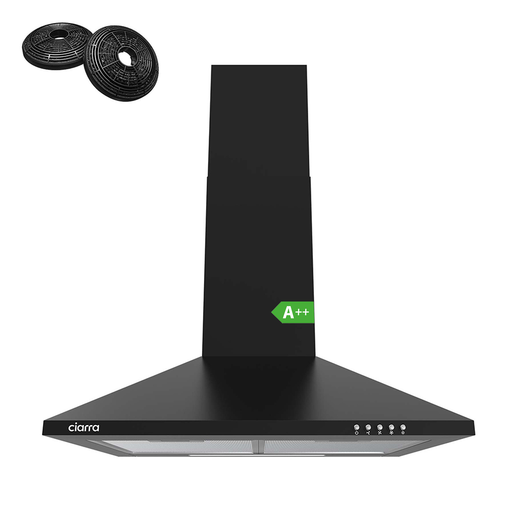
Why it suits this type of buyer: This black wall-mounted model fits a standard 60 cm cooking zone and supports both recirculation and extraction to the outside. Push-button controls keep it simple to use.
You’re not limited to just one ventilation method. The specifications also list two washable aluminium grease filters and a compatible carbon filter type included in the box.
Maximum airflow of 367 m³/h, A++ energy rating, LED lighting and a stated maximum noise level of 63 dB.
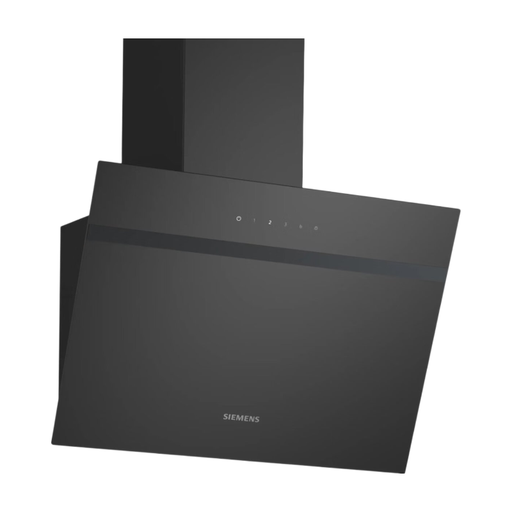
Why it suits this type of buyer: The angled design gives you more headroom above the hob. TouchControl, LED lighting and a filter saturation indicator make it a good choice if you want controls and maintenance to be straightforward.
The filter indicator helps you avoid putting off cleaning. The product specifications list a dishwasher-safe filter and three settings with a turbo function.
59 cm wide, A energy rating, stated airflow of 430 m³/h and a maximum noise level of 60 dB according to the product information.

Why it suits this type of buyer: This model is designed for people who cook more intensively in an open-plan kitchen and want to combine sensor, Wi-Fi or app controls with either recirculation or extraction to the outside.
The product specifications list both carbon filters for recirculation and a connection for extraction to the outside. This lets you choose the installation method that suits your home.
Maximum airflow of 650 m³/h, four speeds including boost, two washable black aluminium filters and a stated maximum noise level of 59 dB.
We’ve put together a complete, up-to-date list of products that meet these strict selection criteria and the current European safety regulations.
Before buying, measure the available wall space and check the recommended distance from the hob. The minimum distance depends on the instructions for your chosen model; it may differ for gas and electric hobs. Also check whether a 120 or 150 mm extraction duct will fit your existing connection.
Clean metal grease filters every two to four weeks, depending on how often you use the cooker hood. For recirculating models, replace the carbon filters as instructed in the product manual. Switch off the power before cleaning, and don’t use abrasive cleaners on black glass or painted surfaces.
Yes, a 60 cm cooker hood is generally chosen to match a hob of the same width. Still, check the exact dimensions, installation method and recommended distance in the manual. If you cook intensively or have a wide hob, a little extra overlap may be preferable.
Extraction to the outside removes moisture, odours and cooking fumes from your home, but requires a suitable duct. Recirculation is more flexible for flats or kitchens without an external connection. It requires carbon filters, and moisture remains in the room.
That depends on the energy rating, annual consumption and how often you use the higher settings. Compare the stated annual energy consumption and noise level in dB. Lower energy consumption doesn’t automatically mean a model will cost less to run for your cooking habits; how long you use it and how often you use boost both matter.
