
Vandaag of morgen in huis

Kwaliteit gegarandeerd

Welkomstaanbiedingen ontgrendelen: GRATIS bezorging | Tot 80% korting | Gratis 30 dagen JoyPlus-proefperiode
Download de app
A 4WD RC drift car might seem simple at first glance: four wheels, a remote control and a battery. In practice, the drivetrain, tyres and steering determine whether you can drift smoothly or end up disappointed after just a few sessions. Parents are often looking for a fun gift for children aged around 8 and over, while experienced enthusiasts focus on responsiveness, control and upgrade options.
As a Joybuy Product Recommendation Officer, I look beyond speed and appearance. The points below will help you turn marketing claims into product details you can check.
A product title might include terms such as “high speed” or “racing car”, but without information about the controls, it’s hard to tell how easy the car is to handle. Beginners may find a car with only an on/off control tricky to manage. Proportional throttle and steering generally give you more control over speed and cornering.
Check the transmitter’s range, too. A stated range, such as 50 metres, is a product specification based on certain conditions, not a guarantee for every indoor space or outdoor location.
An RC car with interchangeable tyres is more practical than a model with just one fixed type. Smooth drift tyres help you perform controlled slides on a flat surface. According to the product description, racing tyres provide more grip on straights and through fast corners.
For best results, use an indoor RC car on a clear, flat surface such as tiles or a smooth wooden floor. Carpets, gravel and grass can significantly affect how it handles. 4WD makes the car more powerful, but it won’t make an unsuitable surface suitable.
A built-in lithium battery means you won’t have to keep buying disposable batteries for the car. Still, check the stated playtime, charging time and charging method. Several 1:24 models list a playtime of around 20 to 40 minutes per charge. That’s enough for a play session, but an extra battery can be useful if you’re planning several races in a row.
Also check whether the remote control needs its own AA or AAA batteries. “Batteries included” may only refer to the car.
A 4WD RC drift car is powered through all four wheels. This can help with acceleration and initiating a drift. For indoor racing, a compact size, low weight and flat surface are often more important than motor power alone.
If you mainly want to drive over grass, sand or obstacles, a crawler or off-road model may be a better choice. A remote-controlled drift car designed for racing is primarily intended for smooth surfaces.
A 2.4 GHz remote control is common on modern RC cars. According to product descriptions, this technology supports the simultaneous use of multiple vehicles with less chance of signal interference. When buying, check that this is stated in the specifications and that the transmitter offers proportional control.
A model with two sets of tyres gives you more options: drift tyres for controlled slides and racing tyres for grip on straight, flat tracks. LED lights are mainly a visual feature and make driving in low light more appealing, but they’re no substitute for a safe, clear place to play.
Also check the recommended age, small parts and supervision requirements. A model described as suitable for children aged 8 and over may still need adult supervision when charging, changing tyres and driving outdoors. Don’t use RC toys on public roads or near traffic.
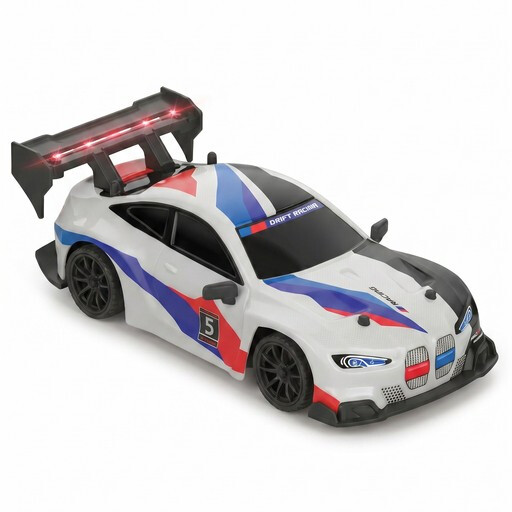
Why it suits this profile: This model combines 4WD, two sets of tyres, LED lights and USB charging in one compact electric RC car for indoor use and on flat outdoor surfaces.
The description covers more than just speed: it also mentions a mechanical steering mechanism, two types of tyres and a range of 50 metres.
4WD, interchangeable drift and racing tyres, LED lights and a stated playtime of around 20 to 40 minutes per charge.
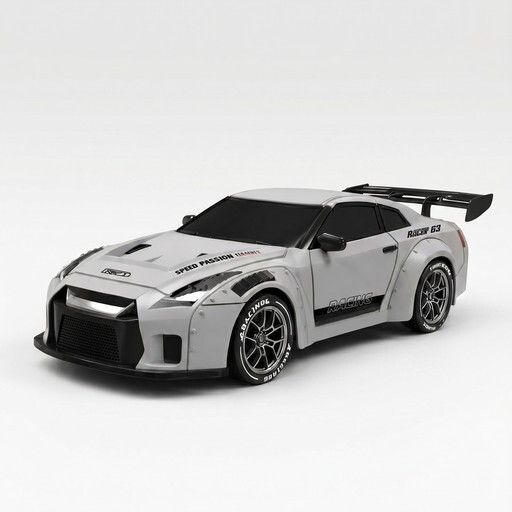
Why it suits this profile: The combination of gyro stabilisation, a servo, two speed settings and independent suspension will appeal to enthusiasts who want to fine-tune how their car handles.
Instead of relying on a speed claim alone, the product information lists specific features: an adjustable gyro, low and high speeds, interchangeable tyres and shock absorption.
7.4V LiPo battery, LED lights, proportional controls and two types of tyres for drifting and racing.
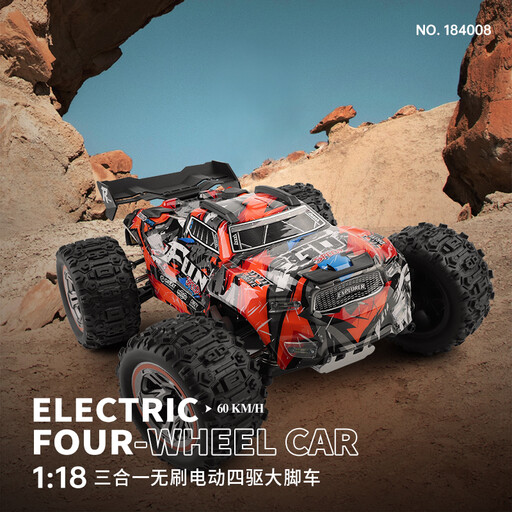
Why it suits this profile: This model is designed for rougher terrain and offers three configurations for users looking for more than just an indoor RC car.
The description specifies brushless drive, independent suspension, 4WD and a 2.4 GHz transmitter. Always check the exact water and terrain limitations before use.
Three vehicle configurations, a brushless motor, independent suspension and a rechargeable battery, according to the product description.
We’ve put together a complete, up-to-date list of products that meet these strict selection criteria and current European safety regulations.
That depends on the model, the age recommendation and where it will be driven. For children aged around 8 and over, compact 1:24 models with two speed settings or proportional steering are often easier to manage. Always check the warnings on the product page and have an adult help with charging and maintenance.
Several of the drift models mentioned list a playtime of around 20 to 40 minutes per charge. Actual playtime depends on speed, surface, temperature and driving style. Charge the battery according to the instructions and avoid storing it fully discharged for long periods.
Yes, but mainly on flat, dry surfaces. A drift car designed for racing will generally perform better on tiles, tarmac or a smooth driveway than on grass or gravel. For rough terrain, a crawler, monster truck or another off-road RC car is a better choice. Always keep away from traffic, water and obstacles that could damage the car or battery.
