
Panorama editor checking fine detail
Wants to inspect transitions and small parts of the image closely during post-production. Adobe explains how Lightroom can combine multiple photos into a panorama.


A 27-inch 4K photo monitor is a good choice for checking fine detail and assessing colour; an ultrawide works well if you want to see the panorama and tool panels side by side. The 27-inch models from EIZO, BenQ and ASUS we looked at have a resolution of 3840 × 2160 pixels. LG and Philips list 3440 × 1440 pixels for their ultrawide models, offering more horizontal but fewer vertical pixels. At a shared desk, adjustability, connections and, if needed, KVM also matter. Adobe describes stitching photos together as a software task: the monitor won’t create the panorama for you.
Wants to inspect transitions and small parts of the image closely during post-production. Adobe explains how Lightroom can combine multiple photos into a panorama.
Wants to match what’s on screen to the intended digital or printed output, so pays attention to colour gamut, calibration and colour profiles. Adobe explains how colour profiles can link the way images appear across devices and in the final output.
Wants to readjust the screen position and connect the monitor to their own laptop and peripherals. Arboportaal outlines considerations for screen-based work in the workplace.
Best for: checking fine detail and workflows where you assess colour carefully.
Trade-off: EIZO, BenQ and ASUS list a resolution of 3840 × 2160 pixels for the 27-inch models we looked at. The screen offers less physical width for viewing a long panorama alongside tool panels.
Best for: a layout that lets you view the panorama and editing panels side by side.
Trade-off: LG and Philips list a resolution of 3440 × 1440 pixels for the models we looked at: more horizontal workspace, but fewer vertical pixels than the 4K models mentioned above.
| Consideration | What should you check? | Who should consider this? |
|---|---|---|
| Detail in the panorama | Compare the resolution and screen size; check that your computer supports the required resolution through your chosen connection. | If I want to inspect small transitions and details in the image, fine detail matters most to me. Around 33% of consumers put detail first. |
| Colour for the intended output | Check the stated colour gamut for the exact model and consider which profiles and calibration options your workflow requires. | When I assess colour for digital or printed output, I want to tailor my colour management accordingly. Around 27% of consumers prioritise colour management for the final output. |
| Switching between users | Check video through the laptop connection, the USB-C charging power you need and whether the exact model has a KVM switch. | If I switch between laptops and peripherals at a shared desk, I want to know whether one connection will do the job. Around 20% of consumers prioritise ease of switching. |
| Space and adjustability | Measure the available width and depth, and check the height adjustment, tilt and space taken up by the stand. | When several people use the same workspace, I want to be able to readjust the screen position and make sure the monitor will fit. Around 20% of consumers prioritise the setup and desk space. |
The LG and Philips ultrawide models we looked at have a resolution of 3440 × 1440 pixels; the EIZO, BenQ and ASUS 27-inch 4K models we looked at have 3840 × 2160 pixels. So a wider workspace doesn’t automatically mean more vertical pixels.
Choose based on what you want to see at the same time: the panorama and panels side by side, or more detail for close inspection.
A stated colour gamut or factory calibration alone doesn’t tell you how colours will appear throughout your workflow. Adobe describes colour profiles as part of managing colour across devices and output.
Check how you can set the monitor to use a suitable profile and what output you’ll be assessing.
USB-C video and power are different features from a KVM switch. The stated charging power also varies by model.
Check the ports, the charging power you need and the KVM function for the exact model and the laptops you use.
If your devices’ connections aren’t compatible with your chosen setup, you may need extra cables or adapters.
The ColorEdge CS2740 is a 27-inch 4K option for photography and image editing.
The PhotoVue SW272U combines a 27-inch 4K photo profile with colour features and KVM.
The ProArt PA279CRV is a 27-inch 4K screen with a compact base and a range of adjustment options.
The UltraWide 34WQ75C-B is a 21:9 option with KVM, designed to display images and work panels side by side.
The B Line 346B1C/00 is a 34-inch ultrawide option with USB-C and an ergonomic stand.
This selection includes 27-inch 4K screens for checking fine detail and ultrawide models for viewing a panorama and work panels side by side. Check the colour features, connections and adjustment options available on each version to find what suits your shared workspace.
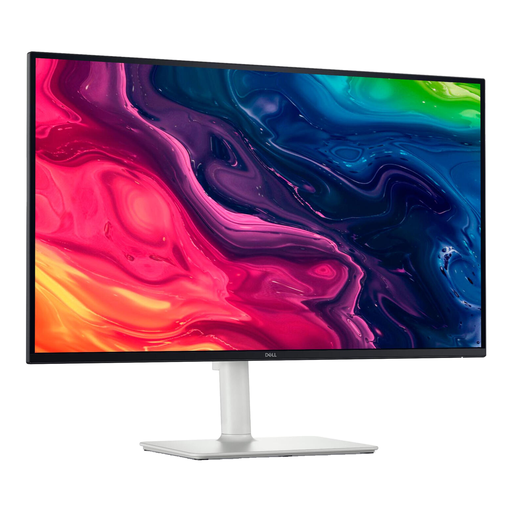 No image available
This 27-inch 4K version is well suited to checking detail in panoramic images and, according to the product description, has an adjustable stand.
3840 × 2160 pixels; IPS panel; height adjustment.
 No image available
A 4K monitor with KVM may suit you if you want to inspect detail and switch between two computers.
3840 × 2160 pixels; 99% sRGB; USB-C with 90 W Power Delivery; KVM switch; adjustable stand.
 No image available
This 27-inch 4K version may suit you for checking detail and colour. At a shared workstation, it’s worth considering how you’ll switch between peripherals.
3840 × 2160 pixels; IPS panel; 99% Adobe RGB; USB-C with 90 W Power Delivery; PIP/PBP; height adjustment. The product information doesn’t list a KVM switch.
 No image available
The ultrawide workspace is designed for viewing a panorama and editing panels side by side; its vertical resolution is lower than that of the 4K option described above.
3440 × 1440 pixels; USB-C dock with 95 W Power Delivery; KVM; RJ45; 15 cm height adjustment.
 No image available
The wide resolution gives you space to view a panorama and work panels side by side; its vertical resolution is lower than that of the 4K option described above.
5120 × 1440 pixels; KVM switch; USB-C dock; RJ45; height-adjustable stand.
No. Adobe explains how Lightroom can combine photos into a panorama using its merge feature; the monitor displays the result and your workspace for editing.
Check the screen position and select the right input for that user. For colour-critical work in Photoshop, you’ll also need a suitable monitor profile; using the same screen settings doesn’t automatically guarantee the same colours on every computer.
No. USB-C can provide video and power, while a KVM switch helps you share connected peripherals between computers. Check which features the exact model offers and whether its charging power is suitable for your laptop.
Compare the energy label for the version you’re considering and check the model-specific information in EPREL. The European Commission states that electronic displays, including computer monitors, carry an energy label on a scale from A to G.