For SDR editing, an appropriate Rec.709 display matters more than an HDR logo alone. If you’re also producing an HDR version, assess separately whether the screen is suitable for that workflow. Compare the stand’s dimensions with your desk, and check that your computer, cable and USB-C power supply are compatible. Manufacturer specifications are not an independent measurement of the colour performance of an individual unit.
Who is this choice relevant to?
SDR filmmaker who prioritises colour
If you mainly edit for Rec.709, look for a suitable colour mode and a calibration process that lets you assess skies, water and grass. BenQ lists a Rec.709 mode for the PD2705U; Adobe describes using a colour meter for objective calibration.
Editor with a shallow desk
If there’s little room behind your keyboard and editing equipment, the monitor’s dimensions including its stand and the option of VESA mounting are important. Compare the stated stand depth of the exact model with the space available on your desk.
Laptop editor or HDR creator
Reducing cables with USB-C and delivering a separate HDR version are two different buying considerations. For USB-C, check that your computer and monitor support the video and charging functions you need; for HDR, assess the whole workflow, not just the screen’s HDR label.
Which features should you prioritise?
When editing polder footage, your choice comes down to the SDR colour workflow, available desk space, laptop connectivity and whether you’ll also deliver HDR.
| What to consider |
What to look for |
Who is this important for? |
| SDR colour reproduction |
Compare the Rec.709 mode or stated coverage, as well as the calibration options. Also check the settings in your editing software and on your screen. |
If I want to assess skies, water and vegetation for a Rec.709 version, I prioritise a suitable SDR colour workflow. Around 33% of consumers prioritise SDR colour. |
| Desk space |
Measure the available width and depth, then compare them with the monitor’s dimensions including its stand. If you’re using an arm, check the VESA pattern and weight capacity too. |
When my desk is shallow, I want to leave enough room for my keyboard and equipment, so I pay attention to the stand, not just the screen size. Around 27% of consumers prioritise physical fit. |
| USB-C and laptop charging |
Check whether your computer supports video over USB-C, how much charging power you need and which cable is required. The BenQ PD2705U lists 65 W, while the ASUS PA279CRV lists 96 W Power Delivery. |
If I edit on a laptop, I want to know whether a single connection can handle my display and charging needs. Around 20% of consumers prioritise connectivity and fewer cables. |
| HDR assessment |
First decide whether you’re creating an HDR master. Then assess the relevant capabilities of the exact model; an HDR label alone doesn’t prove it’s suitable for reference viewing. |
If I want to deliver an HDR version, the screen needs to suit the assessment workflow required for it. Around 20% of consumers prioritise HDR assessment. |
Buying pitfalls when editing in a compact space
-
Assuming a 27-inch screen determines the desk depth you need
The screen size doesn’t tell you how much space the stand takes up. ASUS lists a depth of 21,50 cm including the stand for the PA279CRV; BenQ lists 256,8 mm for the PD2705U.
Measure your desk and compare it with the monitor’s full dimensions including the stand. If you’re using a monitor arm, check that both the mounting pattern and weight capacity are suitable.
If the standard stand doesn’t fit, you may need a suitable monitor arm.
-
Equating DisplayHDR 400 with reliable HDR mastering
An HDR label doesn’t confirm that a screen meets the requirements of your HDR colour assessment.
First decide on your delivery format, then assess the screen alongside the colour management settings in your editing workflow. Don’t use an HDR logo as your only selection criterion.
-
Assuming every USB-C port delivers video and enough power for your laptop
The monitor, computer and cable must support the video function and charging power you need. Manufacturers also list different Power Delivery outputs.
Before buying, compare the specifications of your computer, monitor and cable, including the charging power required.
Depending on the combination, you may still need a separate charger or a suitable cable.
Brands to compare as a reference
ASUS
The ProArt PA279CRV is a 27-inch 4K option with a stated wide colour gamut, USB-C and a relatively shallow stand.
- ASUS lists 99% DCI-P3, USB-C Power Delivery up to 96 W, VESA 100 × 100 mm and a depth of 21,50 cm including the stand.
- The stated HDR support doesn’t confirm that the screen is suitable as a reference monitor for an HDR master.
BenQ
The Creative Pro PD2705U is designed for those combining 4K on a 27-inch screen with an SDR or Rec.709 workflow.
- BenQ lists 99% Rec.709, a Rec.709 mode, USB-C with 65 W and VESA 100 × 100 mm.
- The stated stand depth is 256,8 mm, so be sure to measure your desk depth too.
EIZO
The ColorEdge CS2740 is an option for a 4K colour workflow where repeatable hardware calibration is important.
- EIZO describes hardware calibration with ColorNavigator for this model.
- Check separately which measuring equipment you’ll need; this description isn’t an independent measurement of an individual unit.
Dell
The UltraSharp U2725QE is a 27-inch 4K Thunderbolt hub monitor for those who value connectivity and a tidy laptop workspace.
- Dell lists a 120 Hz refresh rate and a 3000:1 contrast ratio for this model.
- These specifications alone don’t show whether your computer supports all the hub and display functions over a single cable, or whether the screen suits your colour workflow.
LG
The UltraFine 27UP850K-W is a 27-inch 4K IPS model to compare for USB-C, adjustability and stated DCI-P3 coverage.
- LG lists 95% DCI-P3 as a typical value, DisplayHDR 400 and USB-C charging up to 96 W.
- LG states that LG Calibration Studio software isn’t included. Don’t treat HDR support as proof of reference performance.
Joybuy products for 4K editing
This selection of Joybuy products focuses on 27-inch 4K monitors for editing in a compact workspace, with connectivity and physical fit in mind.
 No image available
LG UltraFine 27U711B-B 27-inch 4K IPS monitor
A 27-inch 4K IPS monitor to compare for editing in a compact workspace.
The product description lists HDR10 and 60 Hz. Compare the stand dimensions with the space available on your desk.
Joybuy
 No image available
MSI Modern MD272UPHG 27-inch 4K monitor
A 27-inch 4K option to compare if you’re looking for a laptop connection and an adjustable setup.
The product description lists USB-C with DisplayPort Alt Mode, 98 W Power Delivery, and height, tilt and swivel adjustment. It also lists 97% DCI-P3 and 94% Adobe RGB; these are product claims, not independent measurements.
Joybuy
 No image available
INNOCN CB27U1 27-inch 4K UHD monitor
A 27-inch 4K UHD monitor to compare for a compact editing space.
The product details list USB-C with 90 W Power Delivery and a depth of 195 mm including the stand. The product listing states 99% Adobe RGB and DeltaE < 2; these are claims in the listing, not independent measurements.
Joybuy
 No image available
KTC M27P6 27-inch 4K MiniLED monitor
A 27-inch 4K monitor to compare if you want USB-C connectivity as part of your laptop setup.
The product title lists 4K at 160 Hz and FHD at 320 Hz. The product description lists USB-C with 65 W Power Delivery and an adjustable stand.
Joybuy
 No image available
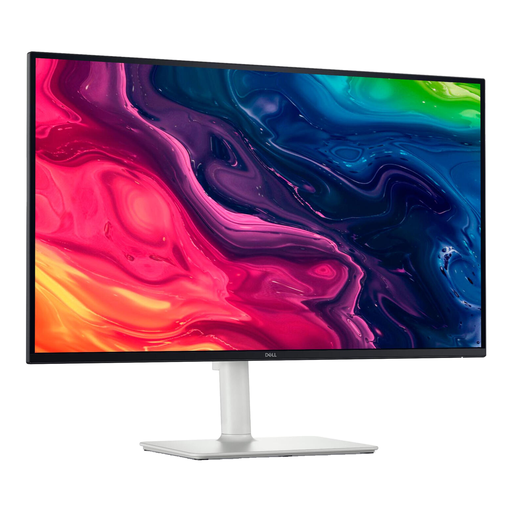
Dell Plus S2725QS 27-inch 4K monitor
A 27-inch 4K monitor to compare for an adjustable editing workspace.
The product description lists an IPS panel, HDMI and DisplayPort connections, and height and tilt adjustment.
Joybuy
Frequently asked questions
Should I buy an HDR monitor for this film?
Not just because the source material or a monitor mentions HDR. First decide whether you’ll deliver an SDR/Rec.709 version, an HDR version or both, then set up your colour management accordingly. For an HDR master, assess separately whether the complete viewing workflow is suitable.
How should I set up colour assessment in my workspace?
Keep the ambient lighting as consistent as possible while working with colour, and avoid shining direct light onto the screen. Adobe recommends using a colour meter for objective calibration; also check that your editing software is set to the intended output colour space.
Who can help if a monitor bought online is faulty?
According to the Dutch government, the seller must provide a solution if there’s a problem with a product. A manufacturer’s warranty or additional guarantee is separate from this. In many cases, distance purchases also come with a 14-day cooling-off period; check the applicable terms and exceptions.
Do energy label rules for computer monitors apply in the Netherlands?
The European Commission states that energy labelling and ecodesign requirements also cover computer monitors, with some exceptions within the product scope. Compare the energy label for the exact model; a colour or HDR specification is no substitute for that label.


