What should you look for?
Start with the output you’re editing the film for and the free space on your desk. Then compare the laptop connection and the layout you want for your workspace.
| What to consider |
What to look for |
Who is this important for? |
| Colour reproduction for your output |
Decide whether you’re working in Rec.709-SDR or an HDR workflow, then compare the relevant colour mode and calibration options. |
If I’m finishing the tulip film for a chosen output, I want to match the colour settings to it. Around 33% of consumers put colour reproduction suited to their output first. |
| Space for the screen and stand |
Measure the available width and depth, then compare them with the monitor’s dimensions, including the stand. |
On a small desk, the stand also needs to fit alongside the rest of my workspace. Around 27% of consumers put available desk space first. |
| Laptop connection and cables |
Check the video connection and compare your laptop’s power requirements with the monitor’s charging output. |
If I want to connect my laptop with as few cables as possible, the ports on both devices need to support the right features. Around 20% of consumers prioritise the laptop connection. |
| Detail and editing layout |
Check the exact model’s resolution and whether text and editing panels are easy to read at your preferred scaling. |
I want to assess the picture and have my timeline and editing panels on the same screen. Around 20% of consumers put detail and workspace layout first. |
Joybuy products
These 27-inch 4K screens are options to compare for editing in a compact workspace; screen size alone won’t tell you whether the stand will fit.
 No image available
LG UltraFine 27U711B-B 27-inch 4K IPS monitor
An option to compare if you’re looking for a 27-inch 4K screen for editing in a compact workspace.
The product name specifies 4K and an IPS panel.
View at Joybuy
 No image available
INNOCN CB27U1 27-inch 4K UHD monitor
An option to compare if you’re looking for a 27-inch 4K screen and want to check that its stated colour and connection features suit your workflow.
The product name specifies 3840 × 2160, IPS, 120 Hz, HDR500 and USB-C 90W PD.
View at Joybuy
 No image available
KTC M27P6 27-inch 4K MiniLED monitor, White
An option to compare if you’re looking for a 27-inch 4K screen; check that its connections and modes suit your editing computer.
The product name specifies 4K 160 Hz/FHD 320 Hz, Fast IPS and Type-C 65 W.
View at Joybuy
 No image available
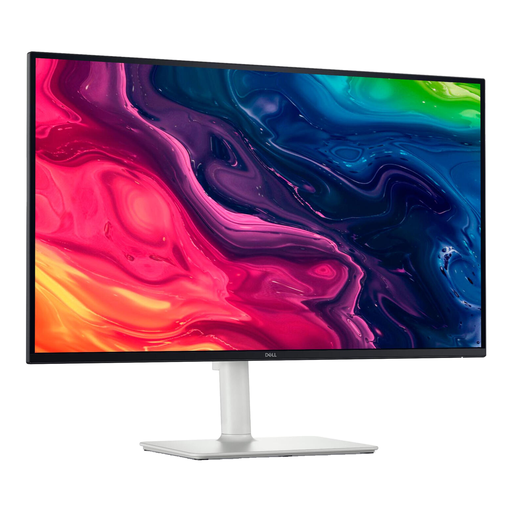
Dell Plus S2725QS 27-inch 4K monitor
An option to compare if you want a 27-inch 4K screen for viewing footage and editing panels on one desk.
The product name specifies a resolution of 3840 × 2160.
View at Joybuy
 No image available
Dell Plus S2725QC 27-inch 4K monitor
An option to compare if you’re looking for a 27-inch 4K screen and want to match the connection to your laptop.
The product name specifies a resolution of 3840 × 2160.
View at Joybuy
Frequently asked questions
Do I need to choose an HDR monitor for this tulip film?
Not simply because the source footage contains lots of colour. First decide whether you want to deliver a Rec.709-SDR or HDR version, as this affects which colour settings are relevant. An HDR label on a product specification sheet doesn’t, by itself, prove that a screen is suitable for the HDR assessment you need to carry out.
How can I check whether a monitor will fit on my desk?
Measure the available width and depth, allowing for the stand. BenQ specifies the PD2705U as 614 mm wide and 256,8 mm deep with its stand; those measurements don’t automatically apply to other models.
Will one USB-C cable automatically handle video and charge my laptop?
No. Check that your laptop supports the required video connection through that port, and compare its power requirements with the monitor’s output. BenQ lists up to 65 W for the PD2705U and ASUS up to 96 W for the PA279CRV.
What are my rights if a monitor I bought online is faulty?
According to the Dutch government, the seller must provide a solution if there’s a problem with a product. For distance sales, the seller must also provide information about the cooling-off period, which is usually 14 days. Check the terms of your specific purchase.
Are there rules for monitors’ energy labels?
The European Commission states that energy labelling rules also apply to computer monitors. Check the information for the specific model; an energy label doesn’t indicate how accurate its colour reproduction is.


