
Animator with limited desk space
Wants to use frames and input tools at the same time, and needs the screen’s width, depth and adjustability to suit a small desk.


Start by measuring the available width and depth, including the monitor stand: the 27-inch creative models reviewed here are over 61 cm wide. Then choose a screen with a stated colour gamut that suits your output, and check that its USB-C port can carry video and deliver enough power for your laptop. These are stated product specifications, not independent performance measurements.
Wants to use frames and input tools at the same time, and needs the screen’s width, depth and adjustability to suit a small desk.
Compares colour tones between frames and is looking for a screen with specifications suited to the colour gamut of the intended output.
Wants to connect video and, if possible, power via USB-C, and check in advance that the connection is compatible with their laptop.
First measure the space available for the screen and stand. Then compare the colour specifications, laptop connection and adjustability with the way you work.
| What to consider | What should you check? | Who is this important for? |
|---|---|---|
| Will the screen fit on the desk? | Compare the width and depth, including the stand, with the available space. ASUS lists the PA279CRV as 61.22 × 53.81 × 21.50 cm; BenQ gives the PD2705U’s width as 614 mm and depth as 256.8 mm. These are overall dimensions, not just the stand’s footprint. | If my desk is narrow, I want to know how much room the screen and stand will take up before arranging my tablet and keyboard. Around 36% of people with this buying question put available desk space first. |
| Can you assess colours reliably? | Check which colour gamut is appropriate for your intended output, then compare the specifications for the exact model. BenQ lists 99% sRGB and 99% Rec.709 for the PD2705U; ASUS lists, among other specifications, 99% DCI-P3 and 99% Adobe RGB for the PA279CRV. These are manufacturer specifications, not independent measurements of colour accuracy. | If I’m assessing colour differences between frames, I want to choose a colour gamut that suits my output. Around 29% of people with this buying question put colour assessment first. |
| Will the laptop connection work? | Check whether your laptop supports video over USB-C and whether the power delivery is suitable. BenQ lists DisplayPort Alt Mode and 65 W Power Delivery for the PD2705U; ASUS lists DisplayPort over USB-C and 96 W Power Delivery for the PA279CRV. | If I want to connect my laptop with as few cables as possible, I want to know in advance whether USB-C can carry video and supply enough power. Around 21% of people with this buying question put the laptop connection first. |
| Can you adjust the viewing position? | Check for height adjustment, tilt and any VESA mounting options. ASUS and BenQ list height adjustment and VESA 100 × 100 mm; according to LG, the LG 24UD58-B model reviewed here does not have height adjustment. | If I’m working on frames for a long time, I want to be able to adjust the monitor to suit my workspace. Around 14% of people with this buying question put adjustability first. |
Both 27-inch screens reviewed are over 61 cm wide, but their stated depths, including the stand, differ. A compact stand doesn’t make the panel itself any narrower.
Measure the available width and depth, then compare them with the overall dimensions including the stand. If you’re using a monitor arm, check the mounting requirements too.
A monitor arm may be an extra purchase, and you’ll need to check VESA compatibility and weight capacity.
BenQ lists specific sRGB and Rec.709 modes, while ASUS specifies other wide colour gamuts. A mode or stated coverage figure alone doesn’t prove that colours will be accurate for every output or setting.
First identify the colour gamut for your intended output, then check the relevant mode and specifications for the exact model.
LG lists the 23.8-inch 24UD58-B as discontinued and does not specify height adjustment for this model.
If you’re considering a smaller alternative, check its model status, dimensions and adjustability separately.
The ProArt PA279CRV is a 27-inch 4K model worth considering if you’re comparing colour gamuts and a compact desk setup.
The PD2705U is a 27-inch 4K model with modes specified by BenQ for animation, sRGB and Rec.709, among other uses.
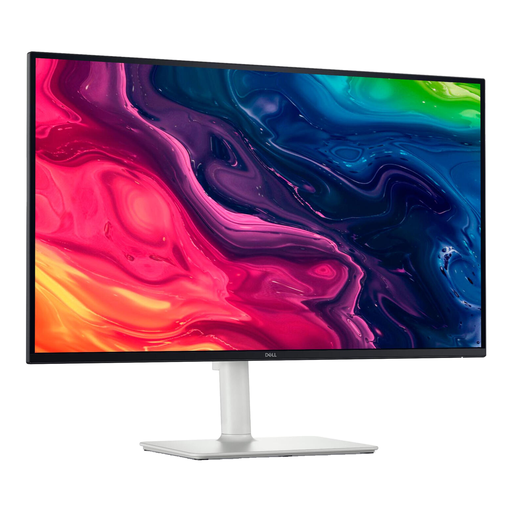
The Dell Plus S2725QC is a 27-inch 4K USB-C model to compare if you’ll use your monitor for both frame work and everyday computing.
The 27UP850K-W is a 27-inch 4K option with DCI-P3 coverage and an adjustable stand specified by LG.
This selection includes 27-inch 4K monitors and a portable 15.6-inch model. Compare the screen size, connections and stated colour specifications with the space and equipment in your workspace.
 No image available
An option to compare if you’re looking for a 27-inch 4K screen for organising frames.
The Joybuy product listing specifies 3840 × 2160 pixels. It also lists USB-C with 98 W Power Delivery, 97% DCI-P3 and 94% Adobe RGB.
 No image available
Worth comparing if you want a 27-inch screen and want to consider colour specifications and adjustability as part of your decision.
The Joybuy product listing specifies 3840 × 2160 pixels, 100% sRGB, 99% Adobe RGB, USB-C with 90 W Power Delivery and 150 mm of height adjustment.
 No image available
An option to compare with other 27-inch 4K models if you have room for a screen of this size.
The Joybuy product listing specifies a 160 Hz 4K mode, a 320 Hz FHD mode and USB-C with 65 W Power Delivery. According to the product title, the stand can be adjusted for height, tilt and swivel.
 No image available
Worth considering if you’re looking for a 27-inch 4K screen and want to check the connections and viewing position you need separately.
The Joybuy product listing specifies 3840 × 2160 pixels and an IPS panel. The description also lists HDMI, DisplayPort, height adjustment and tilt.
 No image available
Worth comparing if a 27-inch screen won’t fit in your available workspace and a smaller panel would suit your setup better.
The Joybuy product listing specifies 3840 × 2160 pixels, 100% sRGB and 100% Rec.709. The listed connections are USB-C with DisplayPort Alt Mode, HDMI and 12G-SDI.
Measure the clear width and depth of your desk, then compare them with the monitor’s overall dimensions including the stand. ASUS lists the PA279CRV as 61.22 cm wide and 21.50 cm deep; BenQ lists the PD2705U as 614 mm wide and 256.8 mm deep. These overall dimensions aren’t the same as the area where the stand makes contact with the desk.
Check that your laptop supports video over USB-C, that the cable is suitable for this, and that the power delivery is sufficient. BenQ lists DisplayPort Alt Mode and 65 W Power Delivery for the PD2705U; ASUS lists USB-C with DisplayPort Alt Mode and 96 W Power Delivery for the PA279CRV.
When you buy as a consumer, the product must meet the reasonable expectations you could have of it. According to ACM ConsuWijzer, the seller must resolve any issue where it does not, free of charge, for example by repairing or replacing the product. The Dutch Government also advises you to assess extended warranties based on the rights they add.
Yes. The European Commission states that energy labelling rules also cover computer monitors, and that electronic displays use a scale from A to G. Check the label or model details for the exact screen: 4K resolution alone doesn’t determine its energy class.
No, that general conclusion doesn’t follow from the workplace health and safety guidance consulted. Arboportaal discusses height adjustment as part of the requirements for employees’ display screen workstations. For a home office, adjustability remains a practical choice; whether employers’ rules apply depends on the working situation.