
Student with a colour-critical portfolio
You assess illustrations or photos on screen and want to choose a colour mode suited to digital work or a print workflow.


Start with the finished work: a suitable sRGB mode may be important for digital work, while print work also calls for colour management and proofs. Then measure the space on your desk and compare the monitor’s full footprint, including the stand. Choose USB-C with enough charging power only if your laptop supports the required video connection. BenQ and ASUS publish colour and connectivity specifications for their models, among other details, but a wider colour gamut or more extensive dock won’t be essential for every student.
You assess illustrations or photos on screen and want to choose a colour mode suited to digital work or a print workflow.
There’s limited room for your monitor stand, keyboard and work materials, so the space taken up by the screen and stand matters too.
You regularly connect your laptop and want to know whether the monitor provides the video connection and charging power your laptop needs.
First, decide whether your portfolio will mainly be viewed digitally or printed too. Then measure your desk and check that the connections are compatible with your laptop.
| What to consider | What should you check? | Who should pay particular attention? |
|---|---|---|
| Colour for the finished work | Compare the stated sRGB coverage with your digital workflow. For print work, consider whether Adobe RGB, colour management and calibration are relevant. Adobe describes ICC profiles as part of colour management between devices. | If I’m assessing colour for digital work or print, I want to know which colour space suits my files. Around 31% of consumers put colour reproduction first. |
| Monitor stand on a small desk | Measure the available width and depth and compare them with the dimensions including the stand. ASUS lists the PA279CRV as measuring 61.22 × 53.81 × 21.50 cm; BenQ lists the PD2705U as 614 mm wide and 256.8 mm deep. | With limited desk space, I want to know whether the screen and stand will fit alongside my other things. Around 25% of consumers say the desk space required is their main consideration. |
| Connecting and charging a laptop | Check that your laptop port supports video output, then compare the charging power required with that provided by the monitor and cable. BenQ lists 65 W for the PD2705U, ASUS lists 96 W for the PA279CRV, and LG lists up to 96 W for the 27UP850K-W. | If I connect my laptop regularly, I want to know whether one connection will provide the features I need. Around 25% of consumers prioritise laptop connectivity. |
| Matching features to your needs | Make a note of the colour mode and connections your portfolio and laptop require. Compare them with the exact model variant and check whether you’ll also need a cable or adapter. | I don’t want to choose features my workflow won’t use, but I don’t want to miss anything essential either. Around 19% of consumers focus on this balance between necessary features and extras. |
The stand takes up space too. BenQ lists the PD2705U as 256.8 mm deep, including the stand; ASUS lists the PA279CRV as 21.50 cm deep, including the stand.
Measure the available width and depth. If you’re considering a monitor arm, check the VESA size, weight capacity and mounting options.
A stated colour space alone doesn’t guarantee that a print will match what you see on screen. Adobe also lists profiles, calibration, ambient light and paper as elements of colour management.
Decide whether your portfolio will be digital or printed, and tailor your colour workflow to your printer’s requirements. Check a proof if needed.
The stated charging power varies by model: BenQ lists 65 W for the PD2705U and ASUS lists 96 W for the PA279CRV. A USB-C port alone doesn’t tell you whether your laptop supports video output through it.
Check your laptop’s video output, the charging power required and the monitor port. Allow for a suitable cable or using a separate laptop charger.
According to ACM ConsuWijzer, your statutory guarantee rights apply alongside a manufacturer’s or seller’s warranty. The seller is responsible if a product is faulty.
Keep your proof of purchase and consider any paid warranty extension separately from your statutory rights.
The PD2705U is a 27-inch 4K option for anyone looking for a documented sRGB mode for digital design.
The ProArt PA279CRV is a 27-inch 4K option for a workflow where wide colour spaces such as Adobe RGB are relevant.
The 27UP850K-W and 27US550-W are two different 27-inch 4K IPS models to compare based on the features you need.
The ViewFinity S8 S80UD, model LS27D800UAUXEN, is a 27-inch 4K work monitor to compare for ergonomics and laptop connectivity.
The UltraSharp U2725QE is a 27-inch 4K Thunderbolt hub monitor for anyone looking for more extensive laptop connectivity.
This selection features 27-inch 4K monitors to compare for a design portfolio and a compact workspace. When choosing, check the exact model variant, the connections listed and the space available, including the stand.
 No image available
An option to compare if you’re looking for a 27-inch 4K IPS monitor for your design work.
The product name specifies 4K and an IPS panel.
 No image available
Compare this model if you’re considering a 27-inch 4K monitor with a QD-OLED panel for design work.
The product name specifies 120 Hz and USB-C.
 No image available
An option to compare if you also want to consider USB-C connectivity and colour coverage for your portfolio.
The product name specifies 120 Hz and USB-C with 90 W Power Delivery.
 No image available
Compare the listed connections and adjustment options with what you need for your workspace.
The product name specifies 4K at 160 Hz or FHD at 320 Hz, USB-C with 65 W, and a stand that can be adjusted for height, tilt and swivel.
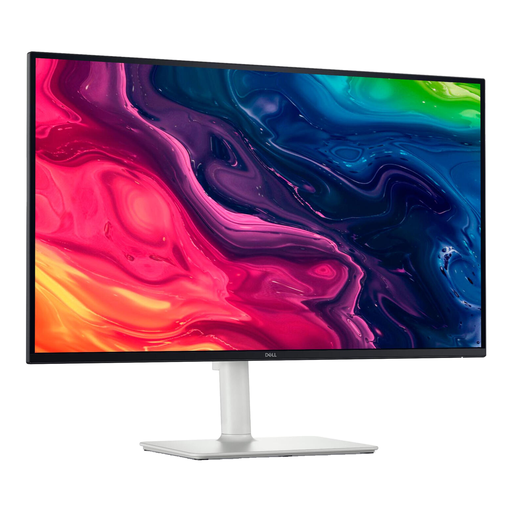 No image available
An option to compare if you’re looking for a 27-inch 4K IPS monitor for editing your portfolio.
The product name specifies a resolution of 3840 × 2160.
No, a wide colour gamut alone isn’t enough. Adobe also describes colour profiles, calibration, ambient light and paper as elements of colour management. Prepare your files to meet your printer’s requirements and check a proof if needed.
Not without comparing your laptop and monitor specifications. Check whether your laptop port supports video output, then compare the charging power you need with the stated Power Delivery; BenQ lists 65 W for the PD2705U and ASUS lists 96 W for the PA279CRV.
Measure the available width and depth and compare them with the dimensions including the stand. ASUS lists the PA279CRV as measuring 61.22 × 53.81 × 21.50 cm; BenQ lists the PD2705U as 614 mm wide and 256.8 mm deep.
For distance purchases from a professional seller, the Dutch government says you’ll often have a 14-day cooling-off period; check the relevant terms and exceptions. Your statutory rights if a product is faulty are separate from any manufacturer’s or seller’s warranty. ACM ConsuWijzer states that the statutory guarantee doesn’t have a fixed term of exactly two years.
Check that the stand offers the adjustments you need and that you can position the monitor suitably on your desk. Measure the available space, including the base; a height-adjustable stand alone doesn’t tell you how much desk space it takes up.