
Vandaag of morgen in huis

Kwaliteit gegarandeerd

Welkomstaanbiedingen ontgrendelen: GRATIS bezorging | Tot 80% korting | Gratis 30 dagen JoyPlus-proefperiode
Download de app
Buying a dash cam can sometimes feel like navigating a jungle of technical specifications. Every brand promises razor-sharp image quality and total security. But in reality, a '4K car camera' can sometimes produce grainy footage in the dark, or the parking mode might stop working after just a week. As a Product Recommendation Officer at Joybuy, I see the issues consumers face every day.
Before you make a decision, it's wise to be aware of a few common pitfalls. This will prevent you from spending money on features that look great on paper but are disappointing in practice.
To cut through the marketing jargon, it's best to focus on a few core specifications. These determine whether a dash cam actually delivers what it promises.
The term 4K (3840x2160 pixels) only tells you the number of pixels. The quality of those pixels is determined by the image sensor. A model with a Sony STARVIS sensor is often a good indicator. These sensors are specifically designed to perform exceptionally well in low light, which is crucial for clear night vision. A dual dashcam with a high-quality sensor on both the front and rear ensures you can rely on the footage, day and night.
A standard 4K front and rear dash cam (two channels) covers the most common scenarios. But for those who want complete coverage, such as for a taxi or rideshare vehicle, a 3-channel dashcam is a better choice. This adds a third camera that films the car's interior, often with infrared for recording in the dark. So, think carefully about which angles are important to you.
Modern dash cams do more than just record. Three features are particularly practical:
Based on objective specifications, we have selected a few models that suit different types of drivers.
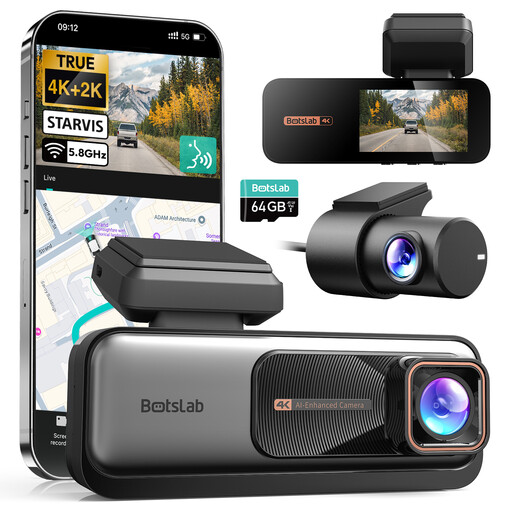
Why This Fits Their Persona: A reliable all-rounder for the daily commute. This set provides clear evidence and convenient features like GPS and Wi-Fi, without unnecessary complexity. Ideal for those looking for a 'set it and forget it' solution.
This model uses a Sony STARVIS (IMX415) sensor for true, non-upscaled 4K footage. Its WDR technology ensures balanced exposure, keeping license plates readable at night and against backlight.
Comes as a complete set including a 64GB MicroSD card, built-in GPS, and fast 5.8GHz Wi-Fi. You're ready to go right out of the box.
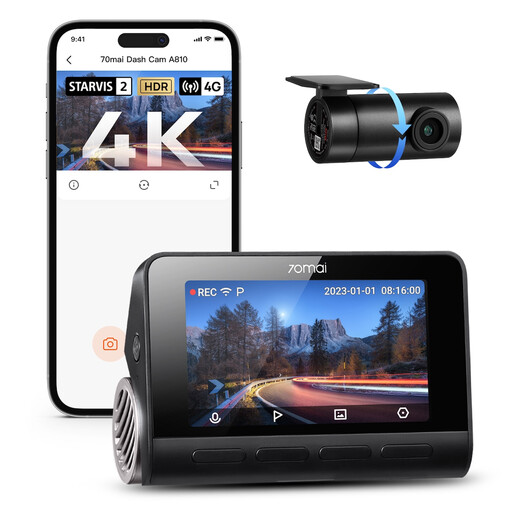
Why This Fits Their Persona: For the driver who wants the latest technology. This dash cam is packed with advanced features, such as top-tier sensors, AI-powered surveillance, and the option for 4G connectivity for remote monitoring.
Tackles the problem of weak night vision with dual Sony STARVIS 2 sensors (IMX678 front, IMX662 rear) and HDR on both channels. This guarantees superior image quality, even in the most challenging lighting conditions.
The AI-powered parking surveillance identifies suspicious individuals around the car. With the optional 4G kit, you can view live footage and receive notifications, wherever you are.
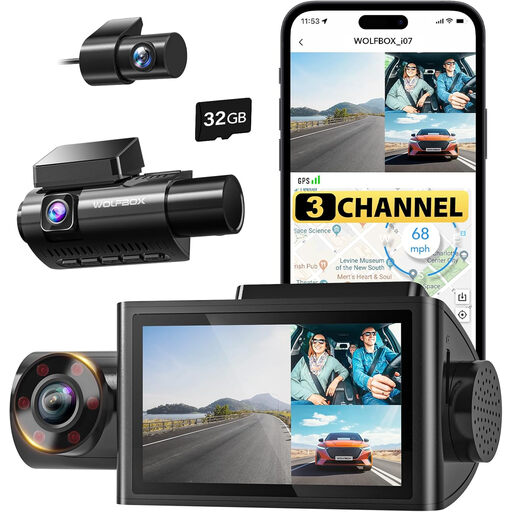
Why This Fits Their Persona: Provides the complete coverage that is essential for professionals like taxi, ride-sharing, or delivery drivers. With cameras for the front, rear, and cabin, every angle is recorded for maximum security.
Solves the problem of limited coverage. Where a dual dash cam stops, this 3-channel system goes further. The interior camera also features infrared night vision, allowing it to film clearly even in a completely dark cabin.
Three-channel recording (1440P Front + 1080P Interior + 1080P Rear) in one integrated system. Built-in GPS and Wi-Fi are standard, and a 32GB card is included.
We have compiled a complete, up-to-date list of products that fully meet these strict selection criteria and comply with Dutch regulations.
Yes, using a dashcam is legal in the Netherlands. You are allowed to film for personal use, for example, as evidence after an accident. However, it is important to respect the privacy of others. According to GDPR guidelines, you may not simply make public or share online any footage in which individuals or license plates are identifiable.
4K recordings take up significantly more space than Full HD footage. One hour of 4K video can easily consume 15-20 GB. Fortunately, all modern dashcams use 'loop recording', which automatically overwrites the oldest files when the card is full. For a 4K front and rear dash cam, a 64 GB or 128 GB card is a good starting point. It's best to choose a 'High Endurance' microSD card, which is specifically designed for the continuous rewriting of data.
A supercapacitor is a modern alternative to the traditional lithium-ion battery in dashcams. Its main advantage is its reliability in extreme temperatures. In a car parked in direct sunlight or during a cold winter night, a supercapacitor continues to perform stably. They also have a much longer lifespan than batteries, making them a more durable and safer choice for a device that is constantly in your car.
