
Vandaag of morgen in huis

Kwaliteit gegarandeerd

Welkomstaanbiedingen ontgrendelen: GRATIS bezorging | Tot 80% korting | Gratis 30 dagen JoyPlus-proefperiode
Download de app
A 4-wheel electric mobility scooter can be useful for shopping, visiting the doctor or making short trips around your local area. However, not every four-wheeled vehicle is automatically suitable for use on public roads. The distinction between a mobility aid and a registered light quadricycle is a common source of confusion.
So don’t focus only on speed or range. The vehicle category, required documents and practical controls all help determine whether a model is right for the user.
A 25 km/h mobility scooter can fall into different vehicle categories. A registered electric microcar or L6e-A vehicle is not the same as a traditional mobility scooter or vehicle for disabled people. As a result, the rules on driving licences, registration, insurance and where you can ride may differ.
Before you buy, check:
Don’t rely solely on descriptions such as “for older people” or “suitable for public roads”.
A vehicle’s stated range depends on factors including the driver’s weight, temperature, hills, tyre pressure and speed. For example, the Chunlai CL-30ZR-60’s certified range may vary by approved vehicle version. You should therefore check the specific figure in the CoC or technical documentation.
A mobility scooter with a lithium battery is often lighter and has a removable battery, but be sure to check:
Four wheels give you a different riding experience from two or three, but stability also depends on the wheelbase, seat position, suspension and surface. Measure doorways, storage areas, slopes and parking spaces too. An electric mobility vehicle may be too wide or heavy for everyday use in a small home.
Look for:
A motor rated at 1.0 kW is a measurable technical specification, but it doesn’t tell you on its own how nimbly a vehicle will perform. Total weight, gradient and load also play a part. According to Chunlai’s product information, the CL-30ZR-60 has a 1.0 kW motor and a certified top speed of 25 km/h.
A higher speed isn’t automatically more useful. For short local trips, predictable controls, effective braking and manoeuvrability are often more important than top speed.
A lithium battery can be practical if you want to charge it indoors. A removable battery means you don’t have to park the whole vehicle next to a socket. Do check the battery’s weight and whether you can remove it safely.
You can also browse our selection of products with removable batteries if being able to remove the battery for charging is important for your home.
According to the Chunlai CL-30ZR-60’s product information, this model has EU Whole-Vehicle Type Approval as an L6e-A light quadricycle, with approval number e9168/201311215*08. This is relevant documentation, but EU type approval alone does not automatically register the vehicle in the Netherlands.
According to the vehicle documentation provided, you’ll need to consider the following before using the vehicle on public roads:
Check the current requirements with the RDW and the Dutch government before setting off. Don’t use an unregistered vehicle on public roads until registration and insurance are in place.
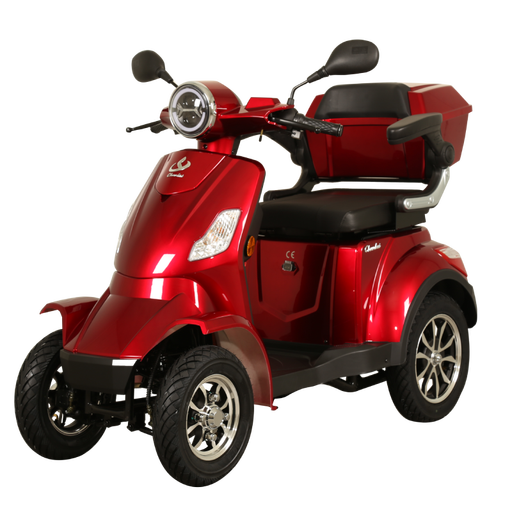
Why it suits this type of user: This model combines a four-wheel platform with a removable 60 V 20 Ah lithium battery and a top speed of 25 km/h. It may suit anyone looking for an electric vehicle for older people for short trips, who wants to check the registration requirements first.
The product information specifies the L6e-A classification, type approval and required CoC. The range is not stated without qualification, so check it for the specific vehicle version.
Four wheels, reverse function, suspension, armrests and a 1.0 kW electric motor.
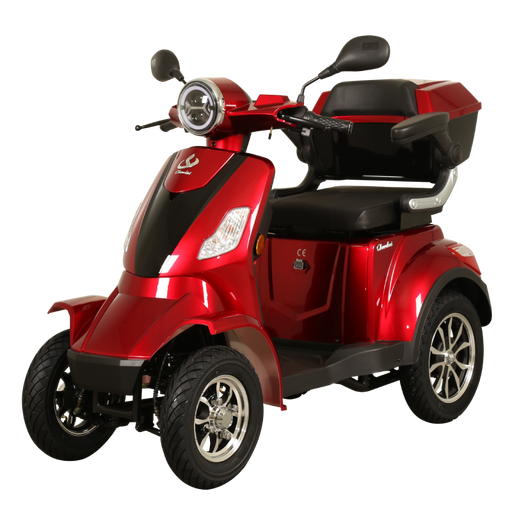
Why it suits this type of user: The same technical platform may appeal to buyers who value vehicle documentation, seating comfort and quiet electric power more than simply finding the lowest purchase price.
The product description makes clear that registration, insurance and a driving licence are still required. It also advises checking the VIN, CoC and approved vehicle configuration.
60 V 20 Ah lithium battery, suspension, supportive seat with armrests and EU type approval according to the product information.
Why it suits this type of user: The combination of four wheels, suspension and a reverse function is useful for shopping, parking and regular local journeys. Beforehand, the user should check that storage, charging and RDW registration can all be arranged.
The specifications are clearly set out: motor power, battery voltage, speed, seating and vehicle category. This makes it easier to compare models than relying on general claims about comfort.
Designed for one person, with electric power, a reverse function and a four-wheel chassis with suspension.
We’ve put together a complete, up-to-date list of products that meet these strict selection criteria and the applicable European safety requirements.
That depends on the vehicle’s legal category. For an L6e-A electric four-wheeler such as the one described in the Chunlai CL-30ZR-60 product information, an appropriate driving licence is specified, usually the AM category. Always check the final Dutch registration and the category shown on the registration certificate.
According to the product information provided, a vehicle used as an L6e-A light quadricycle must be registered with the RDW and display a registration plate before it can be used on public roads. Third-party liability insurance is also required. Traditional mobility scooters may fall under different rules, so check the official classification rather than relying on the vehicle’s appearance.
Charging costs depend on the battery capacity, charging losses and your electricity tariff. A 60 V and 20 Ah battery has a nominal energy capacity of around 1.2 kWh. The actual amount of electricity drawn from the socket will be slightly higher because of charging losses. For a practical estimate, multiply the energy used in kWh by your current electricity tariff.
