
Vandaag of morgen in huis

Kwaliteit gegarandeerd

Welkomstaanbiedingen ontgrendelen: GRATIS bezorging | Tot 80% korting | Gratis 30 dagen JoyPlus-proefperiode
Download de app
A 3D puzzle may seem like a simple gift at first glance, but the differences between models can be significant. Some puzzles are mainly designed for a short building session, while others become playable mechanical models or decorative objects for the bookcase. If you focus only on the number of pieces or an appealing product photo, you may end up buying a kit that is unsuitable for the user’s age, available space or preferred level of difficulty.
When comparing 3D puzzles, pay particular attention to these common pitfalls:
A 3D wooden puzzle often consists of pre-cut wooden sheets that slot together. Some models do not require glue. This makes the building process more straightforward, but wooden parts can break if too much force is applied. Work on a flat table and do not force the connections together.
A wooden model kit is ideal for anyone who values a sturdy appearance and a long-lasting decorative result. However, check whether the model is intended solely for display or also includes moving parts. With a model featuring gears, wheels or a launching mechanism, precise assembly is more important than with a static figure.
Paper and foam are generally lightweight and easy to move. However, they can be more sensitive to moisture. Store each model in a dry place and clean it with a soft, dry cloth.
Start by checking the recommended age on the product page. A kit for children aged 8 and over may be suitable as a family project, but younger builders may need help with small or fragile parts. Models for ages 14 and over generally require more patience and a calm workspace.
The number of pieces provides an initial indication:
The stated building time is also useful. The CUBIC FUN Eiffel Tower has 80 pieces and a stated building time of approximately 120 to 220 minutes. The Robotime ROKR Pinball Game uses 482 wooden pieces and states an assembly time of 7 hours or more. These are two different types of project, even though they are both 3D puzzles.
A decorative puzzle should fit the space where you want to display it. Once assembled, the Eiffel Tower is approximately 70.9 cm high. The Robotime ROKR Pinball Game measures approximately 27.5 × 27.5 × 47.5 cm. So check not only the width, but also the height of the shelf or cabinet.
For a puzzle with LED lighting, check how the lighting is powered. According to the product description, the Dutch Bakery and Neuschwanstein Castle use USB-powered LED lighting. The Robotime Rolife Bookstore runs on two AAA batteries, which are not included according to the product information. This helps ensure that the model can be illuminated immediately after assembly.
Also consider how you plan to use it. Are you looking for an educational puzzle for a child, a DIY puzzle for a relaxing evening or a gift for puzzle enthusiasts? A static animal model may suit a collector, while an interactive model is better suited to shared use.
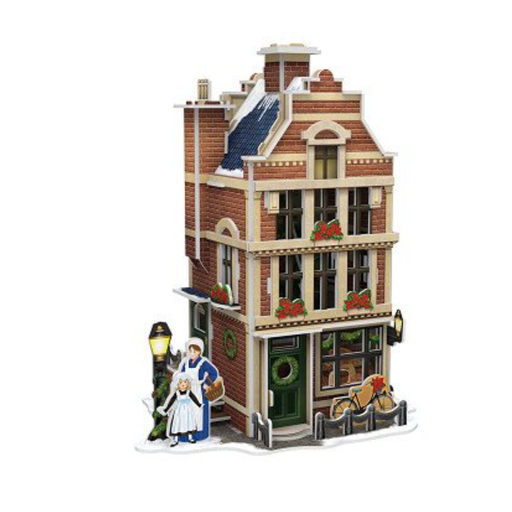
Why it suits this profile: A compact building project for children aged 8 and over, families and beginners who want a clear end result without glue or tools.
The product description lists 65 sturdy pieces, a recommended age of 8 and over, and assembly without glue or tools. USB power for the LED lighting is also specified.
Dutch bakery theme, built-in lighting and suitable for display in a cabinet or as a gift.
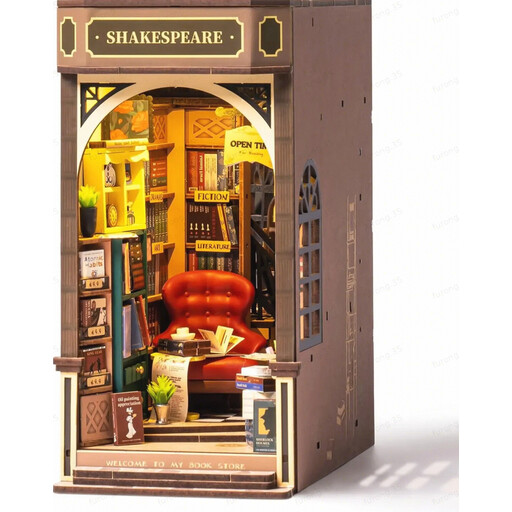
Why it suits this profile: For adults and teenagers aged 14 and over who are looking for a detailed wooden model and an atmospheric bookshelf project.
The product details specify dimensions of approximately 11.4 × 19.5 × 21.8 cm, assembly without special tools and lighting powered by two AAA batteries. The batteries are not included.
Wooden inserts, book stand dividers, touch-activated lighting and space for miniature figures.
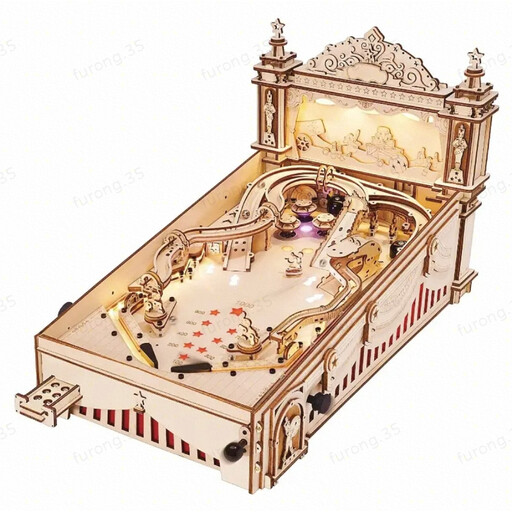
Why it suits this profile: For adults, older teenagers and model builders who want to combine a longer building project with a playable model.
The product information lists 482 laser-cut wooden pieces, an assembly time of at least 7 hours and a USB connection. This makes it clear in advance that it is not a short introductory project.
Mechanical pinball machine, score display via an infrared sensor according to the product description, LED lighting and a retro circus theme.
We have put together a complete, up-to-date list of products that fully meet these strict selection criteria and the applicable European safety regulations.
That depends on the model and the recommended age. Several construction kits in this range are suitable from the age of 8, while some wooden model kits have a recommended age of 14 and over. Always check the warning about small parts and supervise younger children while they are building.
A simple model with approximately 60 to 100 pieces can be assembled in a few hours. The CUBIC FUN Eiffel Tower states a building time of approximately 120 to 220 minutes. More complex models, such as the Robotime ROKR Pinball Game with 482 pieces, can take 7 hours or more. Ideally, plan several shorter sessions to avoid losing any pieces.
Not always. A static model, such as the Robotime Rolife Electric Guitar, does not require power. Models with LED lighting work via USB or batteries, depending on the design. So check before buying whether a cable or batteries are included. This also tells you what running costs and connections the model requires.
