
Vandaag of morgen in huis

Kwaliteit gegarandeerd

Welkomstaanbiedingen ontgrendelen: GRATIS bezorging | Tot 80% korting | Gratis 30 dagen JoyPlus-proefperiode
Download de app
As a Joybuy Product Recommendation Officer, I see the world of 3D printing expand daily. The possibilities are endless, but so are the choices. It's especially easy to fall into marketing traps when selecting the right 3D printer resin. Many users buy a resin that ultimately disappoints, leading to failed prints and unnecessary costs.
Before you purchase a new bottle of UV resin, it's wise to consider a few common pitfalls:
By understanding these points, you can make a more informed search for a product that truly fits your needs.
To avoid a bad buy, it's best to focus on objective product features. These are the three most important specifications to check before purchasing a resin.
Most consumer LCD, DLP, and SLA printers, including popular models from Anycubic and Elegoo, use UV light with a specific wavelength to cure the liquid resin. The industry standard for this is 405nm. Always verify that the resin you are considering is compatible with a 405nm resin printer. This is the most fundamental requirement for a successful print.
Not all resins are created equal. The type determines the properties of your final product and the complexity of the post-processing workflow.
Viscosity refers to the thickness of the liquid. A resin with a lower viscosity flows back more quickly after a layer is lifted, allowing for shorter wait times between layers and thus a higher print speed. This also increases reliability, especially for prints with fine details. Manufacturers often list viscosity in mPa·s; a lower value is generally better for fast and detailed prints.
Based on objective specifications and various user profiles, we have selected several products that offer practical solutions to common challenges.
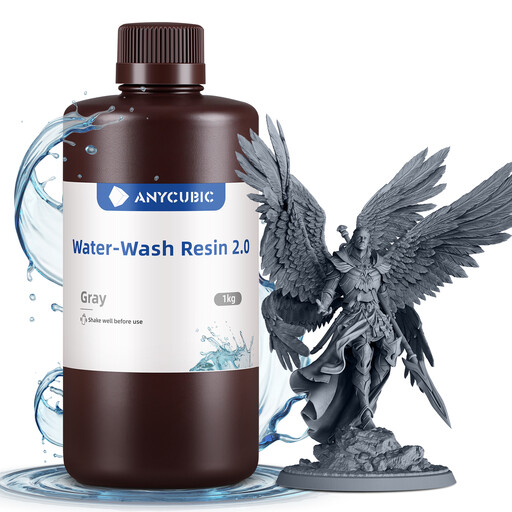
Why This Fits Their Persona: Ideal for beginners who want to focus on printing detailed models without the hassle and extra cost of isopropyl alcohol. Cleaning with water makes the process more accessible and keeps the workspace cleaner.
Directly addresses the pitfall of expensive and hazardous cleaning agents. You don't need separate chemicals for post-processing, which lowers the barrier to entry.
Cleaning with water simplifies the process. According to the manufacturer, it has a low viscosity (190–230 mPa·s) for faster prints and a less potent odour.
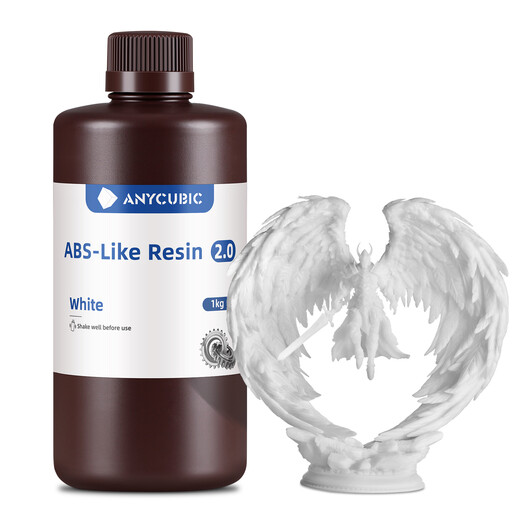
Why This Fits Their Persona: Perfect for users who print prototypes, tools, or mechanical parts. This resin provides the toughness and impact resistance needed for objects that will be used functionally and shouldn't break immediately upon being dropped or struck.
Prevents the disappointment of brittle prints. Whereas standard resins are often too fragile for practical use, this resin delivers a result that is suitable for functional applications.
According to Anycubic's specifications, it offers high toughness (elongation at break: 20-25%) and impact resistance (109 J/m), resulting in more durable parts.
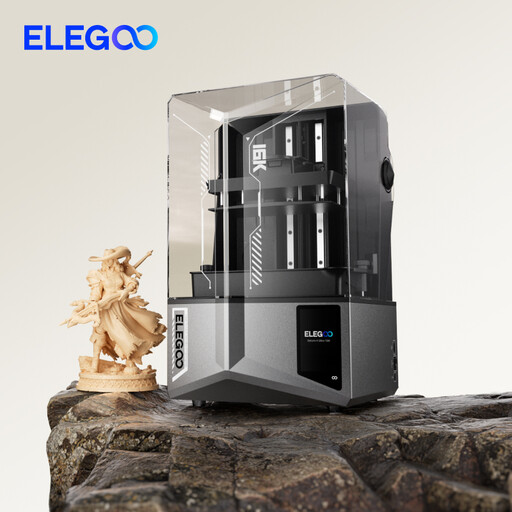
Why This Fits Their Persona: For the user who wants to upgrade not just the resin, but the entire printing experience. This printer tackles common resin issues at the source. The built-in resin heater ensures a stable temperature and viscosity, which significantly reduces the chance of failed prints.
Tackles the pitfall of environmental factors. Resin that is too cold is a common cause of failed prints. The smart, heated vat ensures consistent results, regardless of the room temperature.
According to Elegoo, the intelligent vat heater maintains a constant resin temperature of 30°C. It also includes auto-levelling and an AI camera for monitoring.
We have compiled a complete, up-to-date list of products that meet these selection criteria and comply with current regulations.
No, absolutely not. Although you can clean the models with water, the wastewater still contains liquid, uncured resin particles that are harmful to the environment. Collect the rinse water in a separate, transparent container. Leave it in the sun until the resin residue has fully cured and the water has evaporated. The cured plastic remnants can then be disposed of with regular household waste.
The resin manufacturer, such as Anycubic resin or Elegoo resin, often publishes recommended print settings for popular printer models on their website. This is the best starting point. You can then fine-tune these settings by running a calibration print, like the "Cones of Calibration," to find the perfect exposure time for your specific setup.
Most manufacturers indicate a shelf life of one to two years on the packaging. Store the bottle in a cool, dark place, out of direct sunlight. Always shake the bottle well before use, as the pigments can settle over time. Resin that is too cold or too old can increase the likelihood of failed prints.
