
Vandaag of morgen in huis

Kwaliteit gegarandeerd

Welkomstaanbiedingen ontgrendelen: GRATIS bezorging | Tot 80% korting | Gratis 30 dagen JoyPlus-proefperiode
Download de app
A 3D print that fails halfway, a model that looks dull, or a part that breaks immediately. These are frustrations every 3D printer user knows. Often, the cause isn't the printer, but the 3D printer filament. The market is flooded with options, and it's easy to fall into a few common traps.
Before you order another spool, it's wise to consider the pitfalls that cost you time and money:
The right choice depends on what you want to create. By paying attention to a few key specifications, you can avoid these problems and achieve predictable, high-quality prints.
Marketing terms mean little. The specifications on the product page tell the real story. Pay close attention to the following three points when choosing your next 3D printing material.
This is arguably the most critical technical specification. The filament is pushed through a small opening (the nozzle). If the filament's diameter varies, it leads to irregular extrusion. The result? Visible lines on your print, weak spots, or a completely clogged nozzle.
Not all FDM filament is the same. The two most common materials for hobbyists and professionals are PLA and PETG, each with its own pros and cons.
A good spool of filament comes in a vacuum-sealed bag with a desiccant packet (silica gel). This ensures the material is dry when you receive it. The standard size is a 1kg filament spool, which offers a good balance of volume and price for most users. Always store opened spools in an airtight container with desiccant to maintain quality.
To help you choose, we've highlighted a few products that suit different user profiles. This selection is based on their objective specifications.
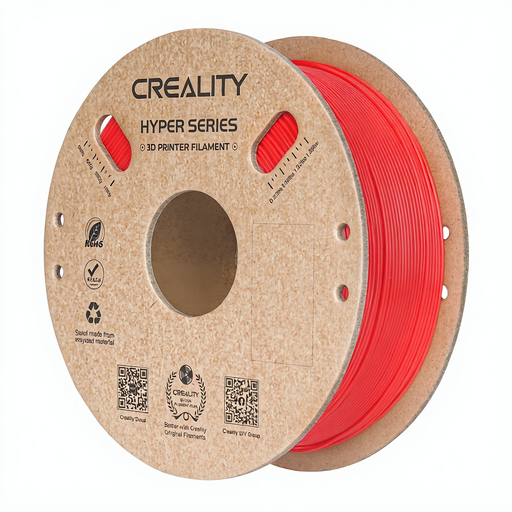
Why This Fits Their Persona: This user wants to print functional prototypes and concepts quickly. Time is of the essence, and waiting for a slow print is not an option.
This filament bypasses the trap of vague speed claims. According to manufacturer Creality, this Creality Hyper PLA is specifically developed for high printing speeds (up to 600 mm/s) on compatible printers, without compromising on quality.
Designed for high printing speeds; tight dimensional tolerance of +/- 0.02mm for reliable extrusion.
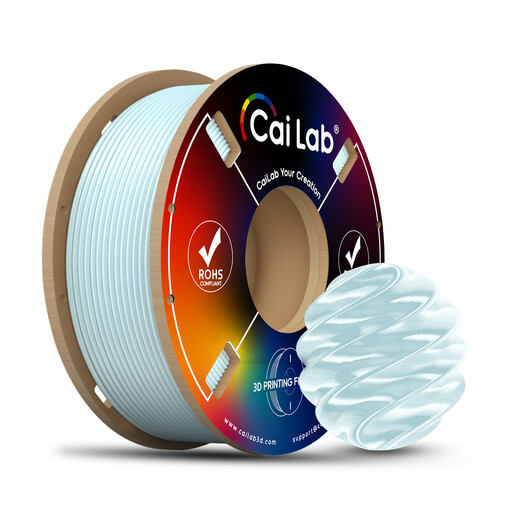
Why This Fits Their Persona: For this maker, the appearance of the print is just as important as its form. They look for materials that give their creations a unique and high-quality look, straight off the printer.
This filament prevents the disappointment of a dull effect. It is a silk filament specifically formulated for a deep, silky sheen, making layer lines less noticeable and giving the object a luxurious finish.
Provides a striking silk gloss; prints as easily as standard PLA.
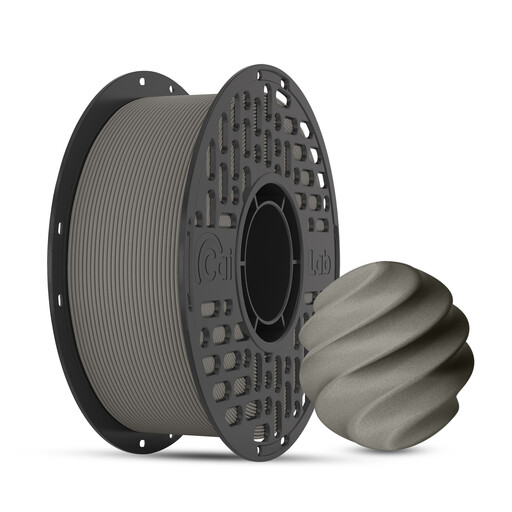
Why This Fits Their Persona: This user prints parts that need to withstand stress: brackets, gears, drone components, or household repairs. Strength, stiffness, and durability are the key requirements.
This material avoids the pitfall of weak prints that break. The base of strong PETG filament is reinforced with carbon fibres. This carbon fiber filament yields parts that are significantly stiffer and stronger than standard PLA or PETG.
High stiffness and strength for functional parts; good heat resistance.
We have compiled a complete, up-to-date list of products that meet these selection criteria and applicable regulations.
The key is to keep it dry. Store opened spools in an airtight box or bag, preferably with a few packets of silica gel to absorb moisture. This prevents the material from becoming brittle and ensures better print quality.
This is almost always caused by moisture absorption. Materials like PLA and PETG are hygroscopic, meaning they absorb moisture from the air. If filament is left unprotected for too long, it becomes brittle. In some cases, you can 'dry' the filament in a special filament dryer or an oven on low temperature (strictly follow the manufacturer's instructions).
Most FDM printers can handle standard materials like PLA and PETG. Always check the recommended printing and bed temperatures of the filament and compare them with what your printer can handle. For more exotic materials, such as carbon fiber filament or nylon, you may need a hardened steel nozzle, as these materials can quickly wear down a standard brass nozzle. Also, always check that the diameter of the 3D printer filament (usually 1.75mm) matches what your printer uses.
