
Vandaag of morgen in huis

Kwaliteit gegarandeerd

Welkomstaanbiedingen ontgrendelen: GRATIS bezorging | Tot 80% korting | Gratis 30 dagen JoyPlus-proefperiode
Download de app
A roll of 3D printer filament may seem simple to choose at first glance. However, small differences in material, diameter and print settings can result in failed models, clogged nozzles or unnecessary costs. Resin printers involve a different process, along with additional safety considerations.
The three most common purchasing pitfalls are:
First, check which technology you use.
An FDM printer melts plastic filament and builds the model layer by layer. Common materials include:
A resin printer uses 3D printer resin that is cured with UV light. UV resin for LCD/DLP/SLA printers is therefore not an alternative to filament in an FDM printer. Check your printer's wavelength; the ANYCUBIC resins listed are designed for 365–405 nm.
With resin printing, gloves, eye protection, ventilation, washing and post-curing are all part of the process. Liquid resin must not be disposed of with general waste. According to the product information, fully cured resin should be treated as plastic waste.
For many modern FDM printers, 1.75 mm filament is the standard size. An incorrect diameter can cause inconsistent feeding, under-extrusion or problems with the extruder. So do not rely solely on the term ‘universal filament’; check your printer's manual.
A stated tolerance is more useful than a general marketing claim. The JOYBUY x ANYCUBIC PLA Basic products, for example, specify a diameter of 1.75 mm and a tolerance of ±0.02 mm. eSUN PLA+ specifies ±0.03 mm. These are product specifications; they do not guarantee that every print will succeed without calibration.
A spool of 1 kg filament is often cost-effective for users who print regularly. However, pay attention to the difference between the net weight of the material and the total weight including the spool.
Moisture is a common cause of poor prints. With damp filament, you may notice crackling sounds, small bubbles, poor layer adhesion and a rougher surface. Store the spool in a sealed container or bag with desiccant. PETG absorbs moisture relatively easily, so drying it can be particularly important.
The correct nozzle and bed temperature varies by brand and printer. Use the packaging or product page as a starting point, then make a small test print.
An easy-to-print filament such as PLA is often suitable for beginners. According to the product description, a filament for fast 3D printers may support higher speeds, but the maximum stated value usually applies under specific conditions. eSUN PLA-Basic, for example, specifies up to 300 mm/s and a volumetric flow rate of 35 mm³/s on certain Bambu printers with a 0.4mm nozzle. Treat this as a reference point, not a universal setting.
For a matte appearance, choose grey, light grey or dark grey filament with a matte composition. For silk PLA, eSUN states that a lower speed can improve the sheen. This means that visual finish and speed may sometimes work against each other.
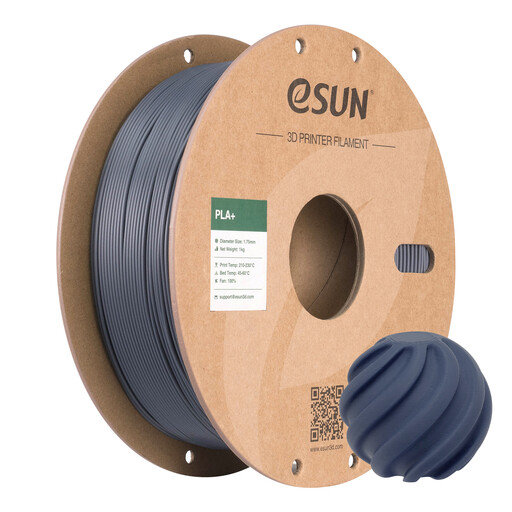
Why it suits this profile: The combination of PLA+, 1.75 mm and a 1 kg spool makes it suitable for many FDM printers and everyday hobby projects.
The product information states low warping, neat winding and a tolerance of ±0.03 mm. However, always check your own printer's settings.
1.75 mm diameter, 1 kg capacity, grey colour and, according to the product description, suitability for many FDM printers.
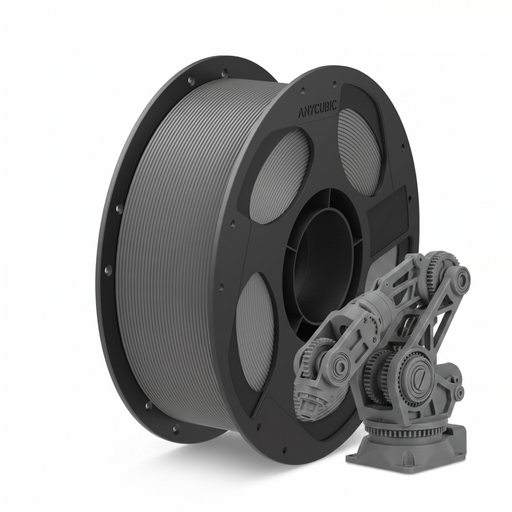
Why it suits this profile: Buyers who focus on dimensional accuracy and surface appearance get a 1.75 mm PLA spool with a stated tolerance of ±0.02 mm and a textured grey finish.
The diameter and tolerance are clearly stated, making you less reliant on vague terms such as ‘precision’.
PLA material, 1 kg spool, 1.75 mm diameter and a grey textured finish.
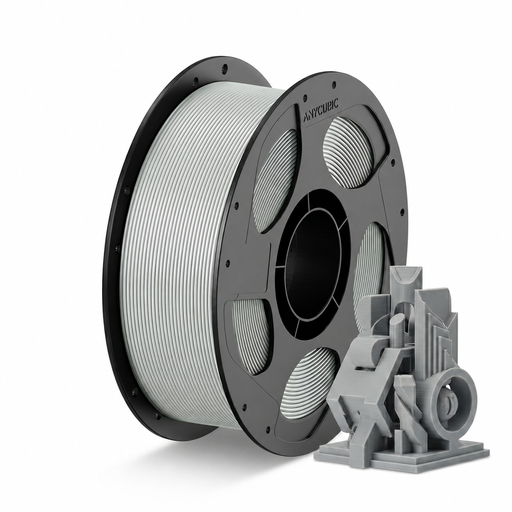
Why it suits this profile: PETG is suitable for functional prototypes and parts where PLA does not provide the required material properties.
The product description specifies PETG, 1.75 mm and 1 kg. This allows you to compare the material based on its intended use rather than choosing solely by colour or speed.
PETG material, grey colour, 1.75 mm diameter and 1 kg capacity according to the product information.
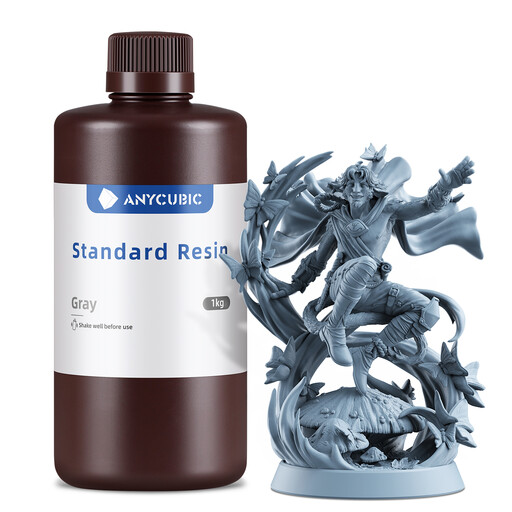
Why it suits this profile: This resin is designed for LCD, DLP and SLA printers, making it suitable for users who create detailed models, miniatures or resin prototypes.
The 365–405 nm wavelength and recommended working environment of 20–40 °C are stated. Check these values against your printer.
1 kg photopolymer resin, grey colour and compatibility with 365–405 nm according to the product description.
We have put together a complete, up-to-date list of products that fully meet these strict selection criteria and the applicable European safety regulations.
A cheap spool is not always cost-effective if a large proportion of the material goes to waste. Pay attention to the following:
For FDM printers, grey filament and matte filaments are practical colours for prototypes, model making and parts you intend to paint later. For a smoother, glossier appearance, silk PLA may be suitable, but the product information states that a lower speed can help enhance the sheen.
PLA filament is usually a sensible starting point because it is generally easy to print and requires less calibration than PETG. PLA+ may be worth considering if, according to the product specifications, you are looking for greater toughness. Always check the manufacturer's recommended temperature.
This depends on the infill, layer height, supports and number of models. A 1 kg spool can be used for many small projects, but heavy-duty functional parts consume considerably more material. The slicer shows the expected weight and print time in advance.
No. Resin is a liquid photopolymer for LCD, DLP or SLA printers. An FDM printer uses plastic filament such as PLA, PLA+ or PETG. Always check the printer technology before ordering material.
