
Vandaag of morgen in huis

Kwaliteit gegarandeerd

Welkomstaanbiedingen ontgrendelen: GRATIS bezorging | Tot 80% korting | Gratis 30 dagen JoyPlus-proefperiode
Download de app
Buying a 3D printer seems simple until you start comparing the specifications. Manufacturers quote high print speeds, smart cameras and automatic features, but these don’t always tell you how well a model will suit your workspace or choice of materials.
The main pitfalls:
The build volume determines how large a model you can make in one go. For standard hobby projects, around 220 × 220 × 220 mm is often enough. If you want to print functional parts, helmets, larger enclosures or several small components at once, consider a large 3D printer with an axis length of 300 mm or more.
A CoreXY 3D printer moves the print head along the X and Y axes using a belt system. This can provide a good foundation for higher speeds, but a sturdy frame and proper calibration are still essential. Check the machine’s weight and dimensions, too: a large model won’t necessarily fit on a standard desk.
An FDM 3D printer melts filament and builds the model layer by layer. PLA is generally a good starting point for beginners. PETG, TPU, ABS, ASA, polycarbonate and fibre-reinforced filaments place greater demands on temperature, ventilation and storage.
So check:
A higher temperature doesn’t automatically mean that every filament is suitable. Always use the material profile and follow the manufacturer’s safety information.
A 3D printer with automatic bed levelling measures the distance between the nozzle and the build plate, so you won’t need to adjust it manually as often. Even so, it’s a good idea to keep the PEI plate clean and check the first layer.
A 3D printer with a filament dryer can remove moisture from compatible filament. This is particularly useful for hygroscopic materials, such as some types of nylon. Check whether the drying module can operate while printing and how many spools it can hold.
When choosing a multicolour 3D printer, check the number of standard colours, expansion options, colour-change time and filament compatibility. TPU, for example, isn’t suitable for multicolour feeding on every system.
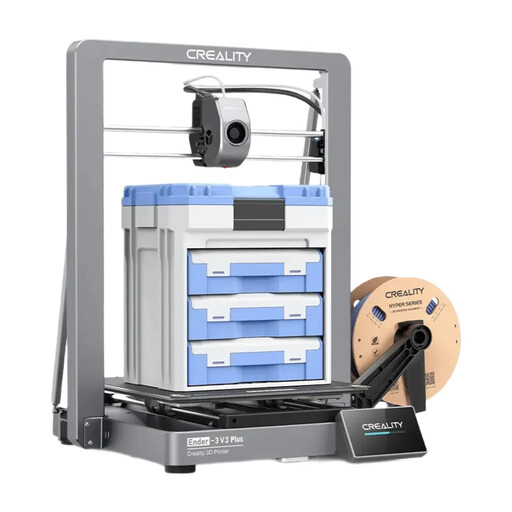
Why it suits this profile: The generous 300 × 300 × 330 mm build volume gives you room to take on bigger hobby projects. Automatic calibration and a largely pre-assembled design mean fewer setup steps to get started.
The stated automatic Z-offset and bed calibration reduce the need for manual adjustments. The recommended speed is lower than the maximum speed, giving you a more realistic basis for assessing the settings.
300 × 300 × 330 mm build volume, direct-drive extruder, PEI build plate and support for PLA, TPU, PETG and some fibre-reinforced filaments.
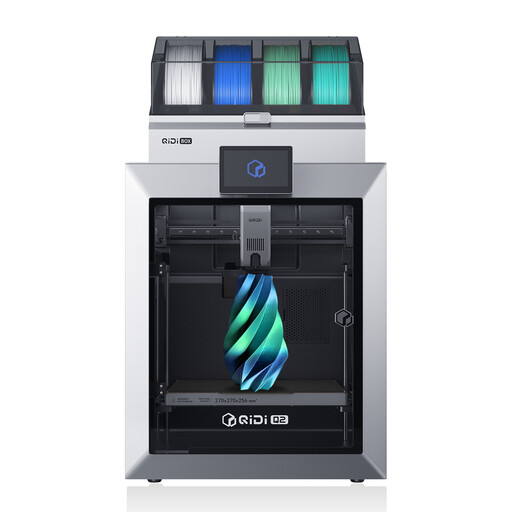
Why it suits this profile: The enclosed FDM design, heated chamber reaching up to 65 °C and 370 °C all-metal hotend make it a good match for users working with different materials and functional prototypes.
The product specifications list automatic levelling, filament detection and an AI camera. These features can support the printing process, but they don’t replace checks on ventilation, material profiles and the first layer.
Print speeds of up to 600 mm/s, active air filtration, AI camera and support for materials including PLA, ABS, PETG and carbon-fibre composites.
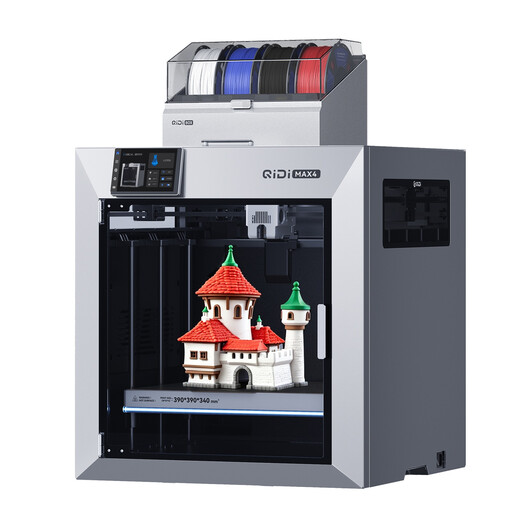
Why it suits this profile: According to the product specifications, this model is designed for large parts, moulds and prototypes. Its 390 × 390 × 340 mm build volume is a good choice when smaller printers would require you to split a design into too many sections.
The large build volume makes its capacity clear in millimetres. The active chamber and heated build plate are useful specifications for materials that may be prone to warping.
390 × 390 × 340 mm build volume, stated print speeds of up to 800 mm/s, a heated chamber reaching up to 65 °C and compatibility with QIDI BOX for up to 16 colours.
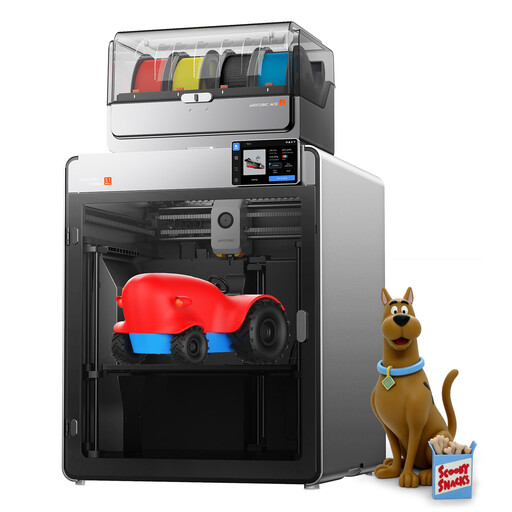
Why it suits this profile: The combination of a 350 × 350 × 350 mm build volume, CoreXY movement and ACE 2 Pro filament module is designed for large, colourful models and small production runs.
The colour capacity is clearly specified: four colours are included as standard, while expanding to a maximum of sixteen requires additional compatible ACE 2 Pro units. This makes the cost of expansion easier to understand upfront.
Active filament drying up to 65 °C, a heated chamber up to 65 °C, a nozzle temperature of up to 350 °C, automatic levelling and 720p video monitoring.
We’ve put together a complete, up-to-date list of products that meet these strict selection criteria and comply with current European safety regulations.
A model with automatic levelling, a direct-drive extruder and an easy-to-use touchscreen interface can make it simpler to get started. PLA is usually a practical choice for your first material. Also check that you have enough space for the printer and that its software is available in a language you’re comfortable using.
As well as the purchase price, you’ll need to budget for filament, electricity, maintenance and, sometimes, replacement nozzles or build plates. Multicolour systems may use extra filament during colour changes. A filament dryer and sealed storage can help reduce moisture problems, but they’re an additional investment.
Its lifespan depends on print hours, material choice, maintenance and parts such as the nozzle, belts, fans and build plate. Clean the build plate, keep filament dry and follow the manufacturer’s maintenance instructions. If you plan to use your printer intensively, readily available replacement parts and clear documentation are important things to look for.
