
Vandaag of morgen in huis

Kwaliteit gegarandeerd

Welkomstaanbiedingen ontgrendelen: GRATIS bezorging | Tot 80% korting | Gratis 30 dagen JoyPlus-proefperiode
Download de app
A 30W USB-C charger is suitable for many smartphones, tablets and smaller USB-C devices. But wattage alone doesn’t tell you everything. A charger may be rated at 30W on paper, yet charge more slowly in practice if it doesn’t support the right protocol, or if you don’t have a suitable cable or port.
The most common pitfalls:
First, check which protocols your smartphone, tablet or laptop uses. USB Power Delivery, or USB PD, is a widely used protocol for USB-C fast charging. Some devices also support PPS or QC.
A 30W PD charger may, for example, be suitable for a smartphone and certain tablets. Laptops often need more power, especially if you want to charge your device while using it. So check your device’s recommended input specifications.
According to the product description, the Xiaomi 33W Nano Charger supports QC, PD and PPS. Its maximum output is 33W under certain charging conditions. This doesn’t mean every connected device will automatically charge at that power.
A multi-port charger is handy for charging a phone, earbuds and smartwatch at the same time. However, the key figure is the maximum total output. When several devices are connected, the power available from each port may drop.
According to its product specifications, the Baseus Compact Quick Charger has one USB-C port and two USB-A ports, with a maximum total output of 30W. The description says that its USB-C port supports PD 3.0 up to 30W when used on its own. If you connect several devices, the power is shared between them.
The PAVAREAL K10 can charge four devices at once, but its total output remains 30W across all four ports. This makes it suitable for accessories and light charging needs, but less suitable if you need to fast-charge several devices at once.
A compact fast charger takes up little space on a desk or in a bag. GaN technology is often used to make chargers smaller. Xiaomi says that GaN technology makes the Nano Charger more compact than a conventional 33W charger. The product specifications give its dimensions as 32,2 × 32,2 × 50,5 mm.
A charger getting warm during use can be normal. However, if it gets so hot that you can’t touch it, stop charging and unplug your devices. Never cover a charger with clothing or other fabric, and don’t use it in a damp environment.
Also check for:
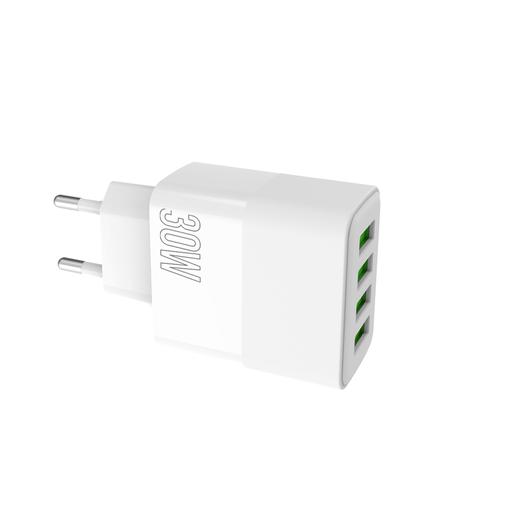
Why it suits this profile: If you want to charge several basic USB devices, this charger gives you four USB ports in one. Its total output is clearly capped at 30W.
The product information states that the combined output across all four ports won’t exceed 30W. This helps avoid confusion about the available power.
Four USB ports, a 110-240V input and, according to the specifications, protection against overcharging and discharging.

Why it suits this profile: This USB-C wall charger is a good fit if you’re looking for a small adapter for a smartphone or tablet and value support for several charging protocols.
The specifications explicitly list QC, PD and PPS. Make sure your device and cable support these protocols.
Compact design, a 100-240V input and a maximum output of 33W according to the listed specifications.
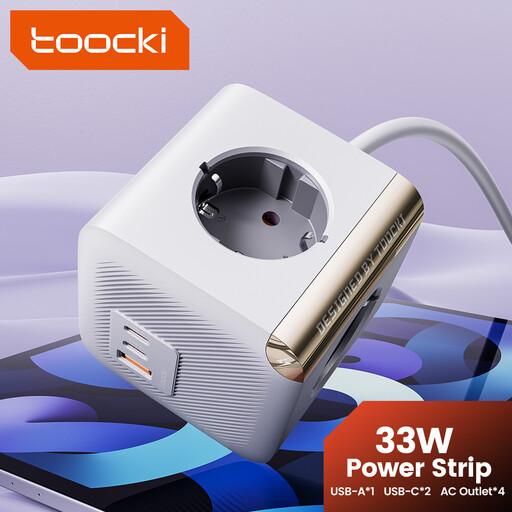
Why it suits this profile: Handy for a desk, student room or home office where you need several plug sockets as well as USB-C charging.
The safety information says not to connect this extension lead to another extension lead. The total power available to connected devices is also limited.
Four AC sockets and two USB-C ports, with PD charging up to 33W according to the product name.
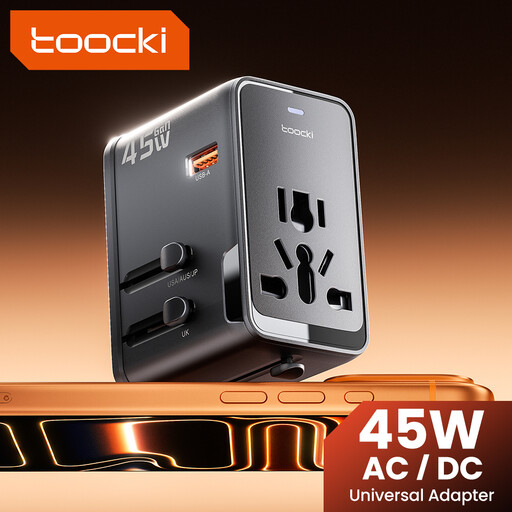
Why it suits this profile: A universal travel adapter is useful if you take several devices with you and encounter different types of plug socket.
The product name lists two USB-C ports, one USB-A port and support for up to 45W PD. Before you travel, check the plug standards and your devices’ requirements.
Supports EU, UK, US and AUS plugs according to the product listing, plus three USB charging ports.
We’ve put together a complete, up-to-date list of products that meet these strict selection criteria and the applicable European safety requirements.
For many smartphones, 30W is enough, provided the device supports USB PD or a compatible protocol. A tablet can also charge at 30W, but the actual charging speed depends on the model, cable and charging protocol.
You might. Use a cable that’s suitable for the required power and protocol. Check that it can handle the necessary charging current. Some setups require a USB-C-to-USB-C cable to enable PD charging.
No. 30W is the maximum output, not its constant power consumption. The connected device generally determines how much power it draws. The charging current may also drop as the battery fills up. Unplug the charger when you won’t be using it for an extended period.
