
Livraison le jour même et le lendemain

Qualité garantie

Débloquez vos offres de bienvenue: Livraison GRATUITE | Jusqu'à -80 % | 30 jours d'essai gratuits à JoyPlus
Téléchargez l'application
An electric mobility scooter 3 wheels 25 km/u may seem easy to choose at first glance. Yet the most important differences aren’t just about colour or motor power. Vehicle classification, battery details and Dutch approval in particular determine whether a model suits your daily use.
If you rely only on terms like “powerful motor”, “long range” or “EU-approved”, you could be in for a surprise. Watch out for these common pitfalls:
According to the manufacturer’s product information, the Chunlai CL-06Z is described as an L2e-P electric three-wheel moped under Regulation (EU) No 168/2013. Type-approval number e9168/201311093*07 is listed. When buying, check that the version you receive matches the approval exactly.
For registration you need a suitable Certificate of Conformity (CoC). Make sure the following details match:
An RDW registration for a mobility scooter is not automatically arranged by the seller or by EU type-approval. Ask in advance which documents are supplied and only use the vehicle on public roads once registration has been completed.
According to the provided product specifications, the CL-06Z has a 1000W electric motor and a certified maximum design speed of 25 km/u. That makes it suitable for short trips, errands and local transport, but motor power alone doesn’t tell you everything about the ride.
Performance also depends on:
Do not modify the motor, controller, software or drivetrain. Any change can affect type-approval, insurance and legal status.
The 25 km/u lithium version is fitted with a 60V 20Ah lithium battery. Lithium batteries are practical for regular charging, but don’t treat the stated capacity as a guaranteed number of kilometres. Ask for the certified range of the exact version you’re buying.
For daily use, it’s wise to check:
A mobility scooter for short distances doesn’t need a large theoretical range, but having a buffer is practical in headwinds, on detours or with multiple errand stops.
The selection below links product specifications to different usage scenarios. The information is based on the published product descriptions; always check the current version, documents and Dutch registration requirements before buying.
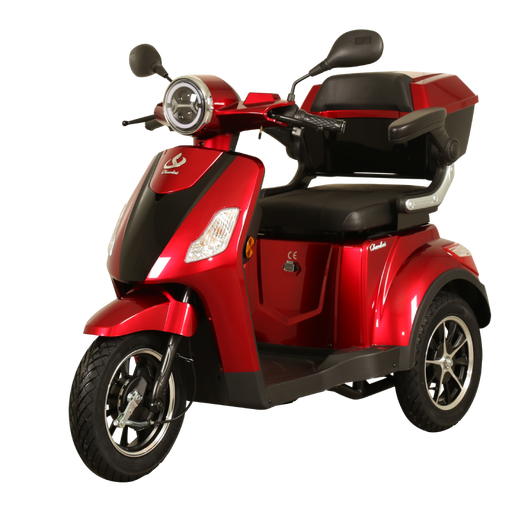
Why this suits the profile: This electric mobility scooter is aimed at a single rider who wants to make short daily trips with a clear dashboard and simple controls.
The product information explicitly lists the L2e-P classification, the type-approval number, the 25 km/u version and the 60V 20Ah lithium battery. Do verify these details against the supplied CoC.
1.0 kW electric motor, reverse gear, digital display of speed, battery level and odometer.
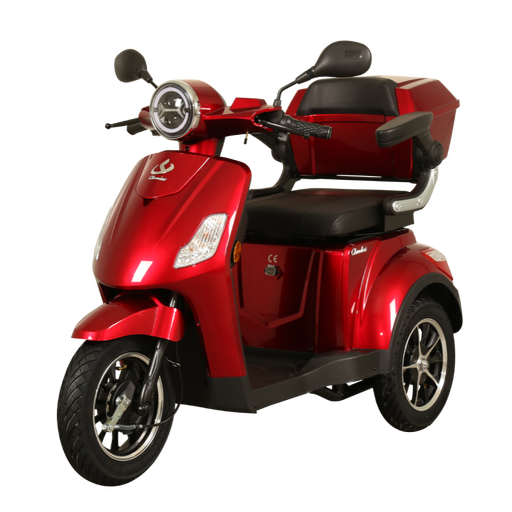
Why this suits the profile: The comprehensive vehicle documentation and comfort-focused equipment suit buyers who place great value on specifications and ease of use upfront.
The stated EU type-approval and technical configuration make it easier to compare the vehicle data with the CoC and RDW application.
Supportive seat with backrest and armrests, suspension, reverse function and a fully electric drivetrain.
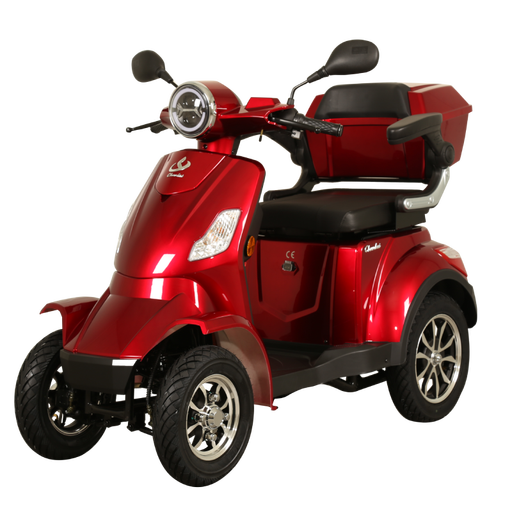
Why this suits the profile: If you drive regularly or place extra value on a four-wheel platform, you can consider this electric light quadricycle as an alternative to a three-wheel mobility scooter.
The product specification clearly states the L6e-A category, type-approval and CoC requirement. You must check the final RDW classification and rules in advance.
Four wheels, a removable 60V 20Ah lithium battery, suspension and reverse function. The range differs per approved version.
An L2e-P model is not a regular bicycle and is not automatically an unregistered mobility scooter. For use on public roads, these points usually apply:
Do not use the vehicle on pavements or pedestrian areas unless this is expressly permitted locally. Consult RDW and the Dutch government (Rijksoverheid) for the rules that apply at the time of registration.
We have put together a complete, up-to-date list of products that fully meet these strict selection criteria and the applicable European safety regulations.
That depends on the official vehicle classification and registration. For an L2e-P three-wheel moped, AM entitlement is usually required. In the Netherlands, a valid A or B licence generally includes AM entitlement. Check the registration certificate and your licence before you ride.
That can’t be deduced from battery capacity alone. Weight, speed, temperature, wind, gradients and tyre pressure all affect consumption. Ask for the range of the exact version and keep a buffer for daily trips.
Besides the purchase price, factor in electricity, third-party liability insurance, RDW fees, number plate, maintenance and possible battery replacement. The electricity used per trip depends on charging losses and distance. So don’t just compare on price; also look at warranty, parts and the documentation supplied.
