
Vandaag of morgen in huis

Kwaliteit gegarandeerd

Welkomstaanbiedingen ontgrendelen: GRATIS bezorging | Tot 80% korting | Gratis 30 dagen JoyPlus-proefperiode
Download de app
A frying pan that warps after a few months, a base that heats unevenly, or a coating that starts to peel. These are common frustrations when searching for quality cookware. For those seeking a long-lasting solution, a 3-ply stainless steel frying pan is the answer. This type of pan, often considered a professional-grade frying pan, is engineered for performance and longevity. In this guide, we'll explain the key selection criteria and highlight a few recommended models.
A 3-ply pan, also known as triple-ply or clad, consists of three bonded metal layers. The structure is typically as follows:
This construction results in a pan that resists warping and offers superior temperature control, without the 'hotspots' often found in lower-quality pans.
When selecting a stainless steel frying pan, several objective parameters are important.
The quality of the stainless steel and the thickness of the aluminium core determine the pan's performance. A pan with fully clad 3-ply construction (where the layers extend all the way to the rim) provides the most even heat distribution. Look for certifications that guarantee food safety, such as the American FDA standards or GB 4806.9.
A good pan for all hobs is a must. The magnetic exterior of a 3-ply stainless steel pan makes it inherently suitable as an induction-ready frying pan, as well as for gas, electric and ceramic hobs.
A 28 cm stainless steel frying pan is a versatile size, suitable for most households. It offers enough space for searing meat, fish or a larger quantity of vegetables. The shape of the rim also plays a role; a slightly curved or rolled rim makes it easier to pour liquids without dripping.
A frying pan without a non-stick coating is a deliberate choice. It requires a different cooking technique (properly preheating the pan with oil or butter) but offers significant advantages. The surface is extremely durable, resistant to metal utensils, and free from chemical coatings like PFOA or PFAS. This makes it a long-lasting pan that can last a lifetime with proper care.
Based on the criteria above, we have selected two models from the PURECOOK frying pan series. These pans meet the specifications for a high-quality 3-ply stainless steel pan.
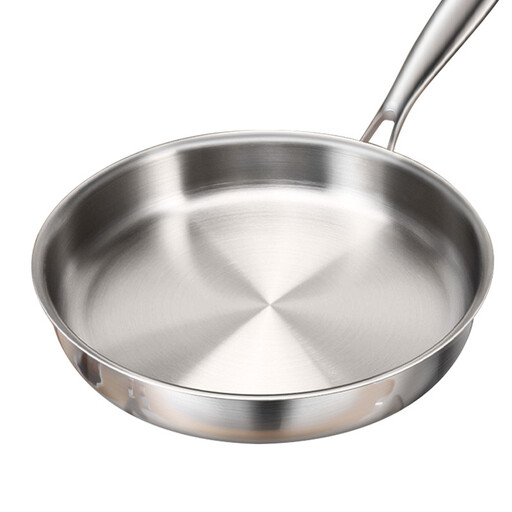
Why this product This model is the essence of a functional, high-performance frying pan. The focus is entirely on the performance of its 3-ply construction, designed for those who want direct, controlled searing and frying. The rolled rim makes it easy to pour off juices or fat.
Advantages
Who is this for? For the home cook seeking a reliable pan primarily for searing, frying, and sautéing. Ideal if you already own lids or don't require one for your cooking style.
View the PURECOOK 28 cm pan without lid
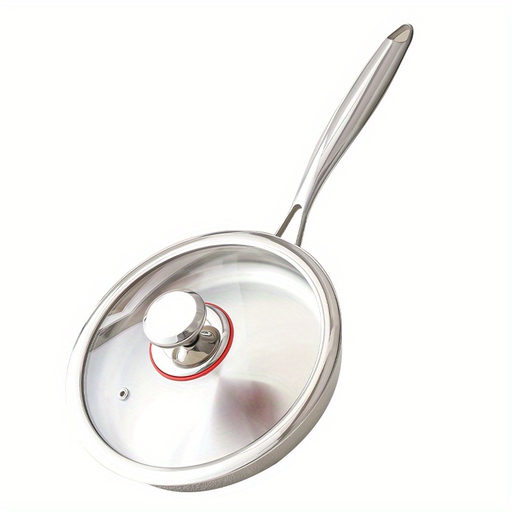
Why this product This model offers the same core performance as the lidless version but adds extra versatility with the included glass lid. The lid allows you to braise dishes, simmer sauces and visually monitor the cooking process without heat loss.
Advantages
Who is this for? For the all-round cook who wants a single pan for various techniques, from frying to preparing sauces and stews. The lid makes this pan a complete solution for daily meals.
View the PURECOOK 28 cm pan with lid
The pans mentioned above feature a rolled rim, which makes pouring liquids easier. This is an example of a functional design detail. If you are looking for pans with a similar finish or want to explore other models, check out our selection of pans in the Rolled Rim category for more options.
The secret is the right temperature. First, heat the pan over medium-high heat. After about a minute, add a few drops of water. If the drops sizzle and evaporate, the pan isn't hot enough yet. When the drops glide across the surface like mercury balls (the Leidenfrost effect), the pan is at the perfect temperature. Wipe the water away, add oil or butter, and immediately place your ingredients in the pan.
Yes. The exterior layer of a 3-ply stainless steel pan is made of magnetic steel, which makes it perfectly compatible with induction hobs. The pan will heat up quickly and efficiently.
Let the pan cool down slightly after use. Clean it with warm water, dish soap, and a sponge. For stubborn stains or burnt-on food, you can soak the pan for a while or use a paste made of water and baking soda. Avoid abrasive powders, but a scouring pad can be used on the stainless steel surface for tough stains.
